











A professional image with MEWA’s embroidery and labelling service
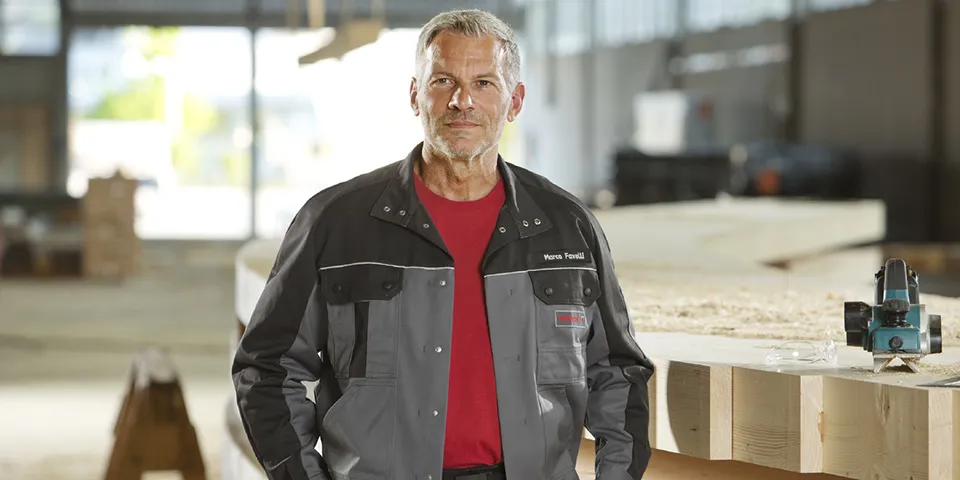
First impressions count, in industry as well as in the skilled trades. Professional interactions and a strong company image depend not only on smart, uniform workwear, but also on the markings it carries, such as the company logo or name labels. Consistent markings on workwear make the company more recognisable and also foster a sense of belonging among employees.
Whether braces trousers, aprons, shirts or protective clothing should be printed or embroidered depends both on the workwear fabric and on how it is used. Embroidery is highly durable, retains its colour even after many washes and does not fray. An embroidered name on a waiter’s collar, for example, looks very elegant. In the healthcare sector, it helps provide clarity and build trust.
By contrast, flying sparks, dust and fumes in industrial production halls and craft workshops put workwear and its markings to the test. A durable solution is essential. Logos and name badges can be applied to garments in the desired colours and quickly replaced when they no longer look presentable.
Screen printing also provides durable markings. The colour range is unlimited, and even the smallest details can be reproduced. As the colour penetrates the fibres directly and permanently, it can be used to enhance workwear for industrial workers, transport companies and airport staff. For craft businesses, transfer printing is a more affordable option for durable prints on shirts, waistcoats or aprons.
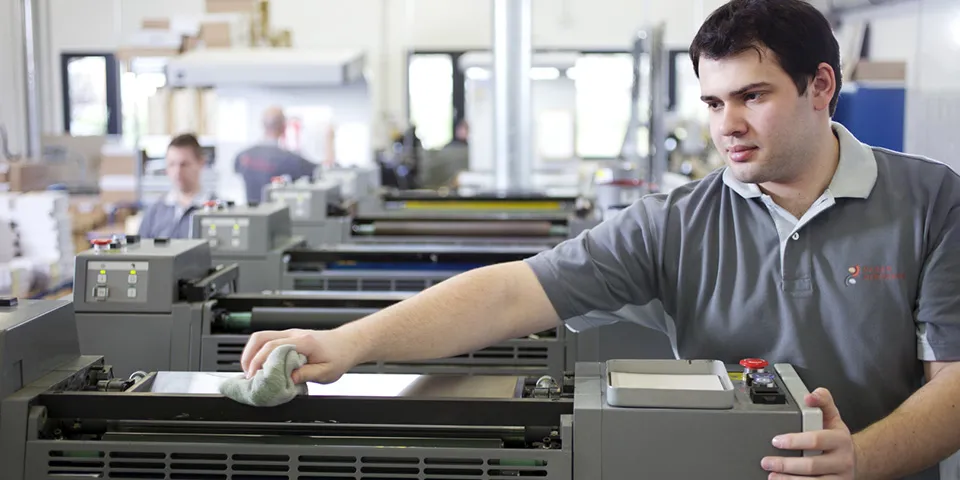
Screen printing: the colour range is unlimited, and even the smallest details can be reproduced.
Special requirements for badges on PPE
Particular care is needed when adding markings to protective clothing (PPE). Badges must be adapted to the PPE in terms of shape, material, size and position. “Flame-retardant badges, for example, cannot be made in just any colour. With high-visibility clothing, only a limited area is available for badges, while the exact position is specified for chemical protective clothing,” explains Silvia Mertens, Product Manager at MEWA. The badge material must also meet the precise requirements for protective clothing. Flammable badges or threads that melt at the slightest heat, for instance, are unsuitable for clothing designed to protect against heat and flames. Seams that are too thick can also prevent sparks from being deflected, compromising the protective function and calling the garment’s type examination into question.
To ensure that the protective function is maintained despite the markings, it is advisable to have logos or embroidery applied by a professional company specialising in workwear. As part of its textile services, MEWA offers a professional embroidery and logo service. This supports companies in creating a uniform image and provides all textile and logo services from a single source.

Particular care is needed when adding markings to protective clothing. Badges must be adapted to the PPE and the place where they are applied, in terms of shape and material.
Question about this story? Ask your question
Keep following this
Get an email when a new story is published. No account needed.
- SubjectNews







