











‘A green tax shift is essential for heat pumps to break through’
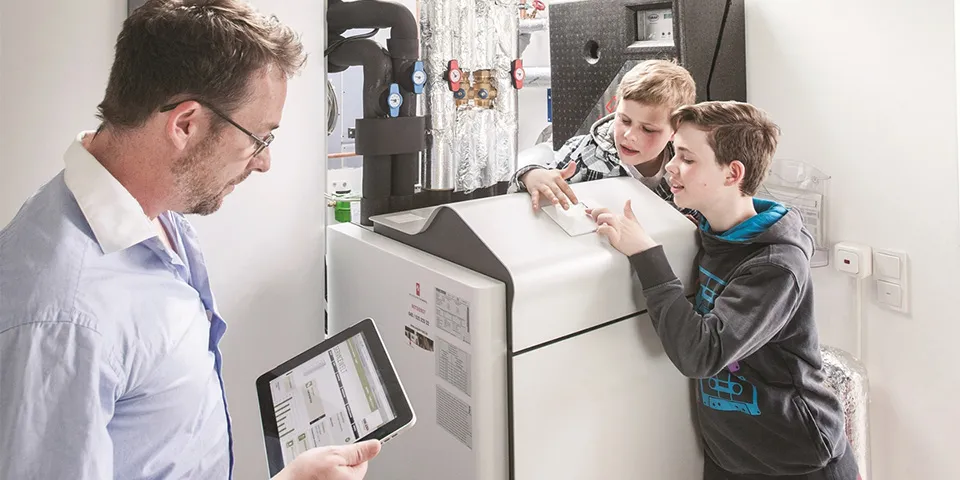
The Warmtepomp Platform is the sector association for heat pumps in Flanders. As the technology platform of Organisatie Duurzame Energie (ODE), it brings together specialist heat pump manufacturers, wholesalers, project developers, consultancy firms and investors from the heat pump sector in Flanders. It is the ideal organisation to put some pertinent questions about heat pumps to. We therefore put Jozefien Vanbecelaere of the Warmtepomp Platform under the spotlight.
I&B: How do you view the development of heat pumps in Belgium?
Jozefien Vanbecelaere: “There has been positive progress, but it is too slow. The number of heat pumps is rising every year, but we need to be more ambitious if we are to meet our energy and climate targets for 2050. More than 90% of households in Flanders still use gas or heating oil for heating. The biggest obstacle to the uptake of heat pumps is the large difference between electricity and gas bills. Many proposals for policy changes have been put forward that would benefit heat pumps. The Flemish Energy and Climate Plan for 2021-2030 includes a series of measures that strongly support this transition and are promising, such as a green tax shift from gas bills to electricity bills, accelerating the rate at which heating systems are replaced, requiring three energy-efficiency measures to be in place within 5 years of the sale of a residential property, and ending gas connections for new homes from 2021. The challenge now is to turn these proposals into legislation.”
‘We are calling for a ban on installing new oil boilers by 2021, and on installing new gas boilers by 2030.’ (Image: Pixabay)
“Policy-makers should address the price gap between gas and electricity through a sustainable tax shift. More than 70% of the electricity price consists of distribution and transmission network charges, levies and VAT. For natural gas, the figure is only 47%. Households pay just 25% in taxes and levies on heating oil. In line with the ‘polluter pays’ principle, the split should be the other way round. Shifting charges from electricity to natural gas and heating oil would ensure that renewable heat is valued more appropriately and discourage the use of fossil fuels.”
I&B: How do we compare with other countries in Europe?
JV: “Belgium is certainly lagging behind other European countries. In 2017, just 2.8 heat pumps were sold per 1,000 households in Belgium. This is a far cry from countries such as Norway and Finland, where 34.3 and 23.7 heat pumps respectively were sold per 1,000 households.”
“Since early 2019, France has had an effective grant scheme that will make heat pumps affordable even for low-income households. The Scandinavian countries have had a CO2 tax since the early 1990s. In neighbouring countries such as the Netherlands, the ‘gas-free’ policy is driving a decisive shift towards sustainable heating with heat pumps and district heating networks, with the aim of fully decarbonising heating by 2050. In Finland, the ‘heat as a service’ model is increasingly being used. Under this model, the supplier makes the investment in the heat pump and provides the customer with thermal energy and, if desired, cooling. The customer is billed for energy in the same way as for electricity. This means there is no upfront investment cost for the heat pump. Through the monthly bills, the customer pays not only for the heat, but also gradually pays off the installation to the supplier.”

The smart meter will be an important tool for unlocking the potential of demand response and flexibility.’ (Image: Shutterstock)
I&B: Do you think a ban on heating with oil and/or gas would be a logical or desirable step?
JV: “To achieve a fossil-free energy system by 2050, we need a clear end date for heating with fossil fuels. This obviously cannot happen overnight, but must follow an announced phase-out timetable that takes account of our existing building stock and its wide variety of building types. We are calling for a ban on installing new oil boilers by 2021, and on installing new gas boilers by 2030. This transition must go hand in hand with an accelerated replacement programme, moving existing buildings towards sustainable renewable heating solutions and avoiding lock-in effects. The aim is to heat all buildings with renewable heat. However, for homes that cannot meet the basic insulation requirements, an interim solution such as a hybrid heat pump could be a step towards fully renewable heating. Gas heat pumps can also form part of the transition, particularly while electricity bills remain a major barrier to electric heat pumps.”
I&B: Are there any current or future developments we should keep an eye on?
JV: “Electric heat pumps can be operated flexibly, especially when they have thermal storage. This allows them to smooth out electricity demand peaks and shift demand to periods of low consumption and/or high wind and solar power generation. This is crucial in an energy system where flexibility helps avoid additional investment in generation capacity. At present, heat pump owners are not rewarded for the flexibility and demand response they can provide. This will change with the smart meter. To make the smart meter intelligent, consumers will be able to install an energy management system, for example an app, on their smart meter, allowing them to match generation and consumption much more effectively.”
“The smart meter will be an important tool for unlocking the potential of demand response and flexibility. Roll-out of the smart meter begins in around 40 municipalities on 1 April, and will cover all of Flanders from 1 July. Even with a smart meter, owners of existing and new PV installations installed by the end of 2020 can continue to use the current compensation system, as with the net meter, for 15 years from the installation date of their PV system. This is particularly beneficial for people who have both a heat pump and a PV system.”
The VREG is also working on a new tariff structure designed to encourage and reward the flexibility and demand response that a heat pump can provide.”
On 25 September, the Warmtepomp Platform is holding the 12th Warmtepompsymposium. It will take place at the Herman Teirlinckgebouw in Brussels.
Question about this story? Ask your question
Keep following this
Get an email when a new story is published. No account needed.
- ThemeFossil-free heating and cooling
- SubjectNews







