











A broad, installer-friendly range for building automation and decarbonisation
Text Björn CrulImage ATEM
Smart buildings, connected systems, EV charging infrastructure, modular construction … technology is playing an increasingly important role in the construction sector. Installers can rely on ATEM’s range and expertise to deliver smart, more sustainable buildings efficiently. ATEM is part of the German Wieland Electric Group. It will celebrate its 80th anniversary in 2026, but continues to keep a close eye on industry trends.
ATEM was founded in 1946 as a purchasing cooperative for a number of Brussels-based companies. “Over the years, we have grown as a distributor. Our range has continued to expand. We have been distributing products from Germany’s Wieland Electric for around 40 years,” says ATEM managing director Koen Notelaers. “Ten years ago, Wieland Electric acquired us. We kept the ATEM name, but have benefited from the backing of a large group ever since. We focus strongly on providing technical support to our customers. Together with the quality of the products from our German parent company, this is a major strength.” Technology now plays an increasingly important role in buildings. The move towards smart buildings means much more is being measured and monitored. “The aim of all these integrations is to optimise energy performance while providing users with the best possible comfort. These systems also make it possible to improve safety and plan maintenance more effectively,” says Koen Notelaers.
Solutions for faster, error-free work
Smart buildings go hand in hand with sensors, connected systems and the automation of lighting, blinds, HVAC and detectors, for example. “Installers are facing much larger and more complex projects, with tight deadlines and frequent difficulties finding qualified staff. Our cabling and connector solutions enable them to work faster and without errors, making it easier to meet deadlines.”
One solution that helps reduce installation errors is the so-called RAN boxes. “These are distribution boards made to measure, with decentralised units. Instead of one large distribution board with automation for each building or floor, we provide several distribution boards per floor, installed in the suspended ceiling. In larger buildings, this can quickly amount to several hundred distribution boards,” says Notelaers. “The advantage is that much less cabling is needed. The distribution boards are made to measure and fitted with connectors, making installation on site very quick.”
Flat cable for EV charging hubs
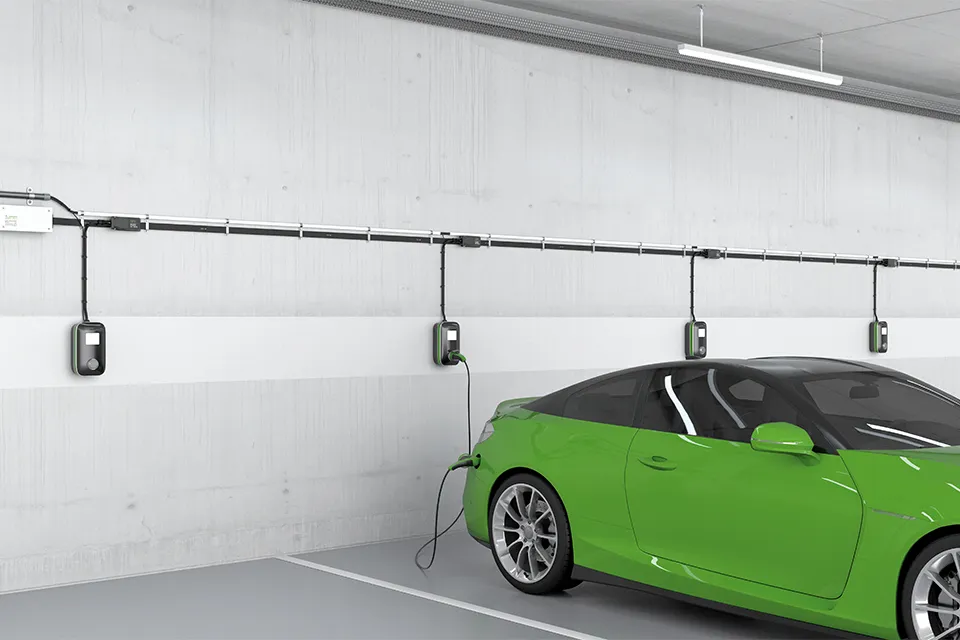
Charging infrastructure is being installed in an increasing number of apartment buildings, office and retail complexes, and car parks. Koen Notelaers says: “Where several standard charging stations need to be installed, our flat cable can be used. It can supply up to 80 amperes, which means you can connect around ten to fifteen charging points to it. As a branch connection can be fitted anywhere along the flat cable, it offers a solution that is quick and easy to install, and cost-effective too.” Modular construction is also gaining ground in the construction sector, with more prefabricated units and timber modules.
“We will see less of traditional construction, where everything is done on site by construction workers and a crane. Increasingly, it will be about modules prefabricated in a factory,” says ATEM’s managing director. “In timber-frame construction, our cables can be built in because there is enough space in the walls. We can draw up a complete plan for this using software.” “We can even make the electrical cabinet to measure and fit it with connectors. This means installation takes much less time and the entire module production process can run faster,” adds Koen Notelaers. Together with Techlink and colleagues from across the sector, ATEM is currently in talks with the government about amending the AREI, so that the regulations can be updated accordingly.
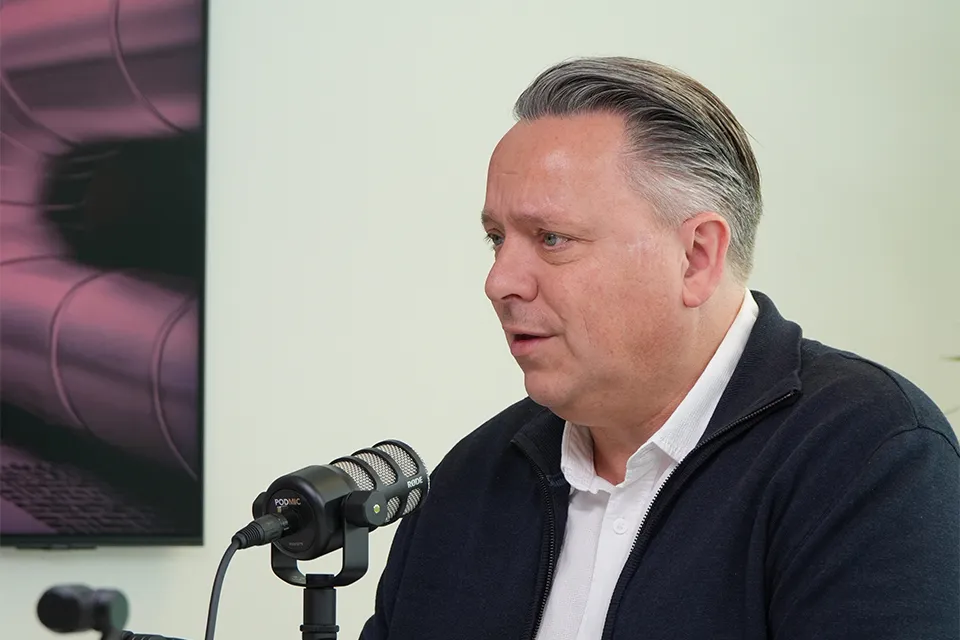
Koen Notelaers recently appeared on Installatie & Bouw De Podcast to discuss the trends in the installation sector outlined above.
Een zakelijke vraag aan Atem NV? Get in touch
Companies in this story
Keep following this
Get an email when a new story is published. No account needed.
- SubjectNews
- CompanyAtem NV







