











2nd Global Shading Day welcomes new participants calling for sustainable cooling

More countries join the initiative, underlining the sense of urgency
On 21 March 2024, the second annual Global Shading Day, organised by the European Solar Shading Organisation (ES-SO), expanded to include Australia, Switzerland, Austria and the Baltic states, further strengthening the collective commitment of 19 European member states to sustainable solar shading solutions.

During the week around 21 March, various stakeholders, including local associations, building professionals, manufacturers and distributors, worked together on a pan-European campaign. They organised events to raise awareness of the benefits of solar shading and encourage consultation with experts. The aim was to reach a wider audience, including architects, politicians and citizens, so that solar shading can be adopted more widely.
As the world faces increasingly serious climate challenges, it is becoming even more urgent to address heat-related risks, health problems and the energy inefficiency of buildings. The Global Shading Day initiative aims to put solar shading in the spotlight as a key strategy in the fight against climate change and in promoting comfortable living environments.
The urgency of the mission was underscored by the challenges of global warming, particularly in 2023, the hottest year on record. Rising temperatures not only threaten our health, but also put energy systems under pressure and drive up electricity costs, especially during heatwaves. A significant rise in demand for air conditioners during extreme heat highlights the need for sustainable cooling strategies.
Passive cooling is smart cooling
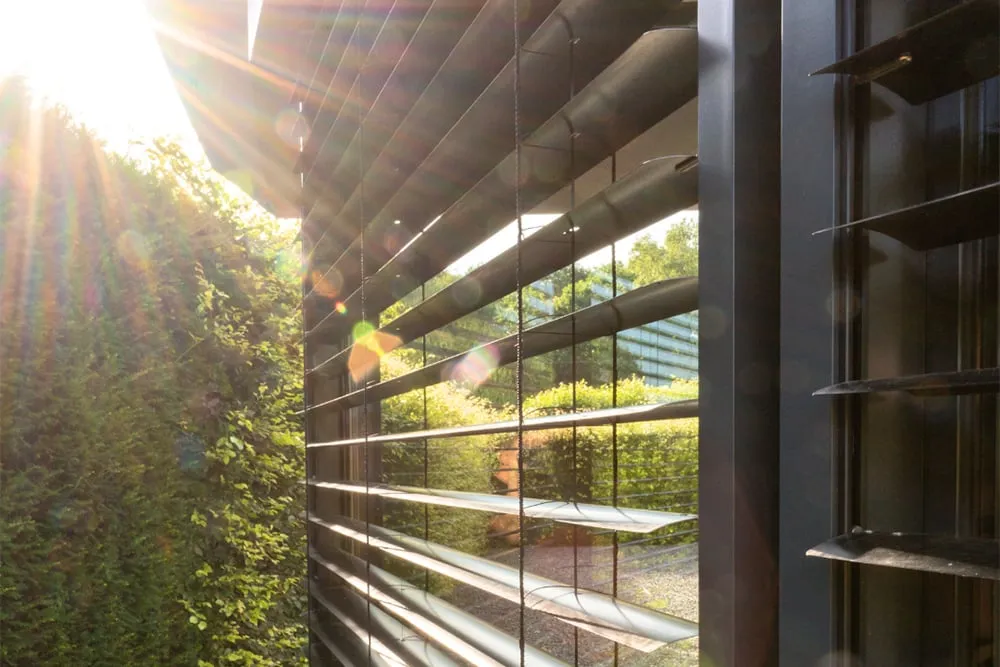
Global Shading Day advocates the widespread use of solar shading to prevent overheating and reduce the energy consumption of buildings. Passive cooling systems, such as smart solar shading integrated into building management, offer sustainable solutions that intelligently manage heat and light, leading to energy savings and improved comfort.
A recent study by Guidehouse revealed the huge potential of solar shading, indicating that it could reduce CO2 emissions by as much as 100 million tonnes and save €285 billion by 2050. As buildings account for 40% of energy consumption and 36% of greenhouse gas emissions in Europe, integrating solar shading into building regulations is essential to limit environmental impact.
“Global Shading Day serves as a call to understand the vital role of solar shading in creating resilient and sustainable built environments,” noted Ann Van Eycken, Secretary General of ES-SO. “Advocating for the mandatory inclusion of solar shading in building regulations can lead to significant energy savings and a reduction in greenhouse gases, and have a positive impact on residents’ wellbeing.
Question about this story? Ask your question
Keep following this
Get an email when a new story is published. No account needed.
- ThemeHealthy air and summer comfort
- SubjectNews







