Hygiene and safety: which taps should healthcare facilities use?
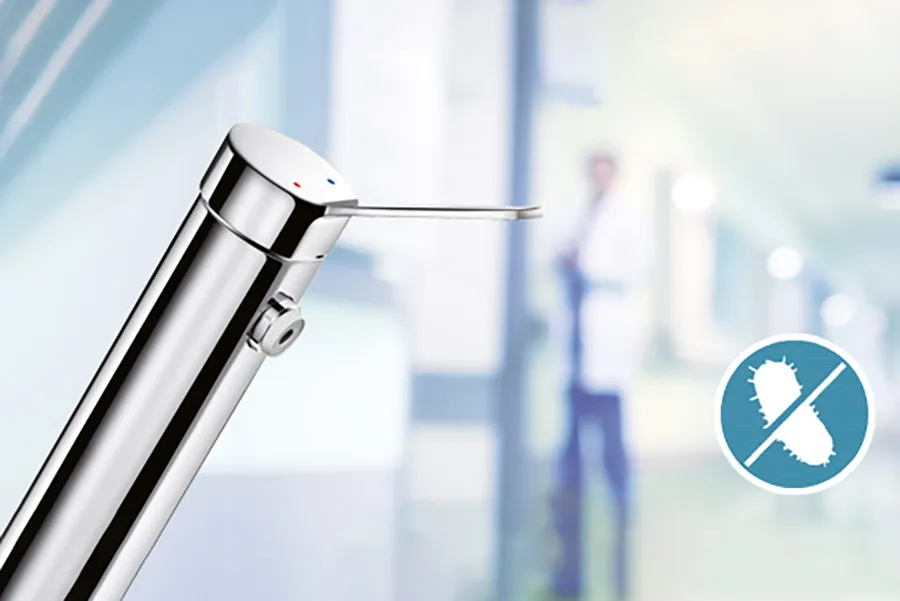
Preventing bacterial growth in water networks is an ongoing challenge in both healthcare facilities and public spaces. Infections caused by poor control of network hygiene can be serious. Installing a mixing valve as close as possible to the point of use is therefore an effective way to tackle the problem.
THE PROBLEM: BACTERIAL GROWTH IN WATER NETWORKS
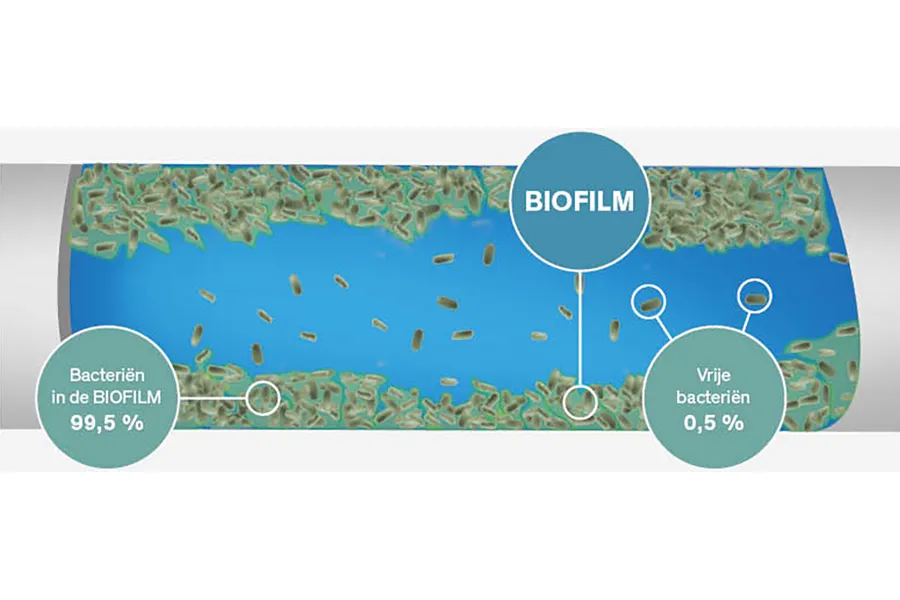
Among the bacteria naturally present, Legionella and Pseudomonas Aeruginosa can cause nosocomial infections (or hospital-acquired infections). These are often fatal for people with weakened immune systems.
Legionella grows in biofilm at water temperatures between 25°C and 45°C. Outside this temperature range, the bacterium either remains dormant or is destroyed. Legionella infection occurs when users inhale aerosols, or tiny droplets of water released from the tap, containing bacteria.
Pseudomonas Aeruginosa, by contrast, grows in water at temperatures between 4°C and 42°C (with an optimum temperature of between 30°C and 37°C). This bacterium needs water and air to multiply. Pseudomonas Aeruginosa is therefore mainly found where all these factors are present: chiefly in taps, flexible hoses and the first metre of pipework. Infection occurs through direct contact, via a wound or mucous membrane.
LEGAL REQUIREMENTS FOR PREVENTING HOSPITAL-ACQUIRED INFECTIONS
In 2021, the European Centre for Disease Prevention and Control (ECDC) recorded 3.5 million cases of nosocomial infections among patients in healthcare facilities in Europe. These infections caused 90,000 deaths, including 3,000 in Belgium, highlighting the scale of the problem in water networks.
The Flemish Agency for Care and Health and the Dutch Ministry of Infrastructure and Water Management have addressed this issue by drawing up a management plan based on Best Available Techniques (BAT) for the design and operation of sanitary facilities, as well as requiring the bacteriological quality of the water to be measured.
See our special feature for more information on the regulations governing hydraulic installations in public buildings.
AN EFFECTIVE TECHNICAL SOLUTION AGAINST BACTERIA: MIX WATER AS CLOSE AS POSSIBLE TO THE POINT OF USE
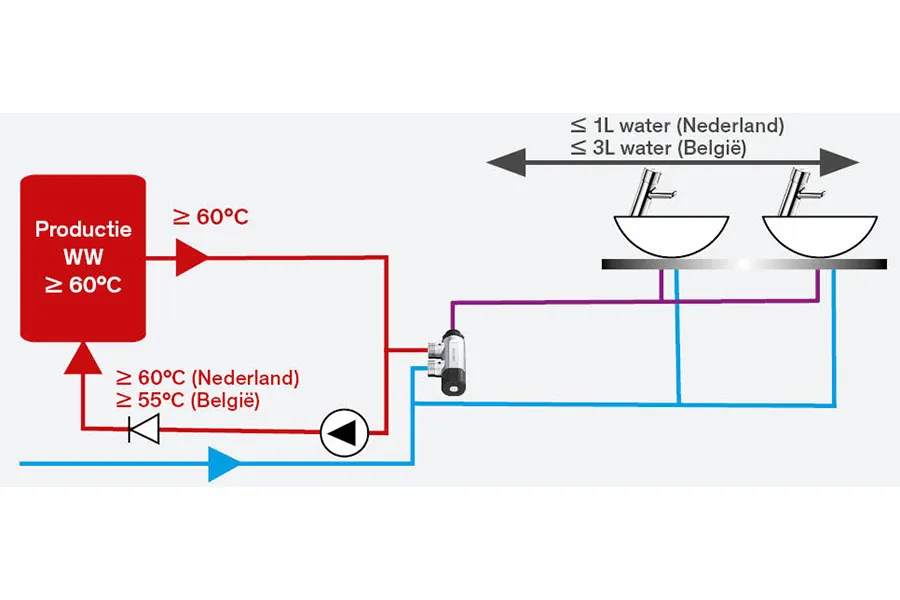
Two measures are needed to prevent bacterial growth: minimise stagnant water in the water network and ensure that the hot water temperature remains above 55°C (Belgium) or 60°C (the Netherlands) at every point in the installation.
With a branch off the hot water network, the water in the pipe is only refreshed as far as the sanitary fittings when they are in use. If they are not used regularly, water stagnates in the pipe and cools to a temperature that encourages bacterial growth. This applies to facilities that experience periods of low occupancy (hospitals, seasonal tourism facilities, etc.). Regulations for public buildings therefore prohibit more than 3 litres (Belgium) or 1 litre (the Netherlands) of mixed water between the hot water circuit and the point of use.
Mixing water as close as possible to the point of use means the hot water supply can be brought close to the sanitary fittings. This ensures that water circulates at a high temperature, preventing the growth of micro-organisms. Once established in the pipework, bacterial colonies are difficult to remove, so prevention at the design stage is a strategy that pays off.
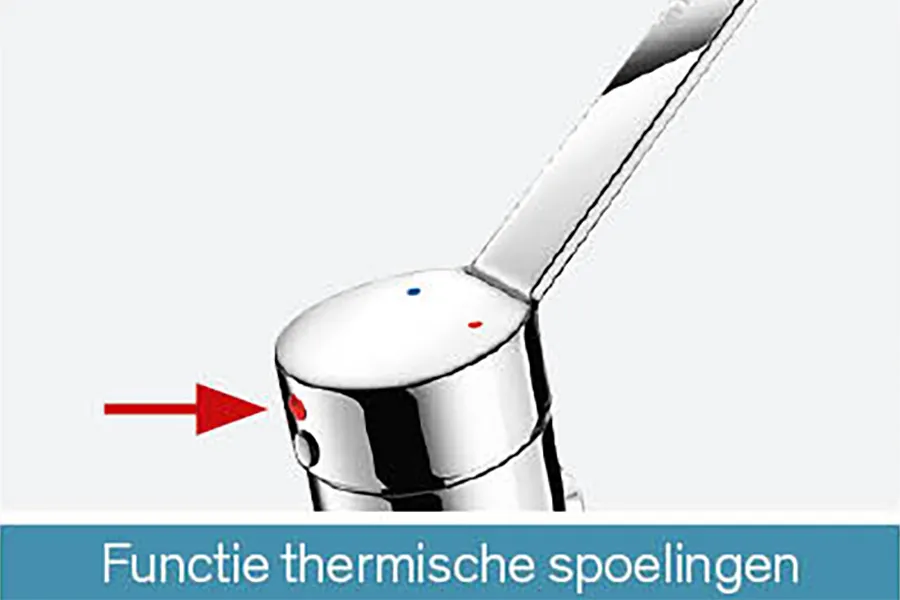
It is also essential to flush taps regularly to refresh the water and maintain a high level of hygiene in the network. This is why all DELABIE electronic taps are equipped with an automatic periodic flush, which takes place every 24 hours after the last use.
HEALTHCARE FACILITIES: TAILORED SOLUTIONS
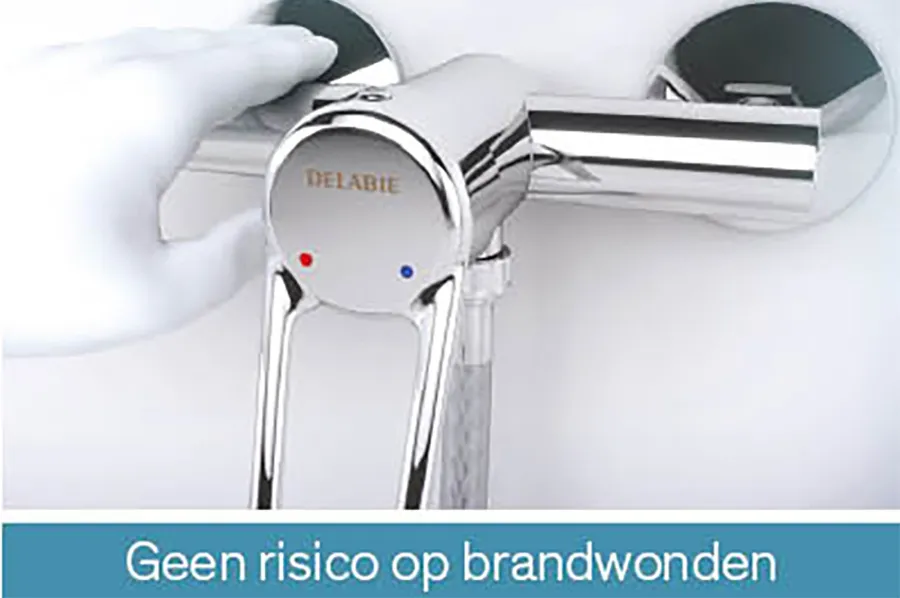
DELABIE’s range for healthcare facilities, including hospitals, care homes and clinics, comprises basin and shower mixing valves with a low volume of stagnant water in the valve body, which protect users from scalding.
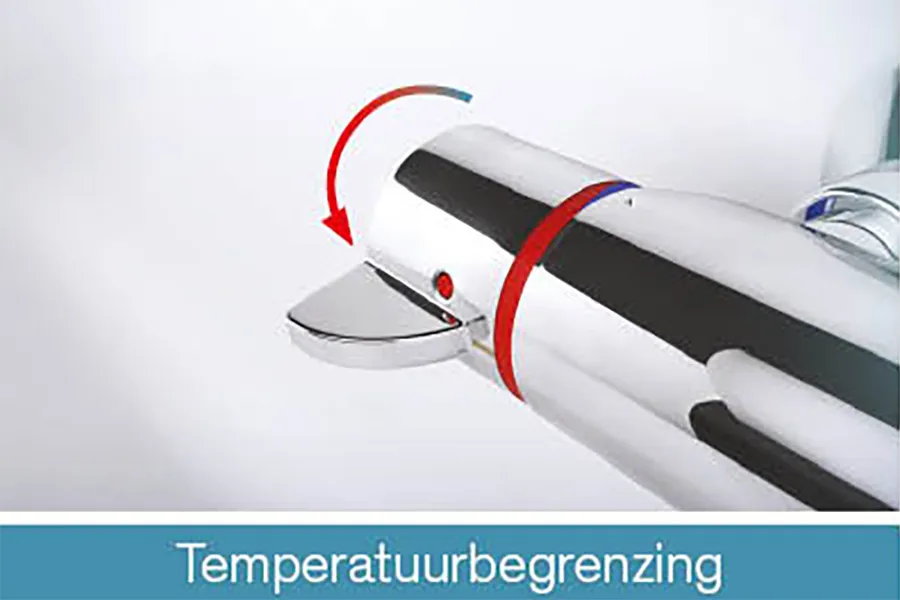
Thermal disinfection is easy to carry out: simply release the high-temperature limit (without removing the control knob or shutting off the cold water supply) to circulate water at 70°C for half an hour. A remedial treatment must be carried out in the event of bacterial contamination of the network.
Many DELABIE solutions meet the requirements of the NF M standard*.
FOCUS ON THREE ICONIC MIXING VALVES:
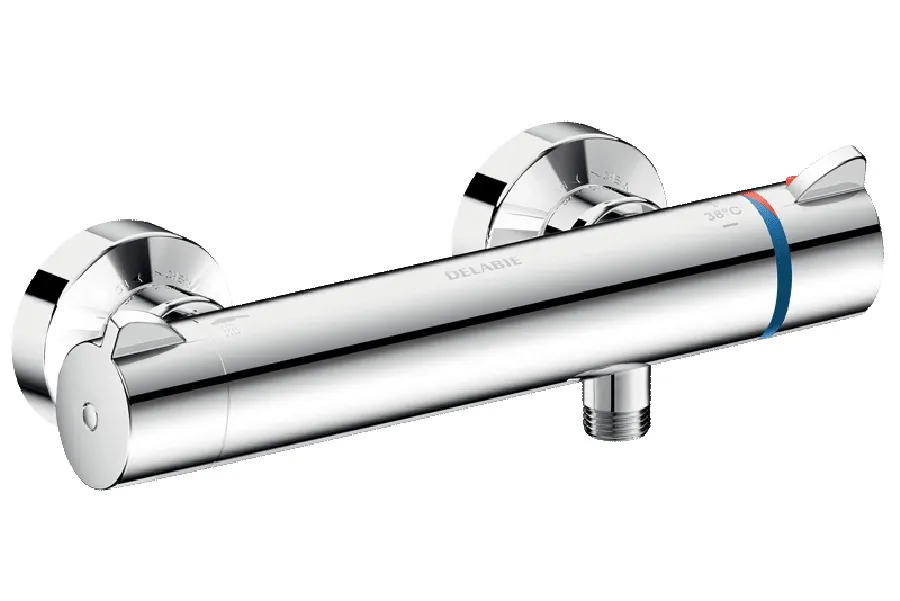
CERTIFIED, SAFE SHOWER MIXING VALVE WITH DUAL CONTROLS
The thermostatic shower mixing valve H9768BEL, NF M certified in July 2021, contains a very low volume of water in the valve body and also features anti-scalding protection. Its thermostatic cartridge ensures a stable temperature, regardless of pressure and flow fluctuations in the network.
Hot water is limited to 43°C and is shut off automatically and immediately if the cold water supply is interrupted. The tap also features Securitouch technology: the valve body remains cool, whatever the temperature of the water inside. This eliminates the risk of burns.
BASIN MIXING VALVE WITHOUT SPOUT
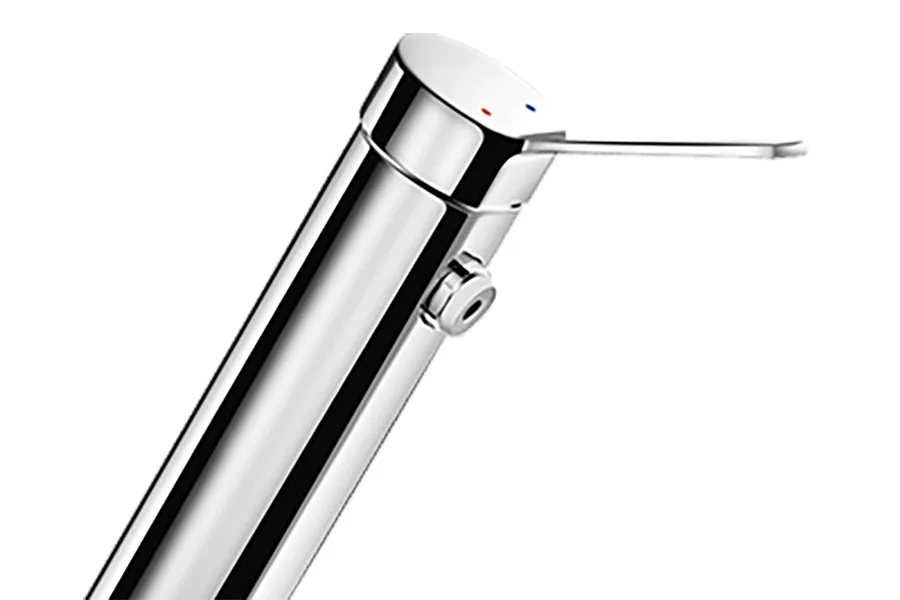
The 2621EP basin mixing valve has no spout, limiting the volume of water in the valve body. It also features a “thermal disinfection” function and precisely meets the requirements of healthcare facilities.
The tap is also fitted with a pressure-compensating cartridge that neutralises unavoidable pressure fluctuations in the network. This keeps the water temperature at the point of use perfectly stable and prevents scalding.
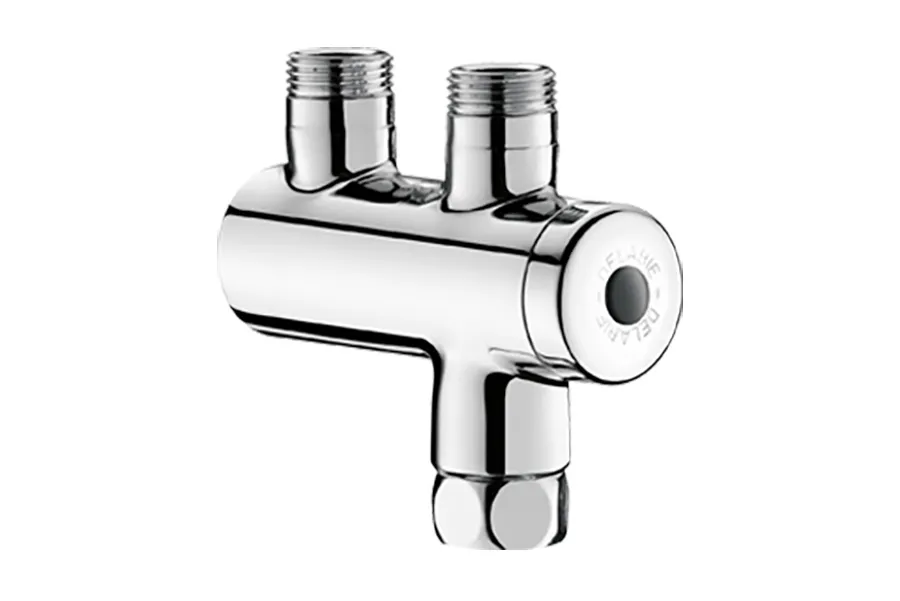
« ALL-IN-ONE » MINI THERMOSTATIC MIXING UNIT
The PREMIX NANO (ref. 732216), developed for public spaces, is an extremely compact thermostatic mixing unit that is ideally suited to the needs of healthcare facilities.
Hospitals and residential care homes are generally fitted with mechanical mixing valves. When taps are used at the same time (toilet flushing, showers, basins, etc.), cold water pressure can suddenly fluctuate. Installed upstream of the taps, the PREMIX NANO ensures a stable temperature and anti-scalding protection at all times.
It can supply two basins or one shower, whatever the configuration. It can be used anywhere, in both new-build and refurbishment projects.
* NF 077 MM is a specific standard for taps used in the medical sector, in force since 2017.
A business enquiry for Delabie? Get in touch
Companies in this story

Keep following this
Get an email when a new story is published. No account needed.
- SubjectSanitaryware
- CompanyDelabie