Breaking habits in public toilets
Habits are hard to break, but recently we have had to rethink our approach to something as simple as handwashing. Current advice on helping to prevent the spread of germs and bacteria has made us much more aware of how to wash our hands thoroughly and correctly. Beyond the current situation, we need to ensure that good hygiene habits are reinforced and maintained in our public washrooms in the future.
Handwashing helps
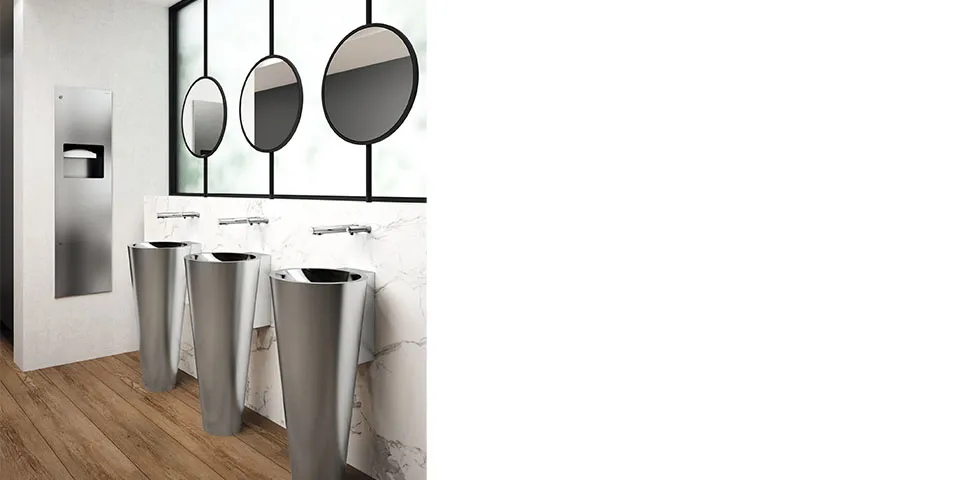
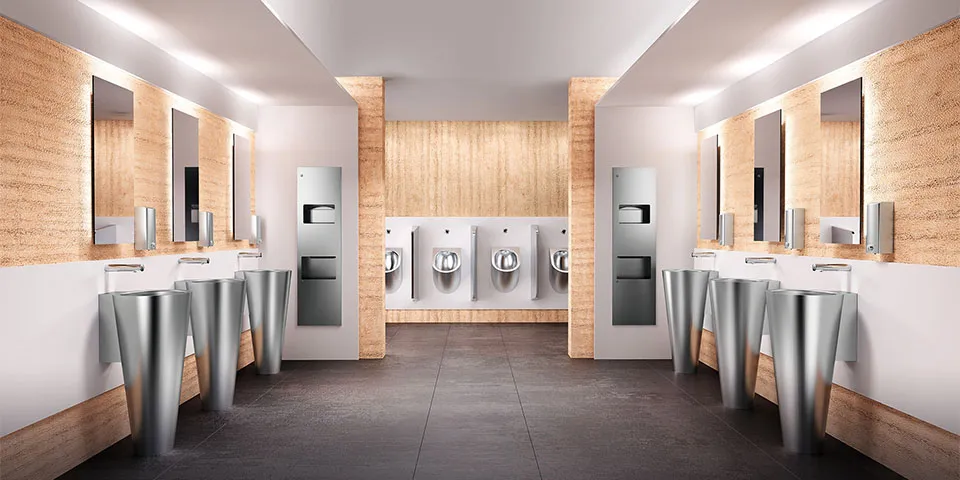
Stainless steel improves hygiene in the washroom.
Turn on the tap
We now wash our hands much more often… before handling and eating food; after every visit to the toilet; after sneezing, coughing or blowing our nose; after treating a cut or wound; and after touching animals. We also know better how to clean them thoroughly and correctly: using soap and water where possible, and drying our hands thoroughly afterwards with a disposable paper towel.
Self-closing mechanical or electronic basin taps optimise hygiene by eliminating the need to touch the tap after rinsing our hands. Any bacteria or viruses on the handles are therefore not transferred back onto our hands. Replacing the aerator with a hygienic flow straightener also limits standing water and dirt residue, helping to prevent limescale and bacteria from building up at the tap outlet. Electronic taps also have the added benefit of an automatic periodic anti-bacterial flush. This flush is activated when the tap has not been used for 24 hours, preventing water from stagnating in the tap and pipework: a key factor in the fight against bacterial growth.
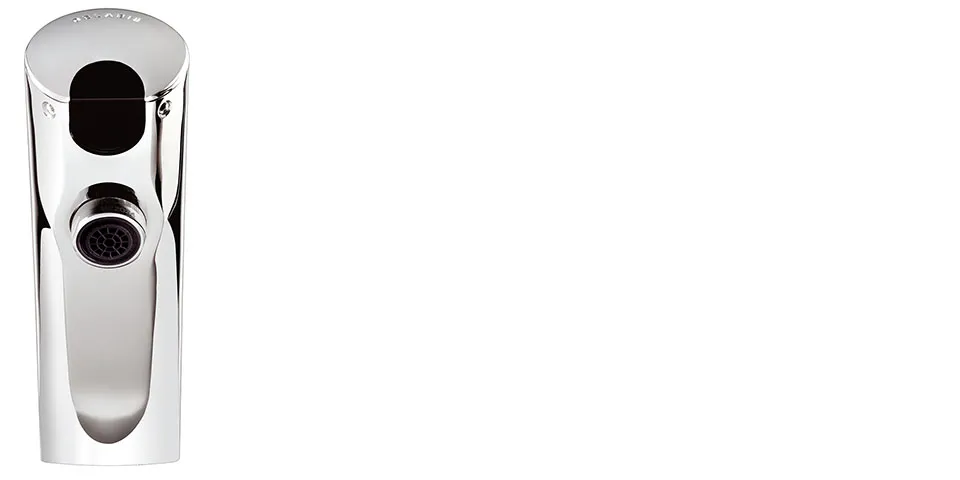
TEMPOMATIC 4 electronic tap: touch-free operation optimises hygiene.
Turn off the tap
In the fight to keep bacteria at bay, we now wash our hands for longer and more often. But how often do we leave the tap running? Traditional basin taps use 9 litres per minute. If handwashing takes 32 seconds, including wetting, soaping and rinsing, and the tap is left running, total consumption is 4.8 litres per use*. We normally wash our hands 4 or 5 times a day, but as we now pay more attention to hand hygiene, this has risen to at least 12 times a day. The impact on consumption is significant… rising from 24 litres to 57.6 litres per person per day*.
For environmental reasons, we need to reduce this increased water consumption. Compared with a traditional basin tap, DELABIE’s self-closing mechanical or electronic taps maximise water savings. They allow owners to optimise their water bills without compromising user comfort. The tap closes automatically after 7 seconds (mechanical models) or when hands are removed from the sensor zone (sensor-operated models), and has a limited flow rate of 3 litres per minute at 3 bar. Users can therefore wet their hands, apply soap and rinse without the tap running continuously. With an electronic tap from DELABIE, water consumption falls to 0.6 litres per use, a reduction of almost 90%*.
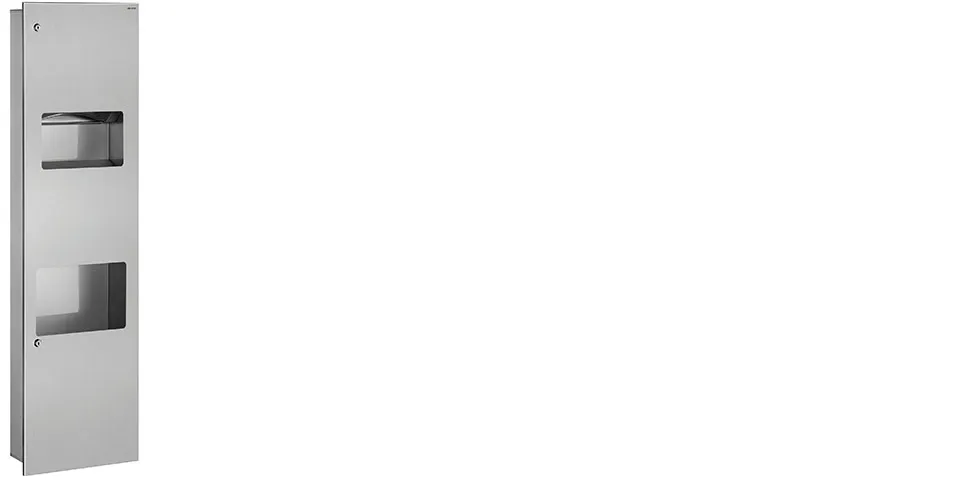
Combined dispenser/waste bin: every handwashing area needs a towel dispenser and a waste bin.
Wash, wash, wash
Washing hands more often and for longer takes its toll on washroom facilities. Can taps and soap dispensers cope with this increase in frequency of use? Unsuitable traditional taps have components that wear more easily, resulting in leaks, water wastage and more frequent repairs. DELABIE taps and soap dispensers, on the other hand, are made from durable materials such as solid brass, with mechanisms tested to withstand more than 500,000 operations. The fixings are also reinforced to prevent them from coming loose over time.
Even the most durable mechanisms need maintenance when used intensively. Regular maintenance extends the life of a tap or soap dispenser. Choosing models with standardised replacement parts, such as cartridges, that are easy to access and replace makes maintenance much simpler.
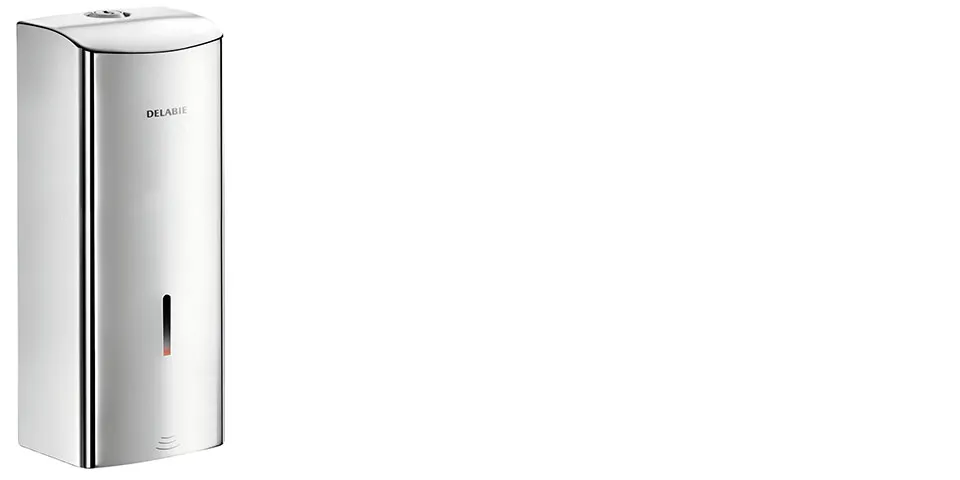
Electronic liquid soap dispenser: reliable, durable and easy to use
Rub your hands together, add a little more soap and you’re done
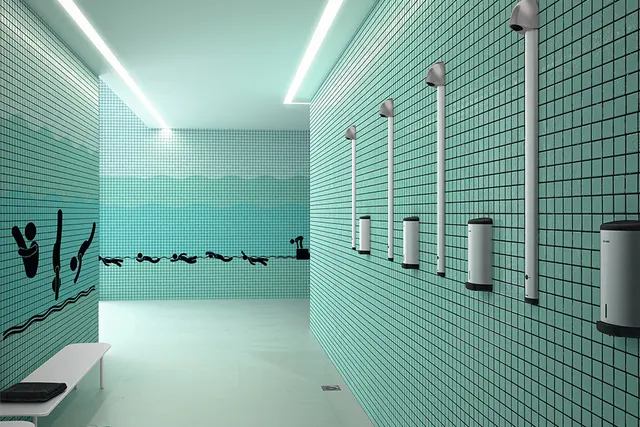
Bacteria and viruses can also potentially remain on the surface of a bar of soap. Liquid soap and antibacterial gel are therefore preferable and have recently become essential. For effective hand hygiene, the soap dispenser needs to be reliable and easy to use. It is also recommended that the push button on a mechanically operated soap dispenser be cleaned regularly. An electronic soap dispenser is therefore the ideal touch-free solution for maximum hygiene. DELABIE’s battery-powered dispenser works with both soap and gel, and delivers an optimal dose (0.8 ml) each time it is activated. To prevent users from getting carried away, the number of doses can be limited to a maximum of 7 per use. DELABIE soap dispensers are also easy to refill thanks to their wide opening.
Hygiene is likely to remain firmly on the public health agenda. Handwashing is an essential weapon in the fight against the spread of germs and bacteria. Those on the front line of managing public washrooms need solutions that provide users with hygienic, water-efficient and reliable handwashing facilities.
A business enquiry for Delabie? Get in touch
Companies in this story

Keep following this
Get an email when a new story is published. No account needed.
- SubjectSanitaryware
- CompanyDelabie