The impact of ventilation with 2-zone control
Text Wouter PolspoelImage Ventiline
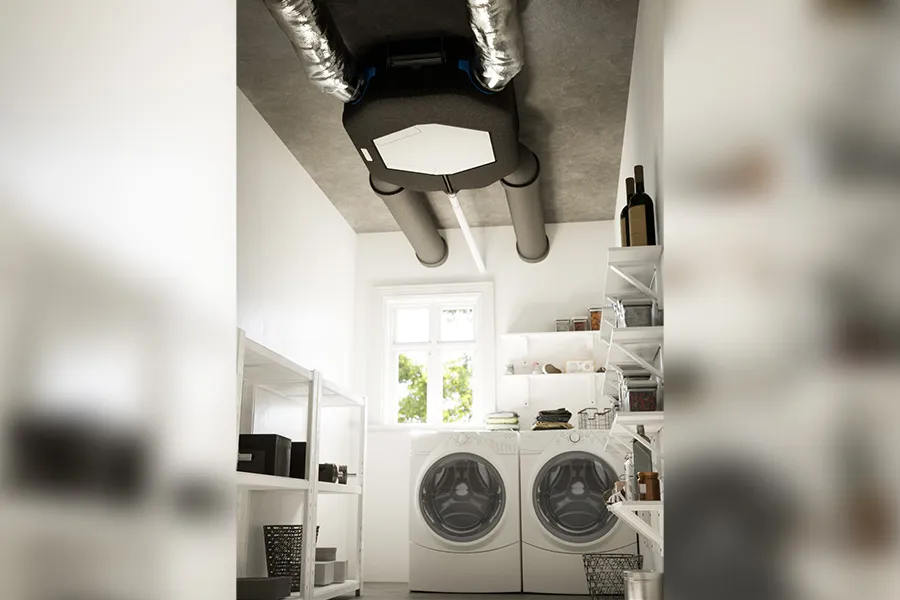
Ventilation is mandatory in every home that is newly built or renovated to improve its energy performance. A system with so-called integrated 2-zone control delivers optimum efficiency. But what exactly does 2-zone control mean? Ventiline, which offers systems of this kind in its extensive range of high-quality ventilation systems, answers the question in this article. The ventilation specialist also looks at the practical benefits of a 2-zone system.
A ventilation system with integrated 2-zone control optimally monitors indoor air quality by using sensors to measure CO2 levels and adjust ventilation when necessary. That last point, ‘when necessary’, is important for the system’s efficiency. A ventilation system with 2-zone control divides the home into a day zone and a night zone: the area where occupants spend their time during the day and the area where they are at night. It controls these two zones using separate dampers.
For example, if everyone is in the living room and the ventilation system with integrated 2-zone control detects CO2, which people exhale, only in that room, only that room will be ventilated. At night, when everyone is in the bedrooms or night zone, the reverse happens. This can save up to 40% on both heating and electricity compared with a ventilation system without 2-zone control. The latter distributes fresh air throughout every room in the home, including those where it is not temporarily needed.
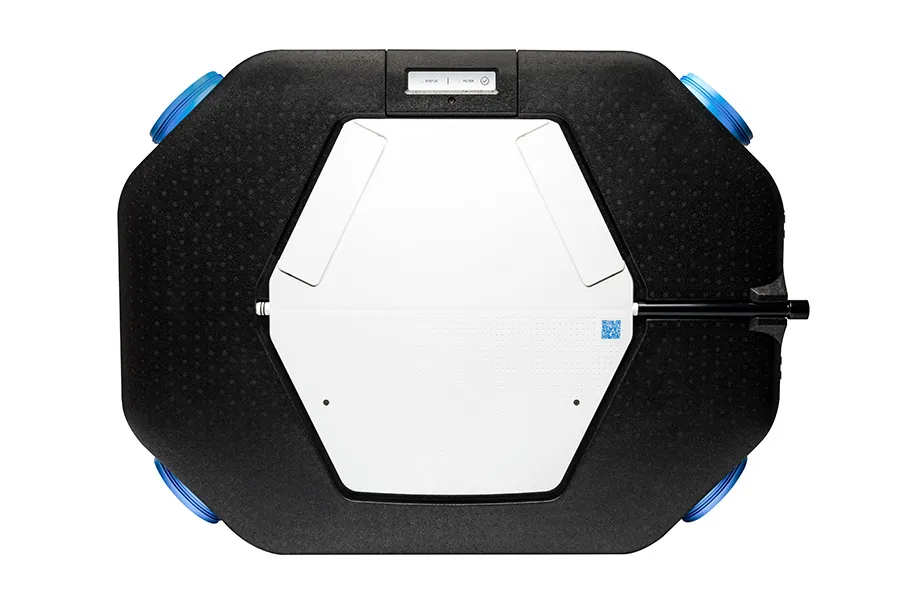
Acoustic comfort
A ventilation system with 2-zone control not only reduces energy consumption, but also improves acoustic comfort. This is important in new homes, which are well insulated, meaning that any noise generated indoors can be disruptive. Because this type of system ventilates only part of the home rather than the entire property, the airflow rate is lower. As a result, the motors do not have to work as hard, which has a positive impact on the ventilation system’s noise level. A reduction of up to 5 dB is realistic. Motor noise is traditionally the most common complaint about ventilation systems.
Correct system sizing is also important for good acoustics. A unit that has to run at maximum capacity to maintain air quality will be noisier than one operating at 70% capacity, just as driving at 70 km/h in second gear is noisier than driving at 70 km/h in third gear. The same applies to correctly sizing the ductwork: the right duct diameter reduces turbulent airflow noise, and adequate sound attenuators are also needed. These are considerations that also require attention in a ventilation system without 2-zone control.
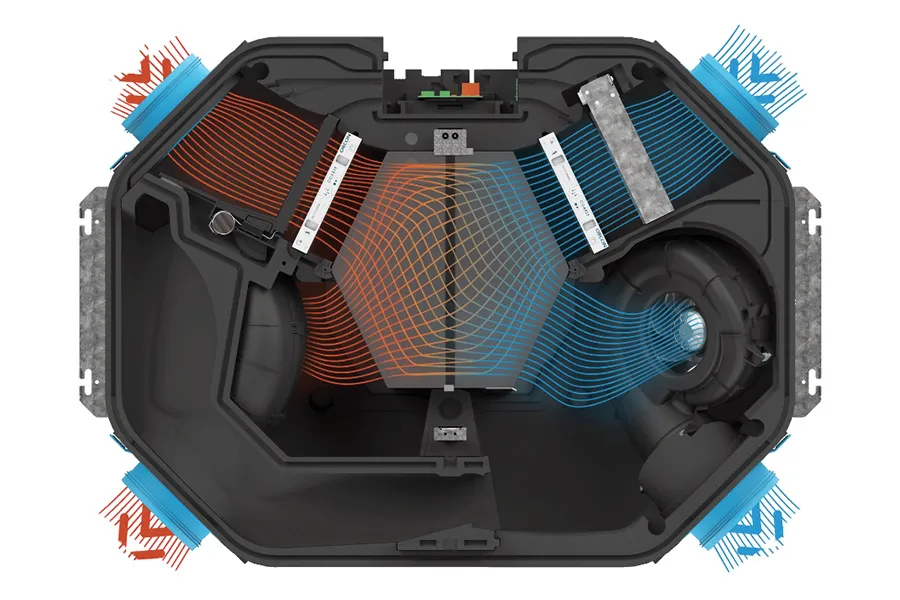
Positive impact on the E-level
A third major benefit of a ventilation system with 2-zone control is that it achieves a highly favourable reduction factor of 0.53, which helps lower the home’s final E-level. For a project involving the (partial) reconstruction of a building following demolition, the owner is entitled to a five-year reduction in property tax if a sufficiently low E-level is achieved. 2-zone control can make the difference between qualifying for the reduction or not, without the need for additional technology, apart from dampers on the ventilation unit’s supply ducts. Dampers have to be installed anyway.
Investing in a ventilation system with 2-zone control therefore pays off immediately. The homeowner first receives a reduction in property tax, which for a single year generally exceeds the additional cost of 2-zone control, meaning the investment is recouped within a year. And the reduction applies for five years! The ventilation unit will also use less electricity, while indoor air quality continues to be monitored 100% of the time. Investing in a ventilation system with 2-zone control therefore benefits both the user’s wallet and their health.
Een zakelijke vraag aan VENTILINE? Get in touch
Companies in this story

Keep following this
Get an email when a new story is published. No account needed.
- ThemeHealthy air and summer comfort
- SubjectVentilation
- CompanyVENTILINE