Demand-controlled ventilation ensures healthy indoor air after a complete renovation
Text Renson en Stephanie DemasureImage Renson
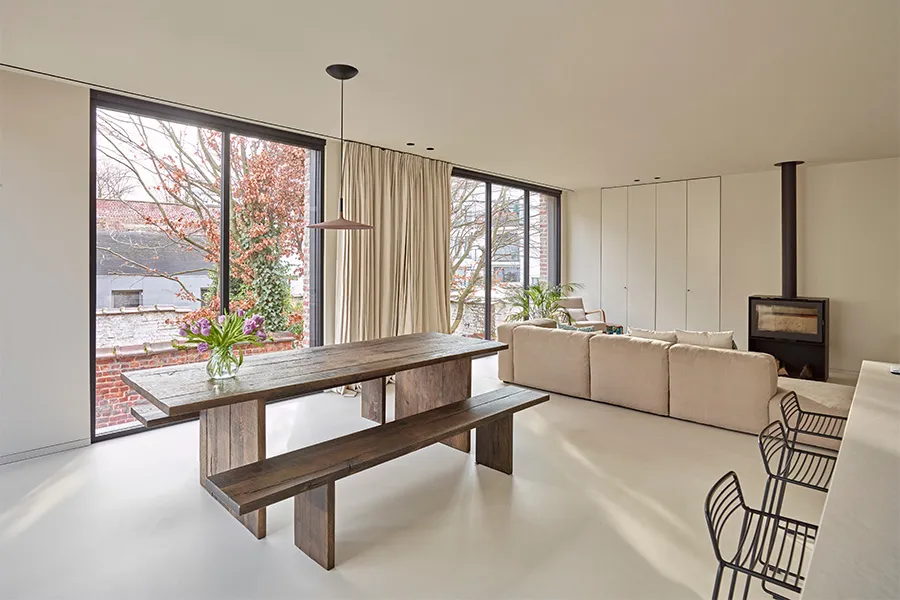
Former beer storage warehouse transformed into a modern city home
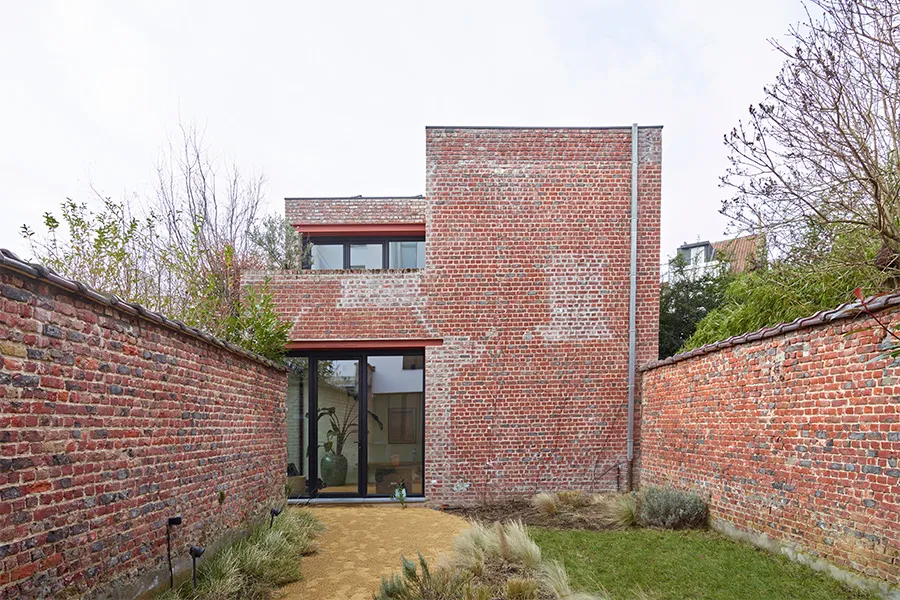
Right in the centre of Brussels, architect Laura Hottat’s family breathes healthy air every day in their fully renovated home. When transforming the former beer storage warehouse, the architect focused not only on a smart layout and optimal use of space, but also on creating a pleasant, healthy living environment. Renson’s Healthbox 3.0, a demand-controlled, energy-efficient ventilation system, makes a major contribution to the latter.
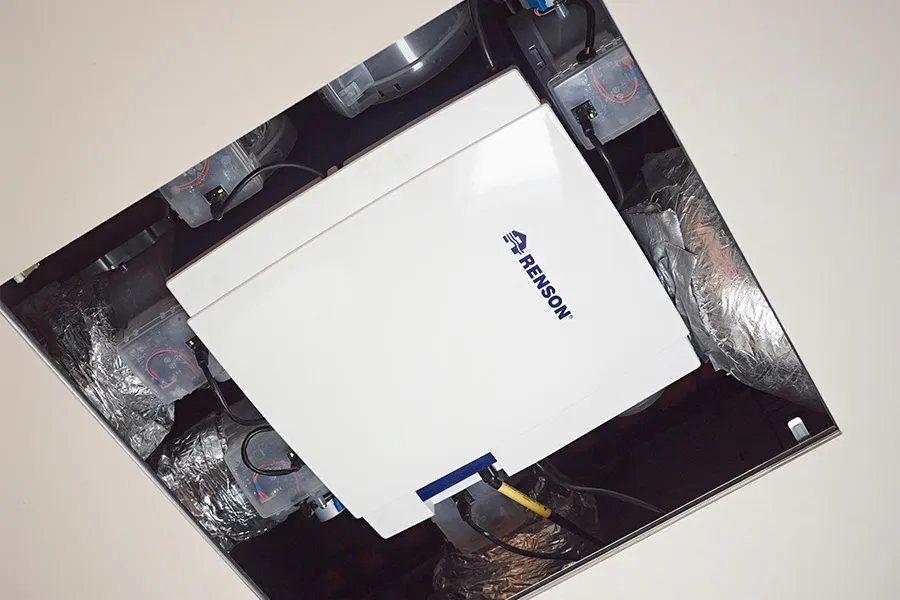
All that remains of the former beer storage warehouse in Etterbeek, in the middle of the city, are its foundations, floor slab and four external walls. These have been given a second life in the spacious, modern home designed for healthy living that Laura Hottat built on the same site. “The large bay windows on the first floor enhance natural light and the connection with the outdoors. At the same time, the blinds prevent overheating, while our ventilation system ensures healthy indoor air at all times,” explains Laura Hottat, describing her choice of Renson’s Healthbox 3.0.
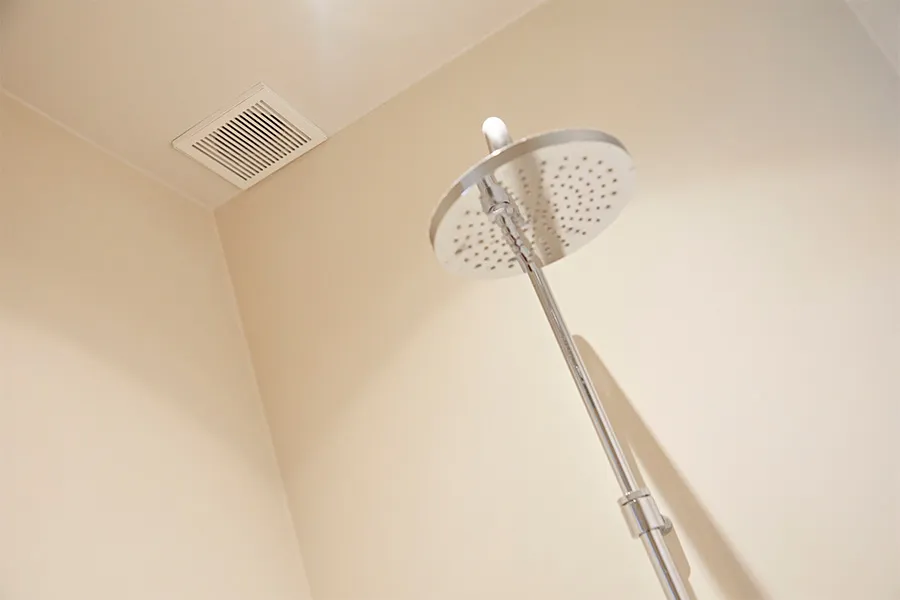
Natural supply, mechanical extract
As a demand-controlled system, the Healthbox 3.0 provides efficient, targeted ventilation in every room. “Airflow rates are controlled in real time based on current indoor air quality parameters. If the air quality in a particular room is good, ventilation there drops back to a base level. Conversely, the system increases its output in rooms where there is too much moisture, volatile organic compounds (VOCs) or CO2 in the air, for example. In other words, sensors continuously monitor humidity, CO2 levels, harmful substances and odours in the indoor air. Residents can use the easy-to-use app to check air quality in real time, as well as the ventilation system’s current operation and airflow rates in each room.”
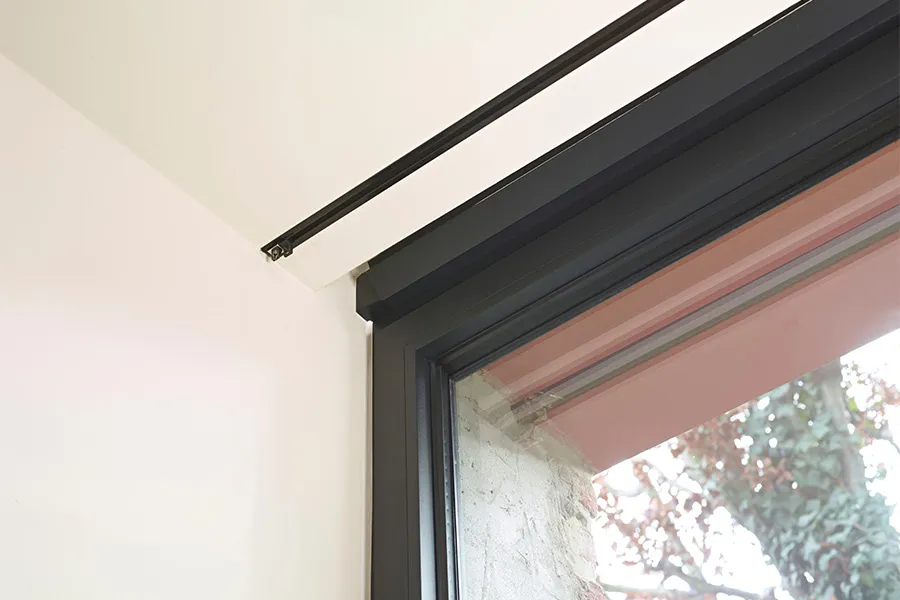
Easy installation for optimal integration
Integrating window vents and ventilation units seamlessly is much easier in a new-build project than in a renovation. Even so, everything in Laura Hottat’s home has been neatly and stylishly integrated. The Invisivent AIR Light window vents, for instance, have been fitted above the new window frames. “Their uniform colour blends in perfectly with the joinery. The window vents let in just enough fresh outdoor air to replace the stale air that is extracted.”
The light version of the Invisivent AIR window vents adds acoustic benefits to the thermal and energy performance of the ventilation grilles. They provide sound insulation of 31 dB. And because air is supplied naturally, cleaning or replacing filters is unnecessary, unlike with a fully mechanical ventilation system.
From a must-have to a worthwhile addition
The importance of ventilation in a well-insulated home is now widely recognised. This is also reflected in the legal requirement to install a ventilation system in new-build homes or as part of a major energy renovation. However, getting that message across is still not easy, the architect says: “A ventilation system is seen primarily as an extra cost. People building or renovating are often reluctant to set aside a budget for it. In that sense, it’s fortunate that it is compulsory. As an architect, of course, you have a duty to explain why ventilation is essential and should not be seen as a burden. That usually makes the difference between ‘it has to be done’ and ‘it’s worthwhile’. Once people have made that connection, the move to demand-controlled ventilation usually follows quickly. After all, who would say no to breathing healthy air everywhere, at all times, without wasting energy unnecessarily?”
Question about this story? Ask your question
Keep following this
Get an email when a new story is published. No account needed.
- ThemeHealthy air and summer comfort
- SubjectVentilation