Optimising heat pump efficiency with a compact buffer vessel
Text Sara DekeselImage Caleffi
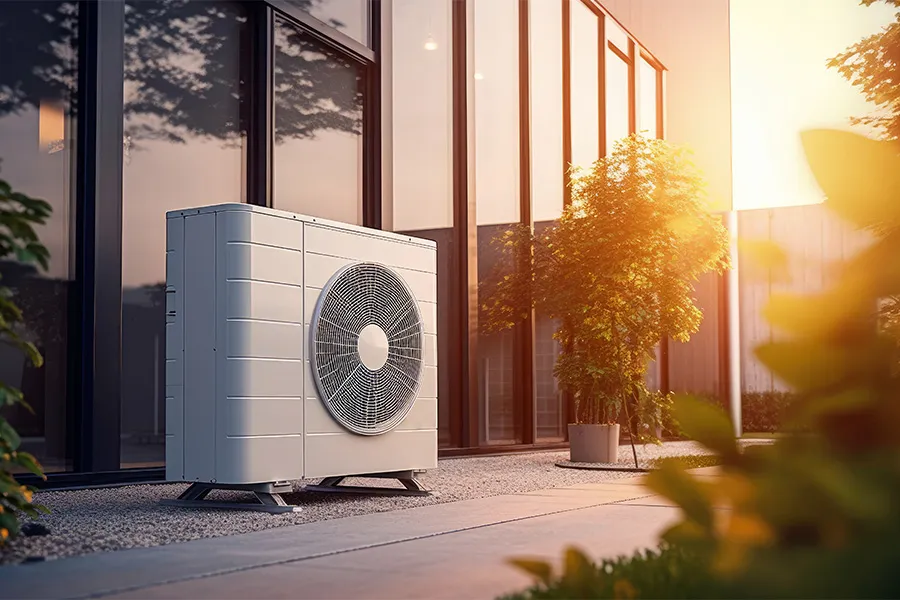
A heat pump is a sustainable investment. Its low energy consumption means it will pay for itself over time. Exactly how long this takes depends on the COP, or theoretical efficiency, the insulation of the property, the heat emission system, hot water consumption and the source temperature. But the components in the heat pump system also play a major role in its actual efficiency and service life. Caleffi knows this better than anyone. That is why the manufacturer is now offering a new range of buffer vessels.
Mauro Manfredi, Managing Director at Caleffi, explains the benefits of a buffer vessel: “A buffer vessel ensures there is sufficient volume in the system to store energy for the heat pump. This prevents short cycling. Sufficient volume is also essential for the defrost cycle of the outdoor unit on air-to-water heat pumps. To maximise the heat pump’s efficiency and service life, it is best to limit how often the compressor switches on and off. A buffer vessel helps by storing heating water for later use.”
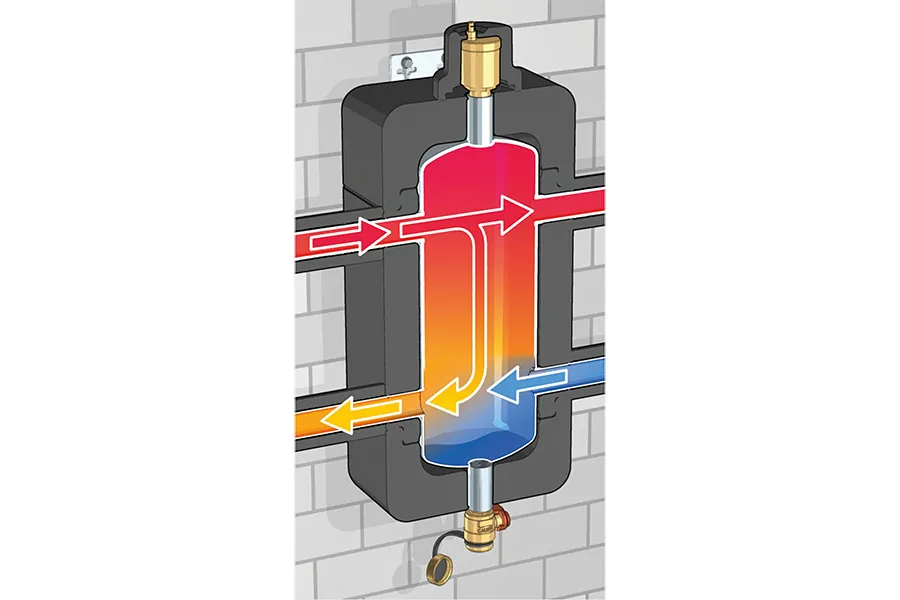
A buffer vessel installed in parallel also provides hydraulic separation between the primary and secondary flow rates. “This means the heat pump does not have to keep switching on and off when heat demand fluctuates. This extends the service life of the components and prevents current peaks. It also guarantees that there is always sufficient flow through the heat pump, so it can circulate water at the correct Delta T,” explains Mauro Manfredi.
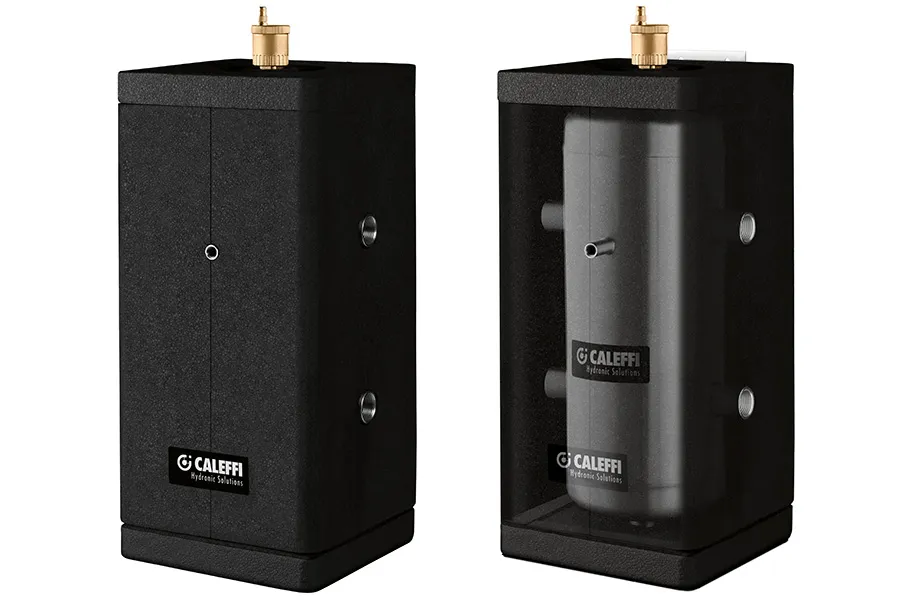
Designed for today’s needs
The new Caleffi buffer vessels meet today’s needs. They are suitable for both heating and cooling, which is increasingly essential as summers get hotter. “That is why our buffer vessels have a temperature range of -10 to +95 °C. They also come with vapour-tight insulation as standard,” says Mauro Manfredi.
The new buffer vessels have compact capacities of 15, 20, 25, 30 and 50 litres. This makes them suitable for current systems, which have smaller water volumes in the heat pump circuit. Their limited capacity also means they take up little space in the plant room. According to Mauro Manfredi, buffer vessels are often oversized. “That is a waste, because keeping the extra volume in the buffer vessel at temperature uses energy.
This challenges the old rule of thumb that around 20 litres of water should be available for every kilowatt of heat pump capacity. The rule was based on heat pumps with little or no modulation capability, whereas 2.5 to 3.5 litres per kilowatt is more than enough for today’s heat pumps. Caleffi has confirmed this with several reputable heat pump manufacturers.
Quality vessels, flexible installation
Made from high-quality stainless steel, Caleffi buffer vessels are resistant to corrosion, other forms of damage and contamination. “This is important for the vessel’s service life and prevents unwanted contamination from the vessel entering the rest of the system,” explains Mauro Manfredi. “The new buffer vessels also come with a MINICAL® automatic air vent. It removes trapped air from the system, which is also essential for optimal efficiency.”
The new Caleffi buffer vessels are easy to install horizontally or vertically, with an integrated bracket and connections at the top, bottom and on each side. “They can also be installed in series or in parallel, providing a suitable solution for every property,” concludes Mauro Manfredi.
Een zakelijke vraag aan Caleffi International N.V.? Get in touch
Companies in this story

Keep following this
Get an email when a new story is published. No account needed.
- ThemeFossil-free heating and cooling
- SubjectHeat pumps
- CompanyCaleffi International N.V.