National Heating Survey explained
Text Eva GoossensImage Daikin

‘Half of Belgian homes are ready for a heat pump’
One in two Belgian homes is already ready for a heat pump, but their owners do not seem to know it. This is one striking finding to emerge from the National Heating Survey. The survey shows that people need guidance and more information. This is a role for the sector, the media and government, including energy advice centres and energy coaches. The advisory role of the installer is also very important, as is that of the architect, who guides the client through both new-build projects and major energy renovations of existing properties.
Installatie & Bouw attended the panel discussion at which the results of the National Heating Survey, conducted by iVox on behalf of Daikin, were presented. Tom Defruyt of Eneco, Vincent Vancaeyzeele of Techlink, Sam Hamels of UGent and Luc De Smet of Daikin took a closer look at the findings. Although we are moving in the right direction, the transition to more sustainable heating needs to accelerate. Heat pumps must continue to replace traditional heating systems. Are homes and consumers ready? What are the challenges? Here is an overview.
Dispelling myths
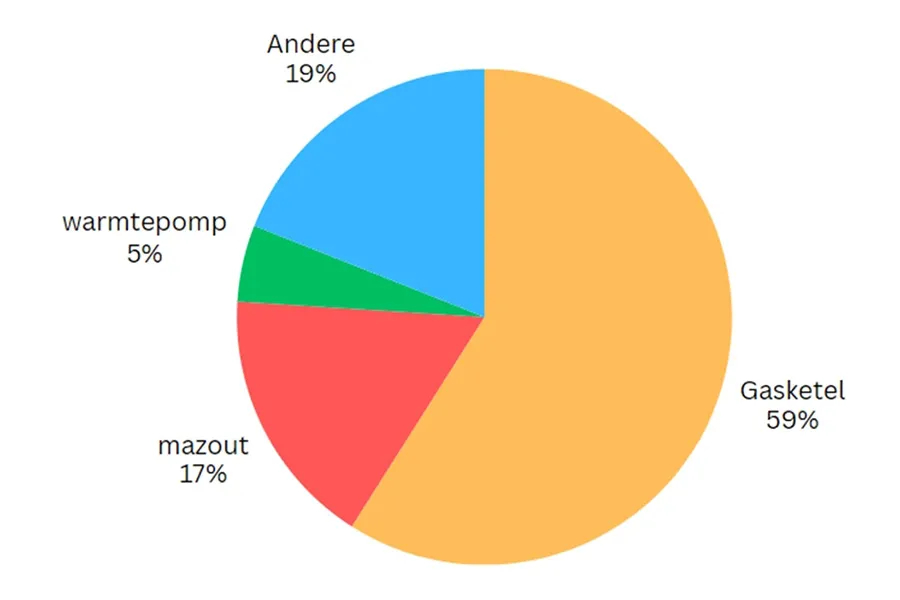
The latest survey results show that Belgians still mainly rely on conventional heating. For example, 59 per cent still have a gas boiler. Yet many Belgians recognise the importance of switching to renewable energy and smart technologies. A quarter say that their home needs an energy renovation, including extra insulation and a new heating system. However, there is still some uncertainty about which system to choose. Luc De Smet, Director Strategy & Innovation at Daikin: “Although one in four units installed for central heating is already a heat pump, the average Belgian still wonders whether their own home is suitable for one. However, when we look at the floor area, estimated energy consumption and stated level of insulation, we see that around one in two homes is ready for a heat pump.” Sam Hamels, Energy Economics Researcher at UGent, adds: “Several myths also need to be dispelled. For example, one in two Belgians still thinks heat pumps are only suitable for new-build homes.” Another myth is that underfloor heating is always essential with a heat pump. It is true that underfloor heating guarantees the highest efficiency. But if that is not possible, radiators, often even existing ones, are also an option. In short, it is essential to correct these misconceptions and raise awareness of the possibilities offered by heat pumps in existing homes.

A tax shift is needed
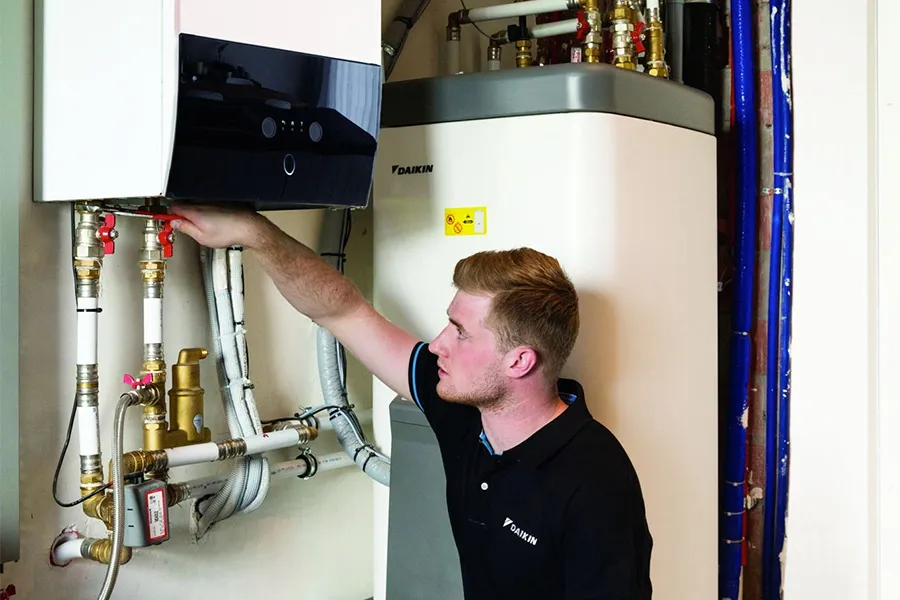
To make investing in a heat pump economically viable, account must be taken of the stated energy consumption, the floor area of the home and the quality of its insulation. A VITO study shows that, at current energy prices, a heat pump is viable in homes with a heat demand of up to 70 W/m². For smaller homes, the figure is as high as 100 W/m². Tom Defruyt of Eneco: “The 50-degree test can establish whether a home is technically ready for a heat pump. During a cold spell, set the boiler to 50 degrees Celsius instead of 70 or 80 degrees. If the home heats up, it can be heated by a heat pump. A test carried out last year found this to be the case for one in two customers.” So why are we still hesitating? Providing information is important, but the clearest way to convince Belgians is to show the obvious impact on their wallets. The main reason respondents gave for installing a heat pump is still to save money. “The high levies on electricity are where Belgium is falling short,” says Tom Defruyt. “To achieve a good payback period for a heat pump, the ratio between the price of electricity and gas needs to come down.” In practical terms, lowering levies on electricity or shifting them to gas could further accelerate the energy transition, as has also happened in the Netherlands. According to the panellists, this tax shift is bound to happen. It is important to make clients who are now investing in a new heating system for the coming decades aware of this.
Electricity demand and dynamic tariffs
Can the grid cope with this growing demand for electricity? Tom Defruyt: “On the one hand, investment in more Belgian solar and wind power is in full swing. On the other, we are introducing flexible control using dynamic tariffs to flatten peak demand.” Combining a heat pump with a dynamic electricity tariff and smart controls, which is already possible, seems a sensible option. This helps keep the grid balanced and saves customers even more. In short, the heating and energy sectors are fully committed to the energy transition and a greener future. It all comes down to providing information, offering guidance and working together so that end users can get on board without doubt or uncertainty.
Een zakelijke vraag aan Daikin Europe? Get in touch
Companies in this story
Keep following this
Get an email when a new story is published. No account needed.
- ThemeFossil-free heating and cooling
- SubjectHeat pumps
- CompanyDaikin Europe