A complete heat pump offering
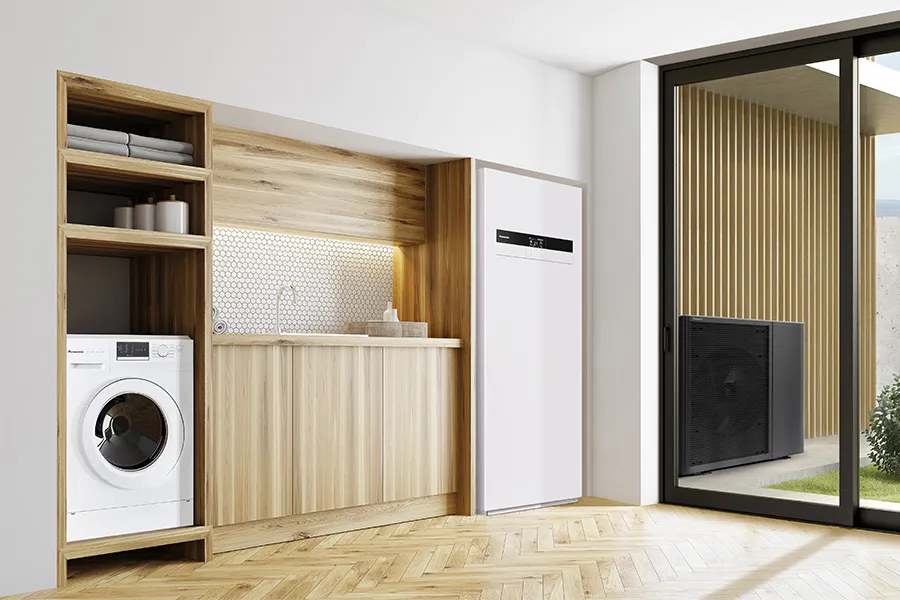
Panasonic employs more than 260,000 people worldwide. Japan has always been known for its technical ingenuity, but the brand owes much of its widespread recognition to consumer goods. Panasonic has also developed the latest generation of heat pumps, giving it what it describes as a strong technological lead in this field, and has brought a new range to Europe. Rudi Van Hemelrijck, sales manager at Panasonic Heating & Cooling BeLux, explains.
TV and audio, video, batteries, household appliances … Panasonic is, of course, a familiar name to us all. Meanwhile, driven by current developments in the climate and energy transition, the heating & cooling division has become the largest in Europe. With 11 other factories, mostly in Asia but also several in Europe, including in France, Italy and Czechia, Panasonic is closely attuned to regulations in this area. Panasonic Europe is positioning itself as a leader in research & development. Keeping a close eye on new environmental targets, Panasonic aims to reduce the energy consumption of all its products. The company is also active in energy generation and storage related to renewable electricity.
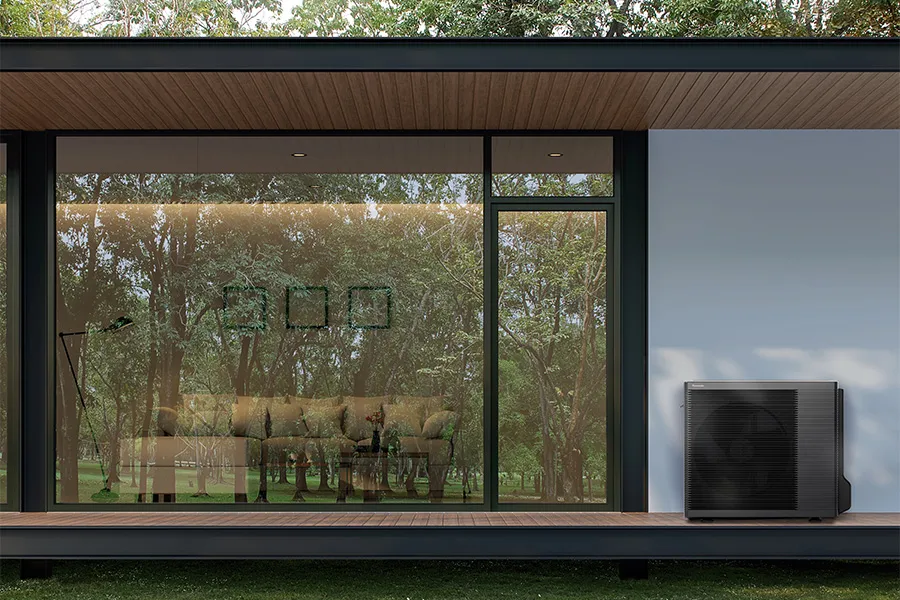
How things have changed
Rudi Van Hemelrijck: “When it comes to energy and heating, Belgium has come a long way, and suddenly everything is moving very quickly. Until just ten years ago, the gas distribution network still urgently needed expanding. Then came the requirement for heat recovery in ventilation systems in non-residential buildings. Under the Ecodesign rules, energy had to be recovered from exhaust air. In homes, too, type D balanced ventilation is increasingly replacing simple type C extract ventilation systems. This approach is now being extended to meet new energy challenges. Under pressure from Europe, the energy performance and indoor climate of residential and non-residential buildings are now also under discussion. The EPB scores of homes are steadily improving, and in Flanders performance was already better thanks to heat pumps. The switch from fossil fuels to renewable energy also brought about a major change, because it was no longer business as usual. For now, gas boilers still have lower upfront costs than heat pumps. If the EPB score is poor, however, a different approach is essential. Incentives on the one hand and penalties on the other remove the price advantage of the boiler.”
“The CO2 issue is now recognised worldwide, and we are aiming for energy neutrality by 2050,” Rudi Van Hemelrijck continues. “To achieve that, we need a major shift in the residential and non-residential new-build market, as well as in renovation. The latest generation of heat pumps and a decisive move to renewable electricity make success more likely. The aim is to achieve zero emissions from building heating by 2040, and to use only renewable electricity and completely phase out fossil fuels by 2050. The plan is also to phase out all fossil-fuel boilers within 10 to 15 years. A boiler has an average lifespan of around 15 to 25 years, so we will soon be writing a different story. Belgium is a gas country, after all, and the phase-out here will probably take longer than in some other countries where gas boilers are already banned. There is also the economic boycott of Russia by Europe in relation to gas imports. The war put pressure on prices, prompting yet another accelerated phase-out of fossil fuels. Europe is pushing the use of renewable energy, and Ursula Von der Leyen is already talking about 30 million electric heat pumps. But we are still a long way from that. Heat pumps are being encouraged at national and regional level through various policy initiatives. Keeping the power stations open for longer was also a necessity. It was a good plan, because we need that energy to run electric heat pumps and, of course, our electric cars. Many older homes still need to be renovated in the future, but a thorough renovation, as required by stricter energy legislation, is not possible everywhere. New-build is then the option. With all these efforts, we will become climate-neutral sooner.”
Top quality and technology
Panasonic already offers heat pumps that maintain their heating output down to an outdoor temperature of –15°C. The Aquarea T-CAP series, for example, delivers without any loss of capacity. It is not essential for new-build, but it is for renovation. Solutions are also available for higher outputs of up to 100kW. Rudi Van Hemelrijck: “The Aquarea monoblock L-series, which uses R290 refrigerant, can produce water at 75°C when the outdoor temperature is down to -10°C, and is connected on the water side via hydraulic pipework. This means that the pipework running from outdoors to indoors contains water. In a split system, the refrigeration pipework contains refrigerant. Split units are more compact and cheaper, but monoblock units are more efficient. For split installations, of course, the installer’s certification is important.”
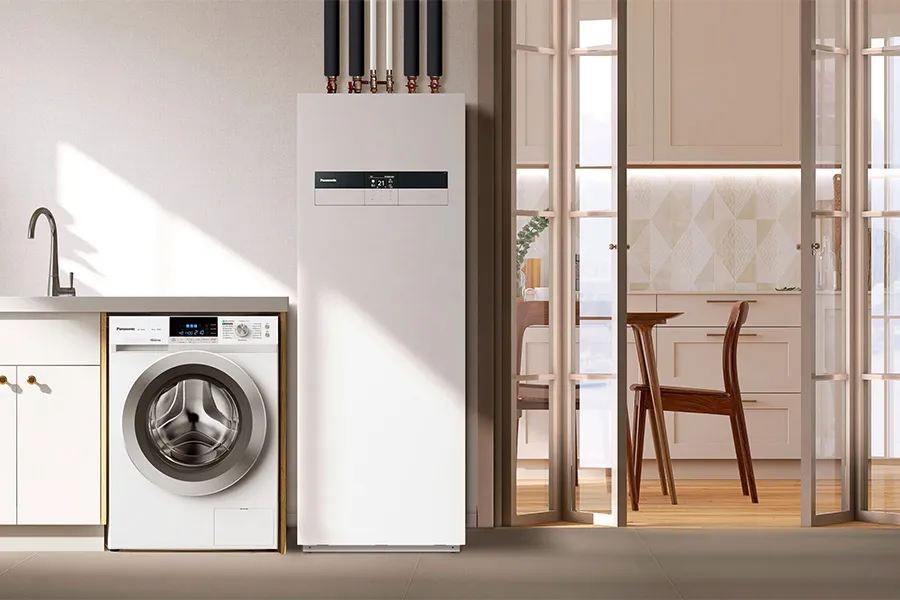
Air-to-air and air-to-water
Rudi Van Hemelrijck: “Air-to-air heat pumps provide heating, cooling and ventilation completely independently of fossil fuels. They are certainly energy-efficient, because ambient air is their main energy source, so their electricity consumption is very low. They can do this all year round. On an annual basis, all our air-to-air heat pumps deliver 4 to 5 times more energy than they consume, even in winter.”
“As for air-to-water heat pumps, the new Aquarea K & L generation has now been launched on the market. These new series are revolutionising design, efficiency, connectivity and sustainability, in line with our vision of a carbon-free society. The new K & L series take heat pumps to a new level of comfort and efficiency, with an impressive design and advanced features. The K-series is an excellent solution for new homes. The L-series, meanwhile, is the perfect solution for renovations where a high water outlet temperature is required. They are revolutionary in terms of design, efficiency, connectivity and sustainability. Easy to install and maintain, they also offer improved accessibility, usability and flexibility for indoor and outdoor units.”
Aquarea T-CAP, K-series and L-series
Rudi Van Hemelrijck: “The Aquarea T-CAP is ideal for renovation and new-build projects where higher, constant heating output is required. The heat pump maintains its heating capacity even at very low outdoor temperatures. Aquarea extracts up to 80 % of the required heat energy from the ambient air. This is used to produce hot water, for heating and, if required, for cooling.
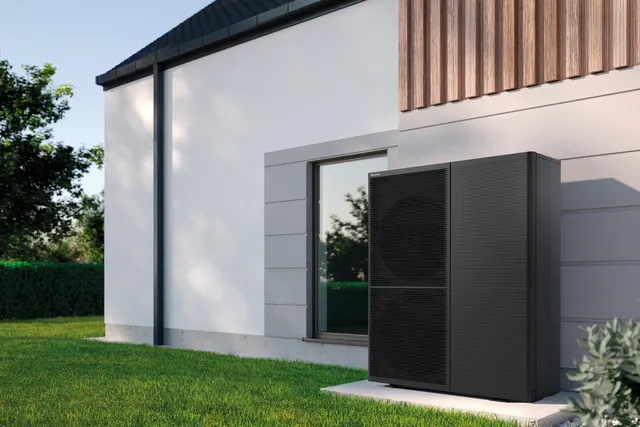
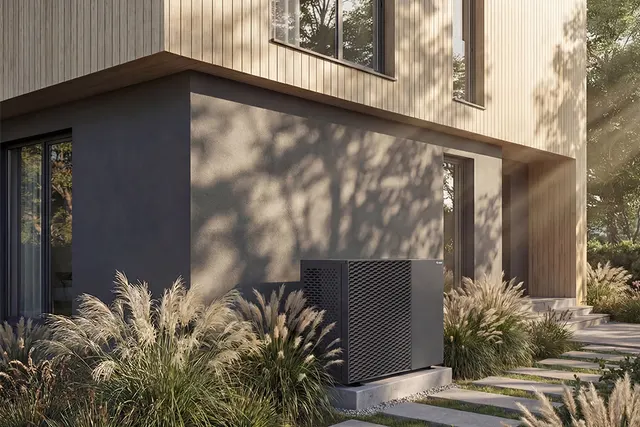
The K-series is the ideal solution for new-build. Rudi Van Hemelrijck: “This heat pump uses R32 refrigerant. The refrigerant connection between the indoor and outdoor units is retained, with water outlet temperatures of 60°C at an outdoor temperature of -10°C. The K-series is available in High Performance and T-CAP ranges for extremely cold conditions. The design has been improved, with a new indoor unit designed to fit perfectly into a home and a refreshed, architecturally sympathetic outdoor unit in anthracite grey. Connectivity is seamlessly integrated, with the option of integrating Wi-Fi into the indoor unit.”
Finally, the L-series is ideal for retrofit applications, when renovating a home with existing radiators. “Using the natural refrigerant R290, this heat pump has a hydraulic connection between the indoor and outdoor units. It delivers water outlet temperatures of 75°C at -10°C. It also produces domestic hot water at up to 65°C without heating for tank sterilisation. Here, too, the design has been improved in line with the K-series. The connectivity integration is seamless, and Wi-Fi connectivity is available,” concludes Rudi Van Hemelrijck.
Een zakelijke vraag aan Panasonic heating & cooling solutions? Get in touch
Companies in this story

Keep following this
Get an email when a new story is published. No account needed.
- ThemeFossil-free heating and cooling
- SubjectHeat pumps
- CompanyPanasonic heating & cooling solutions