The vast potential of direct current
Where does the electricity we draw from the socket come from? The difference between AC and DC (alternating current and direct current) is not something we think about every day, but UCLL Research & Expertise is devoting an ambitious research project to it.
The implications are far-reaching, because UCLL believes a global switch from AC to DC could be very interesting.
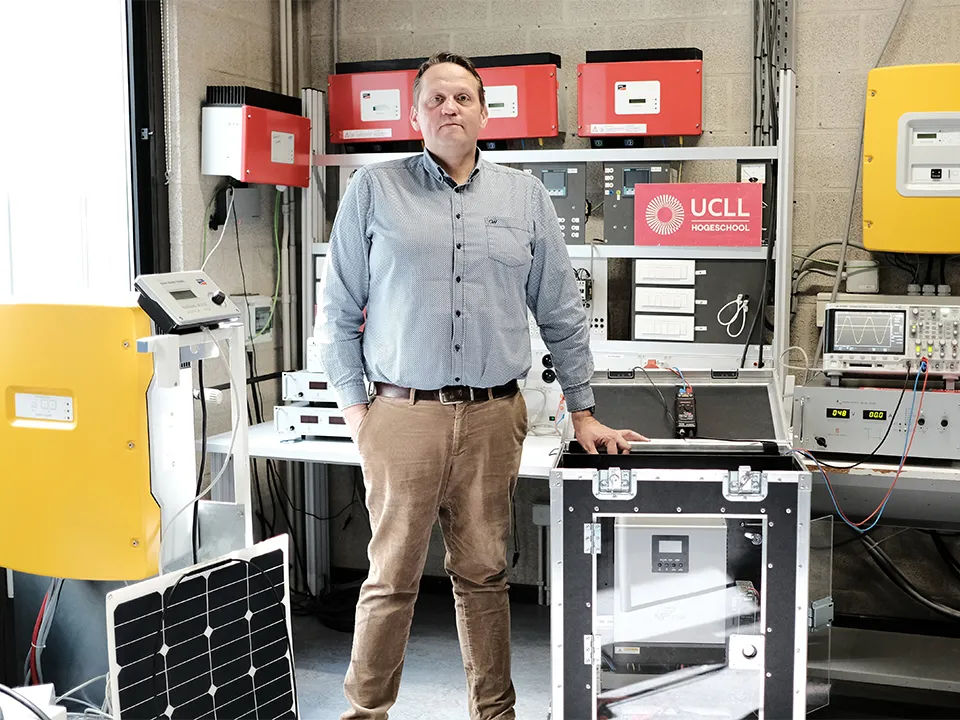
Research into DC technology is part of the Interreg ENLEB project. “With this project, we want to offer people a menu of the possibilities that today’s technologies can provide for energy-efficient new builds and renovations. DC technology can also play a part,” says Peter Van Hout, Research-Project Engineer Energy at UCLL. “We know AC because that’s what comes out of our sockets. But a few years ago, I started wondering whether it was all really right. Our world actually contains much more ‘DC’ than you might think, from solar panels to smartphones and electric cars.”
The Current War
First, a little history. The question of ‘AC or DC?’ has its roots in a fascinating rivalry between two scientists in the late 19th century: Thomas Edison and Nikola Tesla. Their story was made into the Hollywood film ‘The Current War’ a few years ago. “Electricity had been around for some time, but the challenge was getting it to people. Transporting electricity over thousands of kilometres was no mean feat,” says Van Hout. “Edison was the first to build a DC distribution network. But he had no way of stepping up the voltage. His 110 V was not enough for long cables. Edison therefore had to build many power stations just a few kilometres apart, which was naturally an expensive and unfeasible solution.”
Nikola Tesla won the battle when he developed AC machines, Van Hout continues: “At the time, stepping up AC was very straightforward. We still know the principle today as a ‘transformer’. Tesla could therefore easily step up his current to thousands of volts, making it possible to transport it over longer distances. His AC, or alternating-current, grid eventually became established throughout the world.”
‘Everything is in place’
The fact that today’s distribution network is built around AC is the result of historical developments. “Stepping up DC is no problem at all today. But the AC distribution network is an institution, embedded throughout the world. And building new infrastructure is expensive,” says Van Hout. Still, it is not impossible: “We could reuse the existing infrastructure. Everything is in place: the technology, the materials and the people. All that is still needed is international agreement on regulations and a change in mindset, among both ordinary citizens and policymakers.” There is also what Van Hout calls the ‘chicken-and-egg’ problem. “You can provide new residential areas with DC, but what if, for example, there is no fridge that runs on DC yet? But that is mainly a practical objection.”
The question remains: why should we switch to AC? According to Van Hout, there are several major benefits. Energy efficiency is one of them, he says: “DC electricity from solar panels, for example, is often converted to AC using an inverter, and then possibly converted back to DC if, for instance, you have a TV that runs on DC. That involves a lot of conversion steps, and every conversion results in losses.” Transporting the energy would also be cheaper: “You can save on raw materials and materials, because transporting DC electricity requires thinner copper cables.”
Mobile DC unit
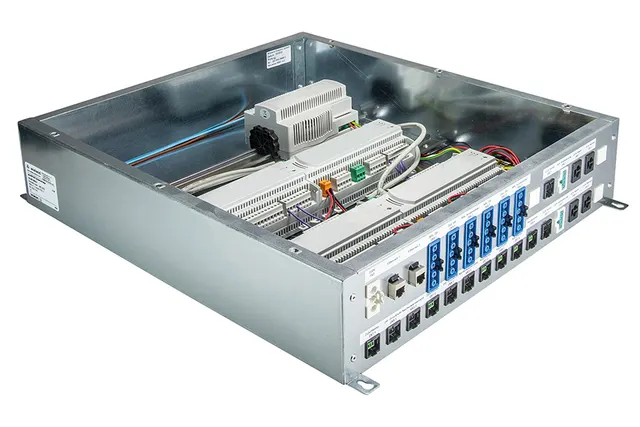
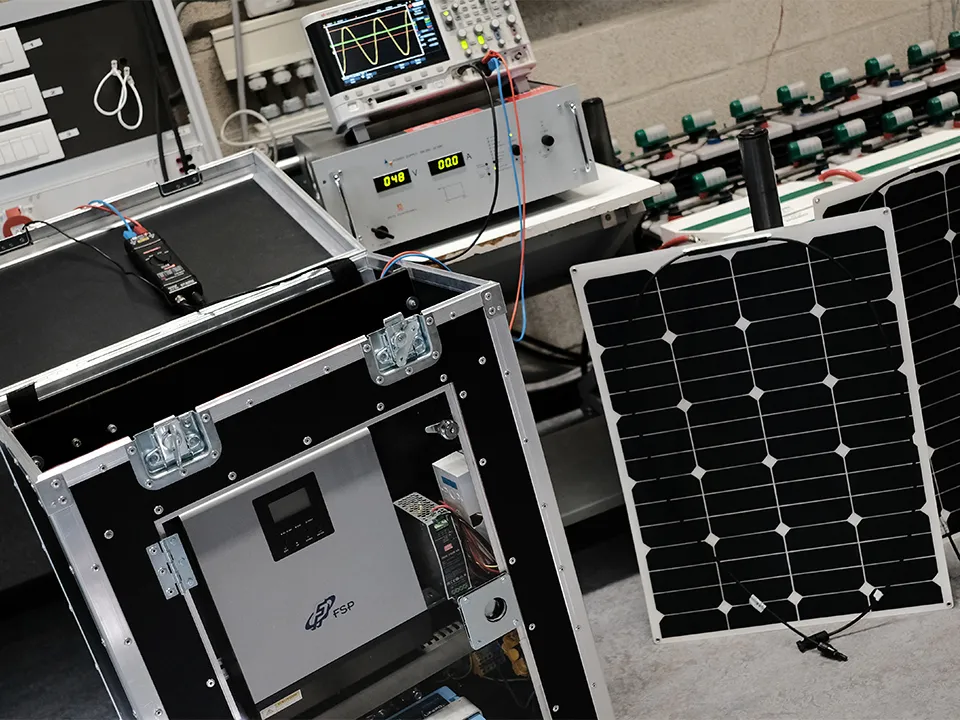
With a specially developed mobile DC unit, UCLL wants to give people a taste of DC and demonstrate the difference between AC and DC. “The unit itself doesn’t tell you very much. You mainly need to explain the story behind it,” says Van Hout. “Nothing changes for the end user. At most, they will get a new socket. At the same time, switching to DC can encourage users to think more rationally about energy. Installers will need training, because working with DC is somewhat different from working with AC in practice.”
For Van Hout, the switch to DC is part of an ambitious vision for the future of energy, and can help us spread energy consumption across the day in an increasingly electrified world. For the researcher, it is the starting point for a beautiful dream: “In the future, there may be cables carrying DC electricity directly from solar panels in Morocco to the other side of the world. Greater security of supply, energy shared around the world and stronger connections between us. We think that is an interesting prospect,” he concludes.
Peter Van Hout is conducting this research at UCLL Research & Expertise’s Sustainable Resources expertise centre.
Question about this story? Ask your question
Keep following this
Get an email when a new story is published. No account needed.
- SubjectElektroTech