Talk About Gas | Brussels
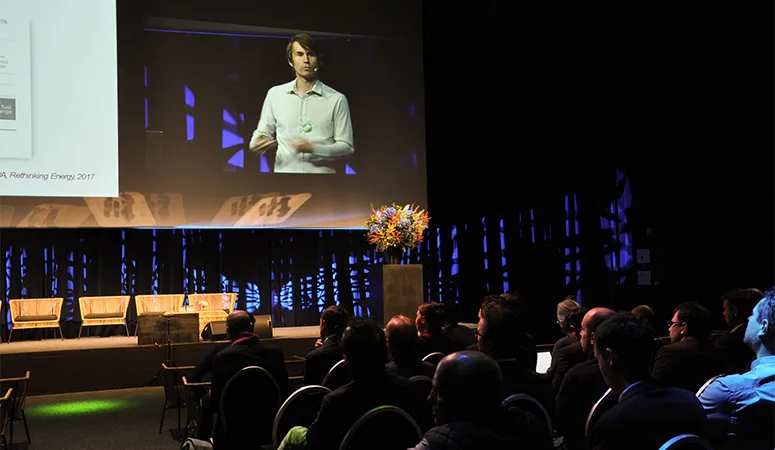
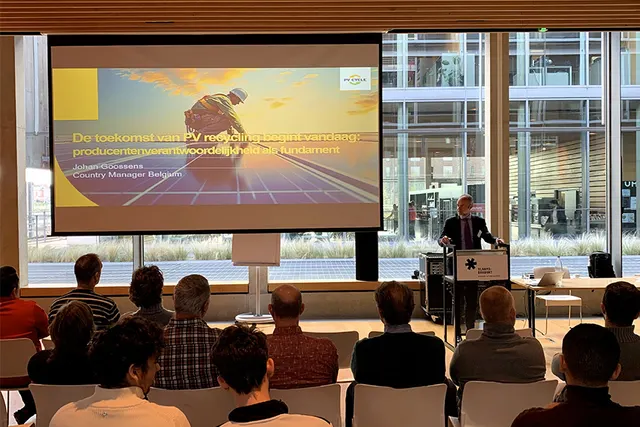
On 29 November, gas.be organised Talk About Gas (TAG) in Brussels for the first time, replacing Gasday: a conference where gas was quite literally discussed. TAG examined ambitious climate targets, how they could be achieved and what the future holds for gas. The conclusion: gas will continue to play an important role at least until 2050, and beyond.
‘Gas has an important role to play in the energy transition’
Discussion is only worthwhile if you have a clear picture of expected developments. That is why Gas.be asked British research firm Delta Energy & Environment to map out the evolution of Belgian gas demand up to 2050. At TAG, Stephen Harkin presented the findings for the residential market in Flanders.
1.75 million gas appliances
One striking conclusion is that the energy mix is unlikely to change much by 2050. Non-condensing gas boilers will disappear in the short term and new technologies will become more important, but gas will remain a key energy source. “A condensing gas boiler has a lifespan of around 20 years. Boilers installed in the coming years will therefore still be in place in 2050. As a result, gas’s share will peak in the 2030s before falling slightly. But by 2050, we expect there will still be around 1.75 million gas appliances in Flanders, mainly condensing gas boilers. We also expect 1.4 million electric heating systems, such as heat pumps.”
For Bram Claeys of the Organisation for Sustainable Energy (ODE), the findings of this study should set several alarm bells ringing. “Anyone who thinks that cutting gas consumption by 30% by 2050 will be enough is not taking the Paris Agreement seriously. Under this scenario, we are still heading for a temperature rise of 3 to 4 degrees.” Harkin agrees: “Only government intervention, such as lowering the price of electricity, and growing consumer awareness can bring about a change of direction.”
The gas sector wants to play an active part in the debate. Juan Vazquez of sector federation gas.be is convinced that gas will continue to play a role in the future. There is (sustainable) potential within the gas sector too, Vazquez says: “We have already succeeded in making gas more efficient and sustainable, thanks to the rise of condensing gas boilers. The share of fossil gas may well fall sharply after 2050, but innovative technologies within the gas sector are also gaining ground, such as biogas. There is no single solution today. We need a combination of all the solutions that already exist and those yet to be developed.”
Competitiveness
Peter Claes of industry federation FEBELIEC, whose members account for 30% of Belgian electricity and natural gas consumption, is also sceptical about the alternatives currently on the table. “It is not clear to me whether existing technology will enable us to decarbonise successfully and affordably by 2050. Moreover, there is a fine line between reducing CO2 emissions and undermining our competitiveness. Can we do everything possible to meet the climate targets if we see that other countries are not following suit?”
The uncertainty surrounding tomorrow’s energy supply was clearer than ever in the results of a poll: 50% of those voting at TAG do not believe we will have a renewable energy model by 2050. “The options are there, but they come at a considerable cost. Cost to the user remains a major barrier, and it will be important to understand consumers’ motivations well enough,” says Harkin. “There is still time for a little more discussion, but not for much longer,” concludes Bram Claeys.
Words Filip Van der Elst | Image TAG
Een zakelijke vraag aan Gas.be? Get in touch
Companies in this story

Keep following this
Get an email when a new story is published. No account needed.
- SubjectElektroTech
- CompanyGas.be