Energy storage: the electricity grid’s piggy bank
Text Wouter PolspoelImage AI
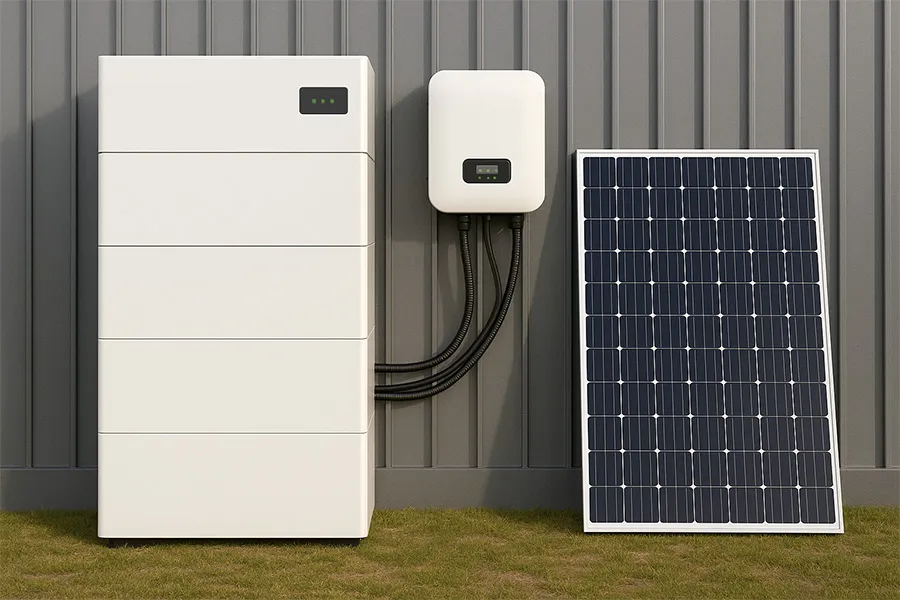
Solar panels on the roof, a heat pump in the basement and an EV charger on the driveway: the energy transition is sweeping through our buildings. However, this growing electrification is also putting ever greater pressure on the grid. Energy storage systems offer a solution in this context. When correctly integrated and controlled, they not only help stabilise the grid but also offer financial benefits to the owner. What are the challenges and opportunities for what, for several reasons, could be called the electricity grid’s piggy bank?
Electricity consumption in buildings has changed considerably over the past ten years. Total consumption is rising as heating, cooling and transport become electrified, while consumption patterns are also becoming more erratic. This is giving rise to so-called double peaks: one in the morning, when residents get up, and another in the evening, when they return home and cook, charge and heat at the same time. This poses a challenge for grid operators, as the grid is at risk of becoming overloaded early and late in the day, a phenomenon known as grid congestion.
The growing number of homeowners with renewable energy sources, which are naturally free to them, also creates another problem for grid operators: grid saturation. The reason is that these sources, solar panels being the best-known example, have variable output. They are largely dependent on weather conditions, which cannot be controlled. As a result, these installations sometimes produce more electricity than the building needs. Any surplus is then fed into the grid, if permission has been granted. In Belgium, permission is available, but in practice this rarely happens. However, if many owners of renewable energy generation technology feed electricity into the grid at the same time, the grid becomes saturated and there is nowhere for the power to go.
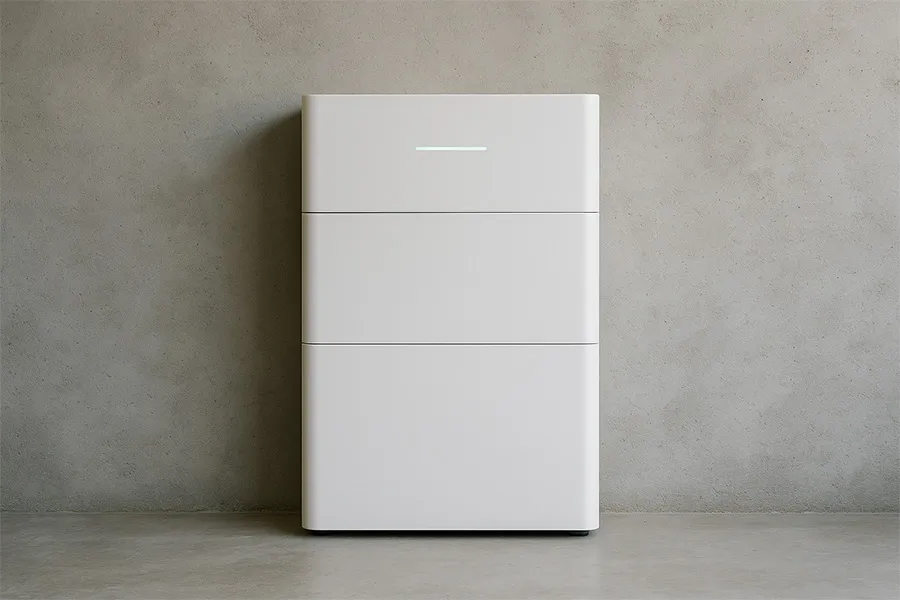
Home batteries, larger stationary systems and thermal storage
Energy storage systems, particularly home batteries and larger stationary systems, as well as thermal storage installations in the broader sense, can help alleviate both problems. Thermal storage systems convert electricity into hot water that can be used later, hours or days afterwards. On the one hand, these systems increase independence from the electricity grid, reducing the risk of grid overload. On the other, they also prevent grid saturation by temporarily storing surplus electricity for the energy storage system owner to use later, or to feed into the grid when it has capacity. Not every energy storage system can feed electricity into the grid, however, and approval is also required.
Put simply, energy storage systems bridge the gap between the generation and consumption of renewable electricity from on-site sources: they charge when there is a surplus and supply power when there is a shortfall.
Buildings where power cuts are not an option, such as hospitals, data centres and certain government buildings, have long used energy storage systems to ensure a reliable power supply.
More than one technology
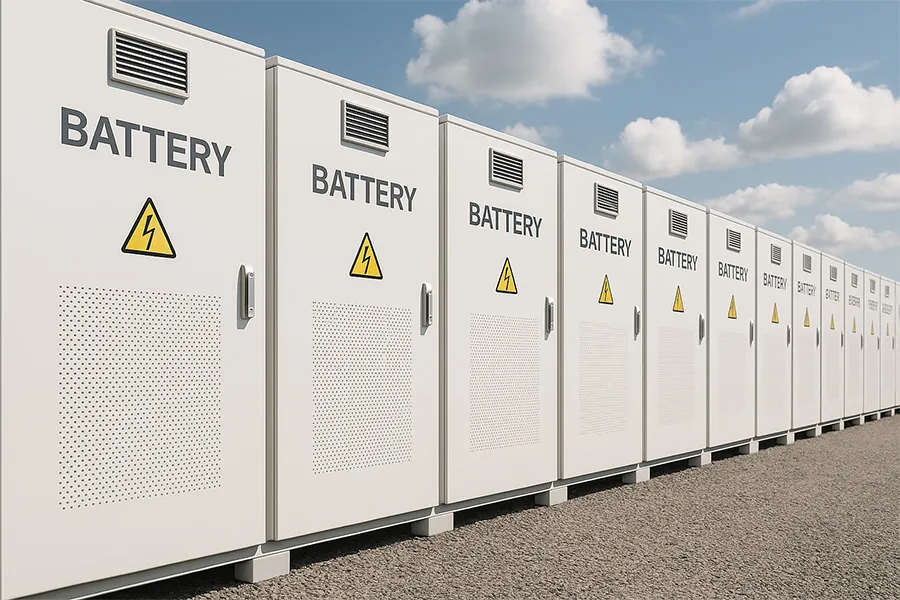
Most energy storage systems today use lithium-ion batteries, but so-called LFP batteries are also gaining ground. Sodium-ion batteries are expected to become more widespread in the near future. Each technology involves trade-offs in terms of cost, energy density, service life, recyclability and safety.
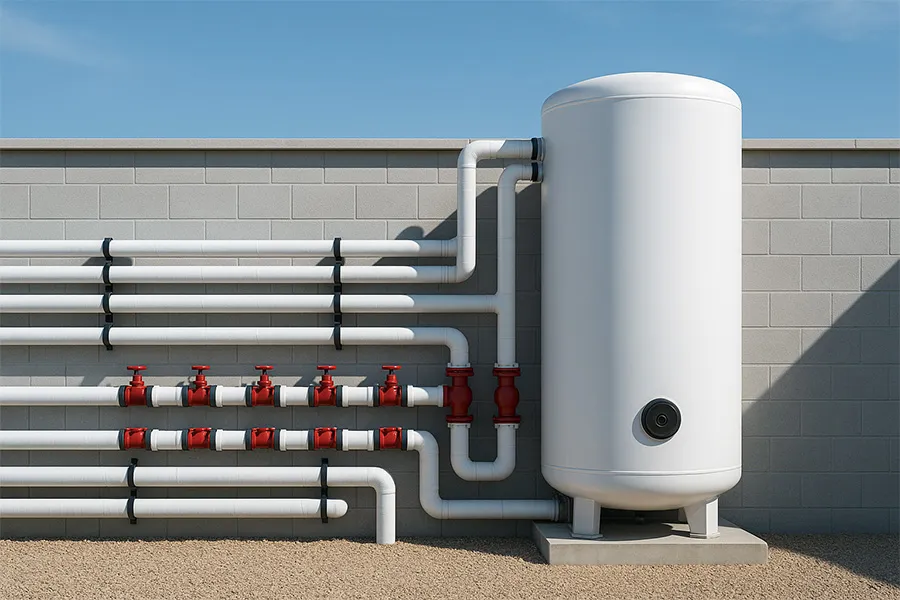
Thermal storage is another option. In buildings with heat pumps, it is often more efficient to store surplus energy as hot water rather than as electricity. The water can be stored in buffer tanks, so-called phase change materials (PCMs), or even in the building structure itself using thermally activated building systems. Electricity can also be used to chill a tank of water. The chilled water can then be used to cool the building without consuming more electricity.
The role of software in energy storage systems should not be underestimated either. Without intelligent controls, such a system will never reach its full potential. Algorithms, apps and control systems determine when best to charge or discharge, and whether this should be based on solar availability, electricity prices or grid load.
Plenty of choices for installers
Energy storage systems offer installers a promising but complex market segment. Expertise is always crucial, of course, but particularly so when it comes to energy storage systems. The choices installers have to make are rarely straightforward.
For example, they need to calculate how much storage the building really needs, based on consumption and the client’s ambitions, and decide which inverter and control logic to use. Useful tools are already available for virtually simulating generation and consumption, but experience and insight remain indispensable. This is particularly true when storage is combined with other technologies such as EV chargers, solar panels, heat pumps and controls based on CO₂ levels or occupancy.
Installers also need to take regulations into account: can the system be installed anywhere? Does it need to comply with fire compartmentation requirements? Is notification required for larger installations? What are the recycling obligations? …
Significant growth potential in commercial applications
Although the residential market attracts most media attention, energy storage systems will become increasingly important in commercial and industrial applications. Think offices, shops, schools and semi-industrial sites. These often have high consumption, can generate substantial amounts of solar energy and have a profile well suited to energy management and so-called peak shaving: smoothing short-term power peaks by temporarily drawing additional energy from a battery or other storage medium, thereby reducing the load on the grid.
Some companies are joining energy communities or energy cooperatives, where storage is used collectively. Temporary applications are also gaining ground, such as mobile batteries on construction sites or at events.
Points to consider for the future
One interesting trend on the horizon, driven by the growing popularity of energy storage systems, is the management of energy storage systems of a certain scale by Belgian grid operators, made possible by the Flemish Action Plan for Flexibility, to ease pressure on the grid. In this scenario, these systems will no longer be standalone solutions, but active links in a larger energy system.
Electricity tariffs, including those for feeding power into the grid, will also become more closely tied to energy storage systems. Finally, regulations and subsidy schemes for energy storage systems will continue to evolve.
A means, not an end
In short, it is clear that energy storage is not an end in itself, but a means of making even better use of self-generated renewable energy, thereby reducing energy bills. Grid operators are also embracing the technology because it helps prevent overload and saturation of the electricity grid.
Together with renewable energy sources, electric HVAC systems, EV charging infrastructure and smart controls, energy storage systems will increasingly form the backbone of energy-neutral buildings. Installers who can master this integration, both technically and in an advisory capacity, will undoubtedly have an edge.
Question about this story? Ask your question
Keep following this
Get an email when a new story is published. No account needed.
- ThemeFossil-free heating and cooling
- SubjectElektroTech