Building management takes off into the future at Liège Airport
Text Valérie CouplezImage Philippe Van Gelooven
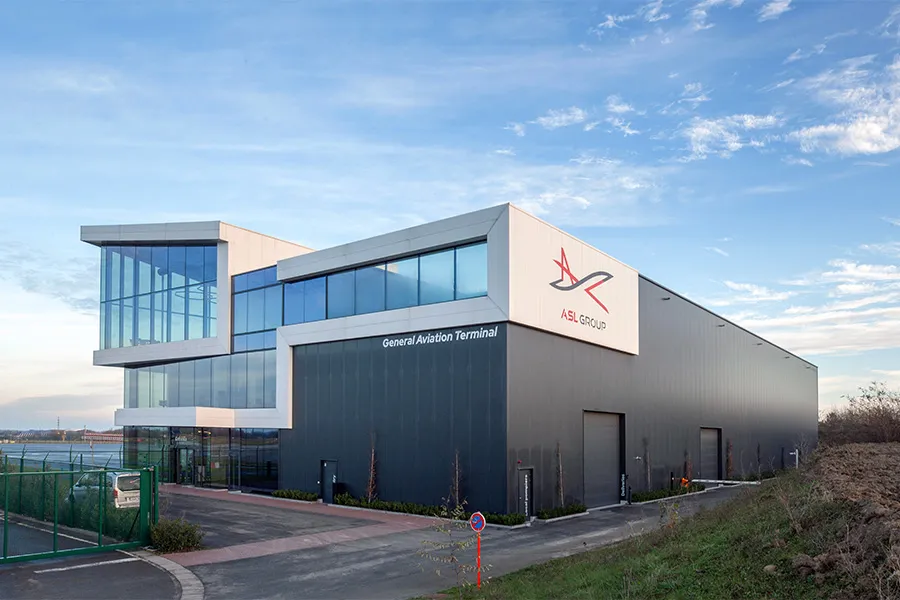
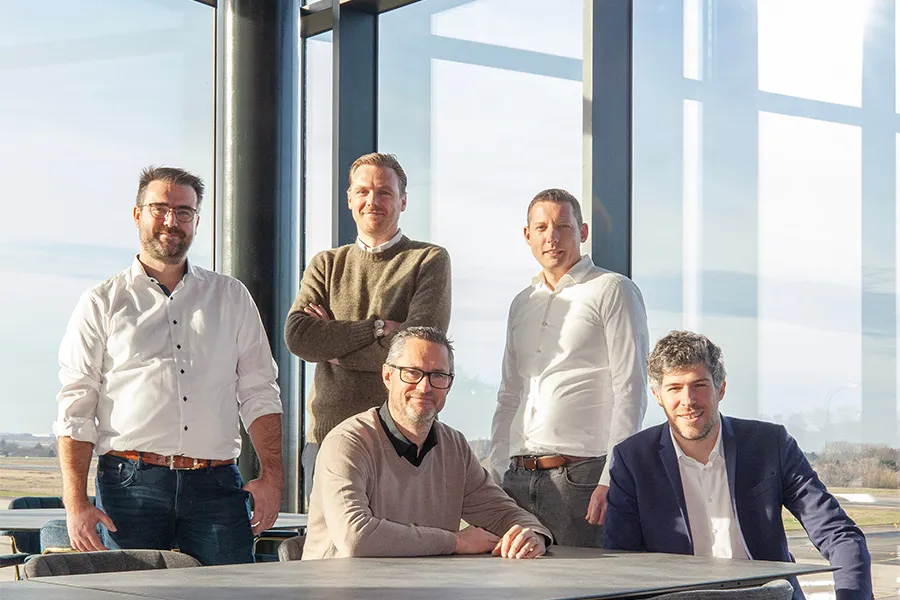
From smart building to autonomous building. The stuff of science fiction? No, reality. Even in Belgium. In Liège, ASL Group delivered a technical tour de force of this kind. Not to impress visitors, but to support its business activities. These involve operating private flights, for which ASL Group needed a building that was open 24/7. Beckhoff solution provider Boolean helped build the solution.
“We have just one permanent member of staff here, Hetty,” begins Raf Weerts, facility manager for ASL Group. “The rest of the staff are freelancers who work on call, whenever an aircraft arrives or departs. To avoid burdening them with lengthy procedures for starting up all the systems, the building does it all itself as soon as someone comes in. Once there is no more movement in the building, all the systems, ventilation, lighting, heating and so on, automatically go back into standby. This allows us to work very energy-efficiently. That may sound like greenwashing in a sector considered polluting, but wherever we can, we try to put sustainability first.”
Seamless integration for autonomous operation
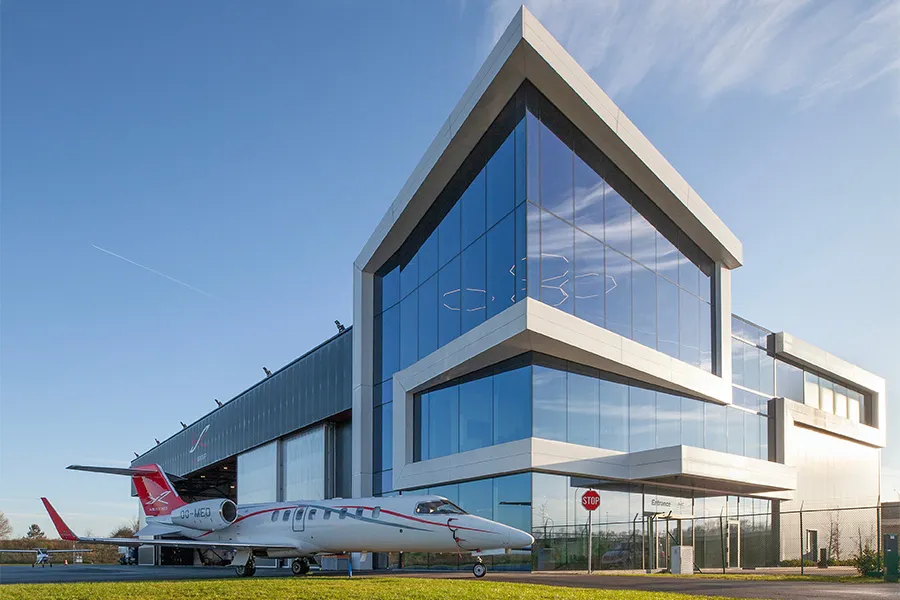
The state-of-the-art building was developed following a tender issued by Liège Airport itself. It was looking for a partner to build and operate a new General Aviation Terminal. “And we were looking for a base in this region. A perfect match,” recalls Raf Weerts.
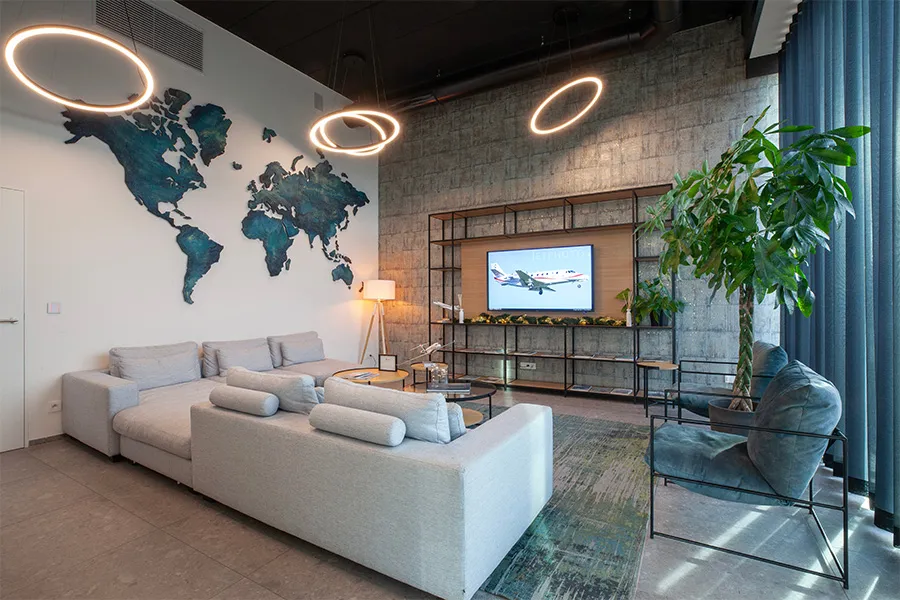
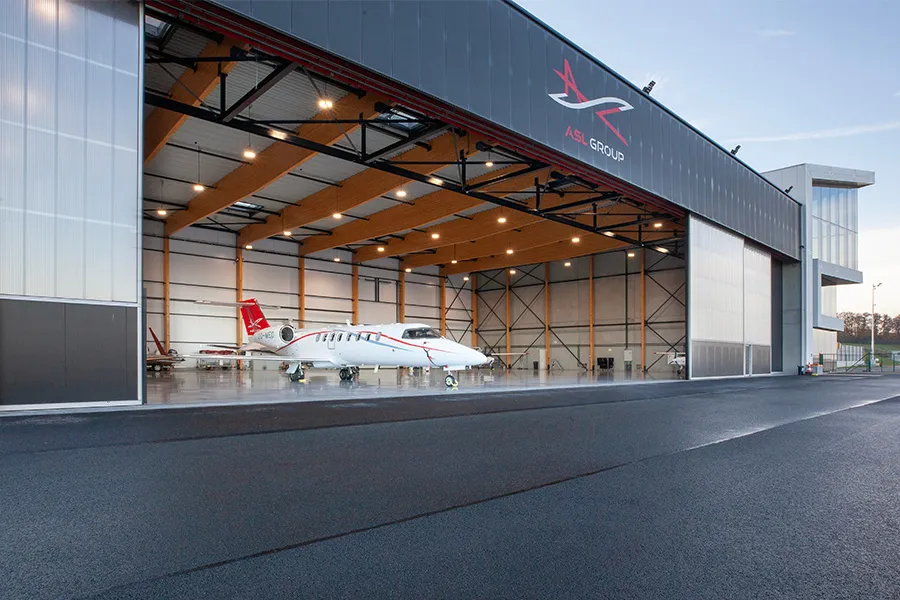
ASL Group’s concept won the tender. With 900 m² of office space and an aircraft hangar measuring 2,250 m², the building is a pleasure to behold. Inside, the spacious lounge can accommodate groups of up to 35 people, while the intimate lounge can welcome 3 to 4 people at a time. “It certainly has style,” laughs Raf Weerts, “but its real strength lies inside. The autonomous operation we gave it by seamlessly integrating all the systems is formidable.”
As if by itself
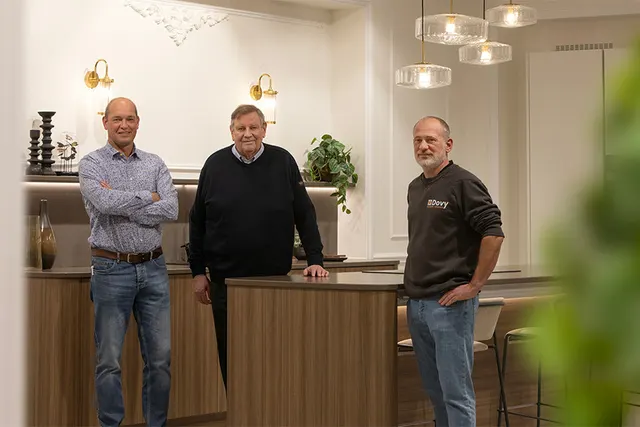
ASL Group did not deliver the project alone. Thanks to previous professional collaborations, Raf Weerts knew just the right partner for the job: Boolean, led by Chris Briers and Thomas Nagels. “We were immediately on the same wavelength. Beckhoff technology would be the backbone of the entire system. You need open technology that can bring together all those different signals and protocols.”
And there are quite a few of those. Beckhoff’s TwinCAT platform coordinates all the HVAC systems, lighting, electricity, EV charging points and even the audio system. “Only access control remains in the hands of the airport. Any other platform would have required far more connections and workarounds. With Beckhoff, it all happens automatically,” says Chris Briers.
The building as a living lab
The biggest challenge for the Boolean team was creating the ease of use ASL Group had in mind. “Raf’s input was essential. He has a very clear idea of what a technical installation should look like, and a vision for how the building should operate. Turning that into a flowchart gave us a guide to work from. If this happens, the system should respond in this way. That flowchart was the starting point for programming the software,” explains Thomas Nagels.
At the same time, Boolean built in plenty of flexibility. “We also wanted to incorporate feedback from the end user into the project, as well as allow for the integration of new technologies and the testing of new ideas. A living lab, as it were.”
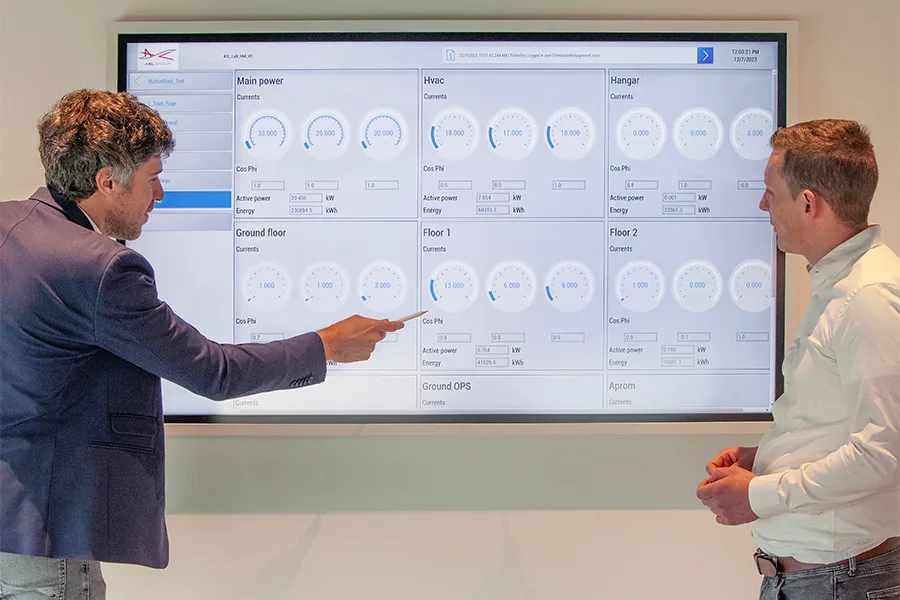
“All the systems are monitored, too. If we see something that isn’t working quite as it should, I can simply log in, identify the problem and solve it myself from behind my keyboard, or explain to the people on site what needs to be done,” adds Raf Weerts.
Own platform
A key part of the setup is Boolean’s own platform, Boolytics. Thomas Nagels explains: “It allows us to capture and log data in real time. Web-based dashboards make it highly visual and therefore easy to find data points. The tool also offers enough flexibility to strike a balance between the ease of use the customer wants on the one hand and the ability to delve deeply enough into the analysis on the other.”
Raf Weerts configured the specifications himself. “Everything is monitored so closely that I’ve usually called them before they’ve even noticed a problem on site. If the heating isn’t working properly, I can intervene and take action before the building cools down,” he says.
PLC at the heart of the system
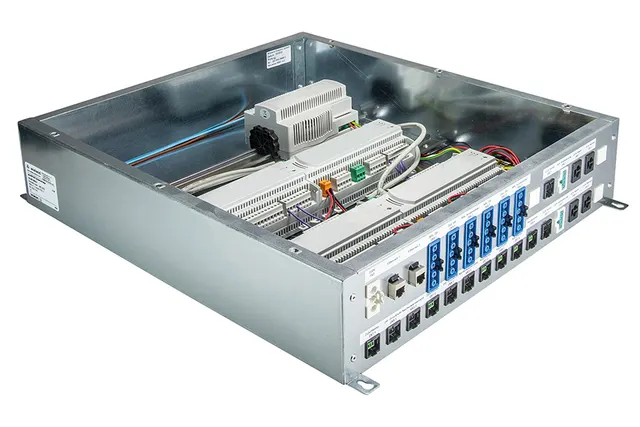
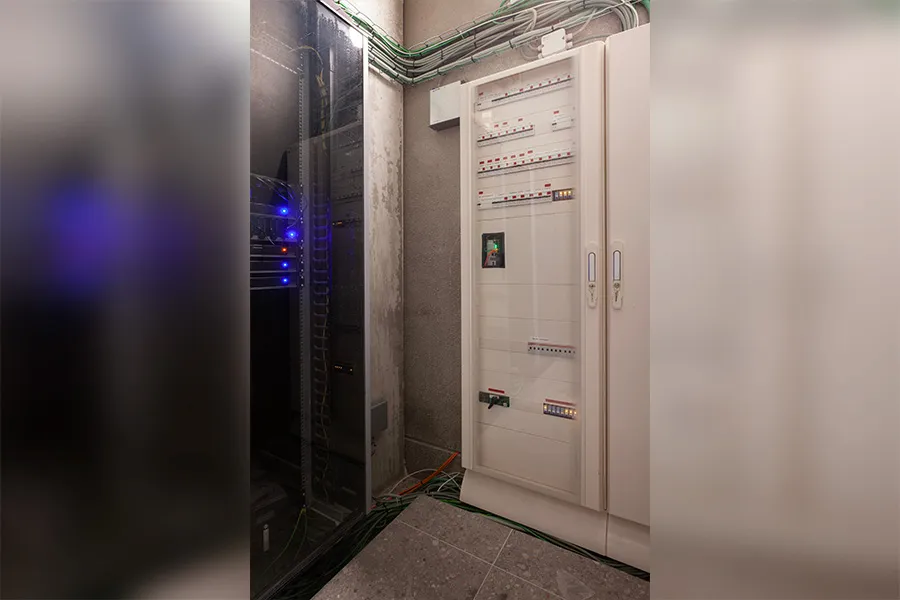
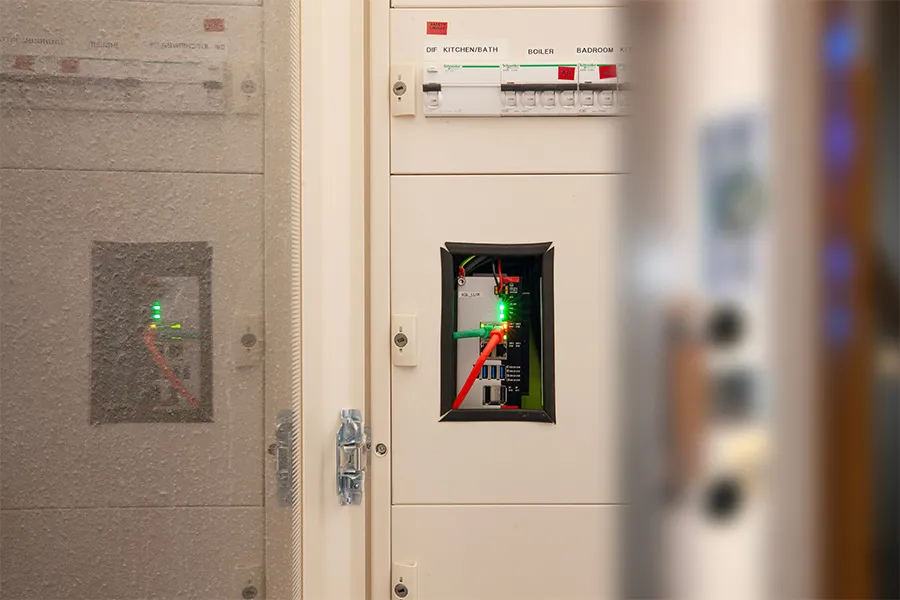
The heart of the entire installation is the Beckhoff C6030 PLC. It receives most of the data via bus systems or IP communication, then brings it together in TwinCAT and passes it on to Boolean’s software. “That openness on both sides makes Beckhoff the right technology partner,” sums up Chris Briers.
And not just in Liège, either. As facility manager, Raf Weerts is working to get all the buildings running on Beckhoff technology. “Not every building has the same systems, but you can standardise how they operate and give them all the same structure. That makes life so much easier for the end user. It also creates opportunities to share energy, for example. By enabling the PLCs at different sites to communicate, you know when you can switch on the high-consumption equipment.”
2030 standards
In terms of energy performance, then, the building is well ahead of its time. “We followed the 2030 standards for insulation, glazing and so on. You only get one chance to insulate, so you may as well do it properly,” says Raf Weerts. “That means the entire building can be kept at the right temperature with a VRF heat pump with an output of 32 kW. Especially as we don’t need 23 °C. Guests only need to spend 5 to 10 minutes inside. By then, the captain has usually already announced that the aircraft is ready for departure. So they keep their coats on. But of course, we make sure it’s comfortable for the staff. If they press the boost button, the desired temperatures are reached quickly.”
Going the extra mile with controls
And it is in this area, working as energy-efficiently as possible, that all Boolean’s programming work really pays off. Chris Briers says: “We’ve gone a long way with this. We threw out all the manufacturers’ standard control systems. We configured and parameterised everything ourselves.
“This building allows us to prove, in black and white, that we’re using less energy, because we monitor it so extensively, including with Beckhoff terminals. We even track the intermediate steps in the control sequences. That lets us examine the process in great detail and see where optimisation is possible,” says Thomas Nagels. “For example, we’ve already done a lot of experimenting with the heating curves. What happens if we tweak those parameters? What does it deliver in the end? Is it worth the effort?”
Open to every possibility
As a Beckhoff solution provider, Boolean needed very little support. Nevertheless, Chris Briers is keen to highlight the service. “It’s very easy to access. If you do run into a challenge, there’s always someone you can speak to who can help you move forward. The longer you work with the technology, the less help you need. But it’s there when you need it, including to introduce you to new technologies and products. What’s remarkable is that, despite all the innovation, Beckhoff also excels in stability: I can still get spare parts for solutions I installed more than ten years ago. It’s robust, industrial technology. The same PLC that manages this building could control a production process. There’s no shortage of computing power, so in the long term, this building can go in any direction.”
Een zakelijke vraag aan Beckhoff Automation? Get in touch
Who worked on it
General Aviation Terminal in Luik
- TwinCAT-platform
 Beckhoff
- bouw en uitbatingASL Group
- solution providerBoolean
- aanbestedingLuchthaven van Luik
Keep following this
Get an email when a new story is published. No account needed.
- ProjectGeneral Aviation Terminal
- ThemeSmart building integration
- SubjectElektroTech
- CompanyBeckhoff Automation
- CompanyASL Group
- CompanyBoolean
- CompanyLuchthaven van Luik