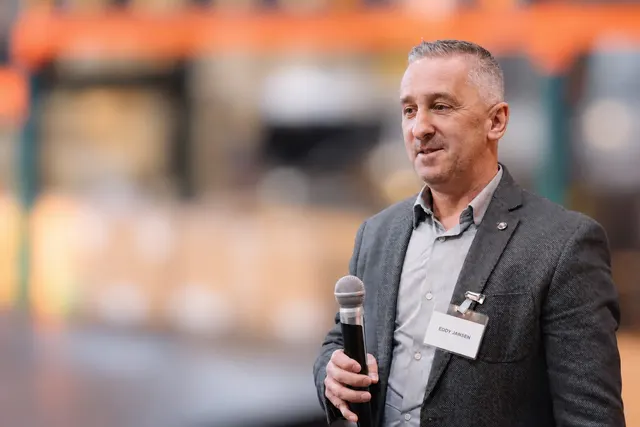
Vincent Vancaeyzeele (Techlink) discusses trends in the Flemish installation sector on Installatie & Bouw De Podcast
Text Kris VandekerckhoveImage Louwers Mediagroep
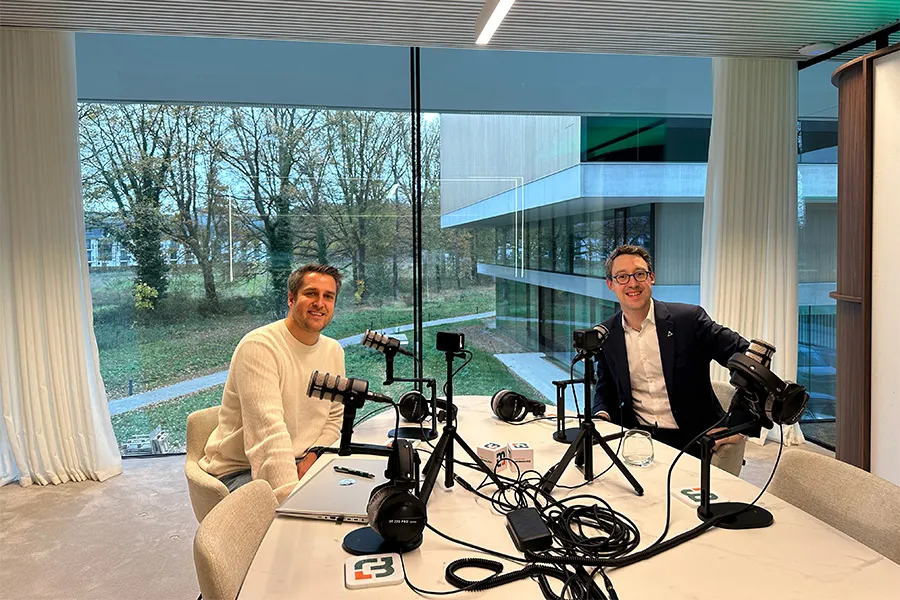
What were the notable trends in the Flemish installation sector in 2025? And what new developments can we expect in 2026? Vincent Vancaeyzeele, technology & innovation team manager at Techlink, as well as a director at ODE Vlaanderen and managing director of TechnoFin, explored these questions in a recent episode of Installatie & Bouw De Podcast. “While AI is still finding its feet, energy storage is moving faster,” he said, among other things.
According to Vincent Vancaeyzeele, the impact of policies promoting electrification was clear. “The increase in VAT on gas boilers in renovation projects, from 6 to 21%, gave the phase-out of fossil-fuel installations fresh momentum,” he said.
On the technical front, he saw a major shift in the design phase. “There is much more focus on accurate heat-loss calculations and the hydraulic design of schematics. The sector recognises that good design prevents many problems during installation and operation. Systems are becoming more complex, increasing the need for in-depth technical expertise.”
Price-conscious customers and growing administrative pressure
Comfort remains important, but in 2025 price-consciousness was once again at the top of end users’ priority list, according to Vincent Vancaeyzeele, in both the residential and commercial sectors.
Administrative workloads for installers also increased, he noted. “Periodic maintenance of oil-fired and gas boilers not only has to be carried out, but now also has to be officially reported. Installers have to try to explain this extra work and the associated costs to customers. That takes time and communication, both of which are already in short supply.”
AI is on the way, but not on site yet
According to Vincent Vancaeyzeele, artificial intelligence (AI) came on in leaps and bounds behind the scenes in 2025. Manufacturers and distributors, he said, are making major advances in design software and automated surveying using camera technology. “But the real breakthrough on site is still some way off. There is a fear of the unknown,” he said. “AI works extremely well in ideal conditions, but end users expect perfection. Building a prototype is achievable, but producing a fully supported, fault-tolerant end product takes time and extensive testing.”
He therefore does not expect self-learning installations to become mainstream in 2026.
Energy systems are growing
“While AI is still at the development stage, energy storage is moving faster. Batteries in particular saw further sharp price falls, leading to larger systems being specified for both residential and commercial projects,” said Vincent Vancaeyzeele.
In larger buildings, he sees a clear rise in demand for BACS, or Building Automation and Control Systems, which intelligently integrate heating, cooling, ventilation, lighting and energy monitoring. “There are major opportunities here in 2026.”
The quiet revolution in the electrical sector
According to Vincent Vancaeyzeele, the electrical sector is set for the biggest changes: “We are on the verge of a new generation of circuit breakers with integrated energy monitoring. They will be announced in large numbers in 2026 and will become the new standard.”
Such a circuit breaker measures the energy consumption of the heat pump, cooker or other major appliances directly, and also enables smart control at a later stage. “It is a crucial step towards genuine energy management in homes,” Vincent Vancaeyzeele believes.
Specialisation becomes crucial
According to Vincent Vancaeyzeele, the sector will move towards multidisciplinary teams rather than individual all-rounders. “Electrification is increasing the need for collaboration. Two HVAC installers for every electrical engineer: that is the model of the future.”
Demand for technical professionals is soaring, but the number entering the sector is not keeping pace. “All subsectors are fishing in the same pond: plumbing, electrical, HVAC, PV, batteries, and even defence,” Vincent Vancaeyzeele said, identifying what he believes is behind the problem.
STEM entrants as a lifeline
Techlink is therefore continuing to focus strongly on attracting new technical talent. “Through initiatives such as Install Skills, in East and West Flanders, the Walloon Concours du Meilleur Élève Chauffagiste, and the Install Tomorrow Experience Day, where 2,000 Flemish and 2,000 Walloon pupils visit Walibi for hands-on technical workshops,” he concluded.
The episode of Installatie & Bouw De Podcast featuring Vincent Vancaeyzeele is available on the Installatie & Bouw België website and on the usual streaming platforms, where it can be found under the channel ‘Installatie & Bouw’.
Spotify Embed: #1 - 2026 decoded: The quiet technological revolution in the installation sector
Question about this story? Ask your question
Keep following this
Get an email when a new story is published. No account needed.
- ThemeThe installer of tomorrow
- SubjectGeneral