Geothermal energy and ice storage keep art and visitors at BRUSK in Bruges at the right temperature
Text Josefien De BockImage MVL Media Groep
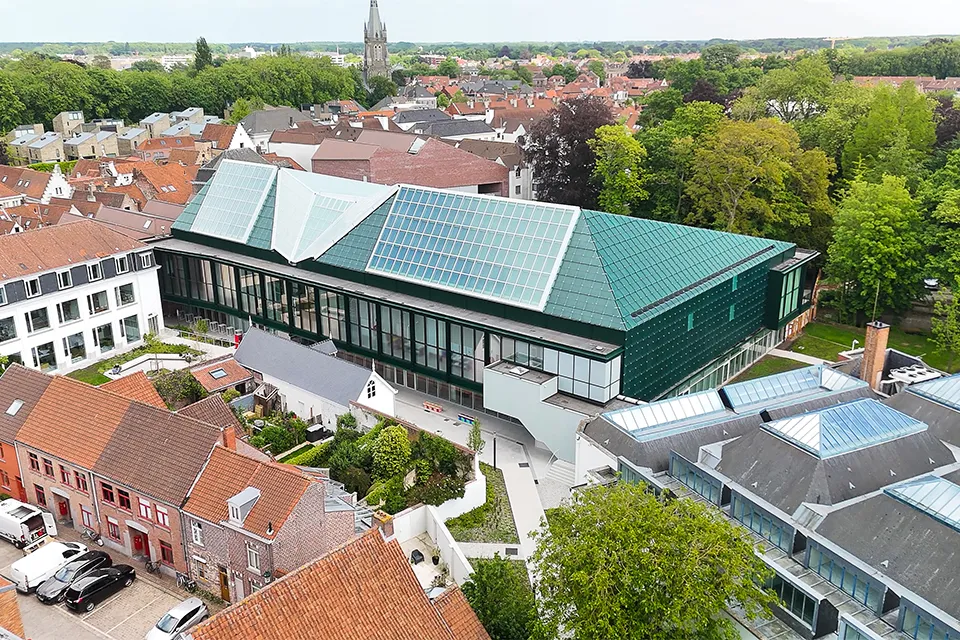
Behind the imposing architecture of BRUSK, officially opened in early May, lies an engineering story that is every bit as impressive. The new museum site for Stad Brugge, designed by Robbrecht en Daem architecten and Olivier Salens architecten, must keep world-class artworks in exactly the same conditions in summer and winter. For the HVAC installation, Stad Brugge worked with SPIE Belgium, which, as a multi-technical contractor, developed a complete solution with Mitsubishi Electric using geothermal energy, heat pumps and ice storage. The system had already completed a full year of trial operation before the first artworks arrived in Bruges. No detail was left to chance.
“At BRUSK, it was never just about heating or cooling,” says Lode Lanszweert, account manager at Mitsubishi Electric. “The temperature and humidity have to be kept exactly the same at all times, for both visitors and the art collections.”
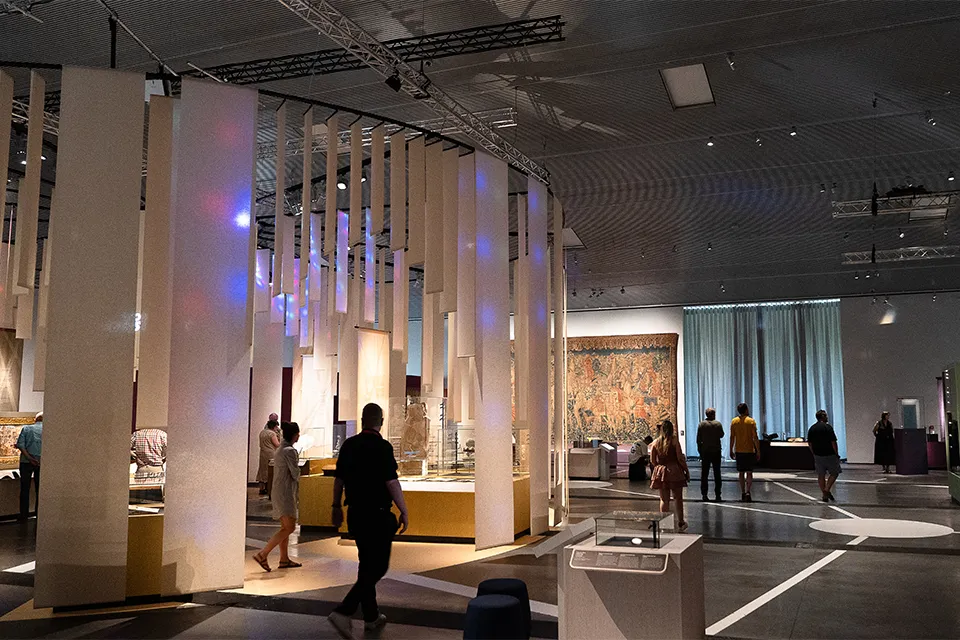
BRUSK was delivered as a design-and-build project, with SPIE Belgium helping to define the technical solution within the parameters set by the engineering consultancy. Sustainability was built into the project from the outset. The building runs without fossil fuels and makes maximum use of green energy through integrated solar panels and a BEO field.
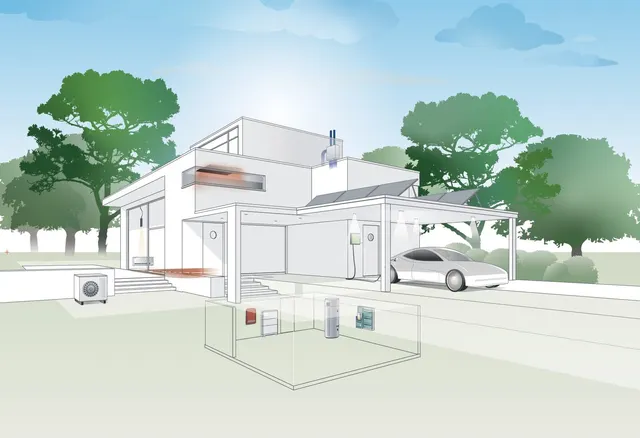
Notably, all the heat pumps are installed indoors. “That was a deliberate choice,” explains Lode Lanszweert. “The roof had to remain completely clear for the integrated solar cells and to preserve the building’s architectural appearance. That is why we use an air-to-water heat pump, with outside air drawn in and discharged through ducts.”
Ice storage deep beneath the museum
One of the installation’s most unusual components is located in BRUSK’s plant basement: a six-metre-long ice accumulator. During solar peaks or cheaper off-peak periods, water inside it is turned into a single large block of ice. “This ice storage allows us to store energy intelligently,” says Lode Lanszweert. “In the event of a power cut, the stored cooling capacity means we can maintain the right conditions in the museum galleries for another eight hours.”
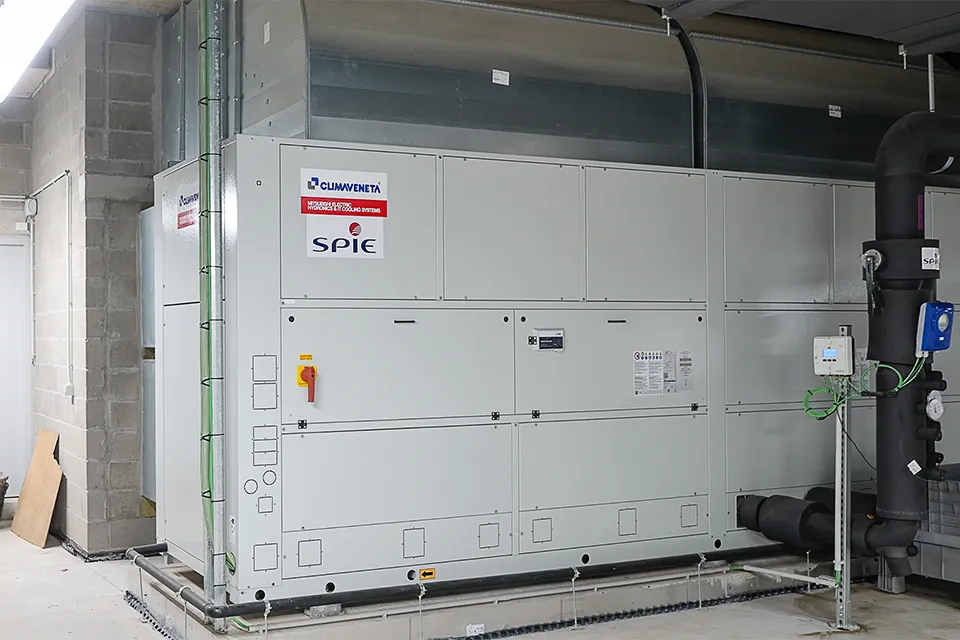
Two geothermal 6-pipe heat pumps have also been installed, one for comfort cooling and one for low-temperature cooling to dehumidify the air handling units. This latter function is particularly important in a museum setting. “With low-temperature cooling, we can keep relative humidity perfectly under control,” Lode Lanszweert continues. “This ensures the ideal humidity for
the artworks throughout the season.”
Another advantage of 6-pipe technology is that the system can heat and cool at the same time. Thermal energy is exchanged internally between warm and cool zones, without constantly drawing additional energy from the BEO field. This gives the system a very high efficiency.
Fully prepared in 3D
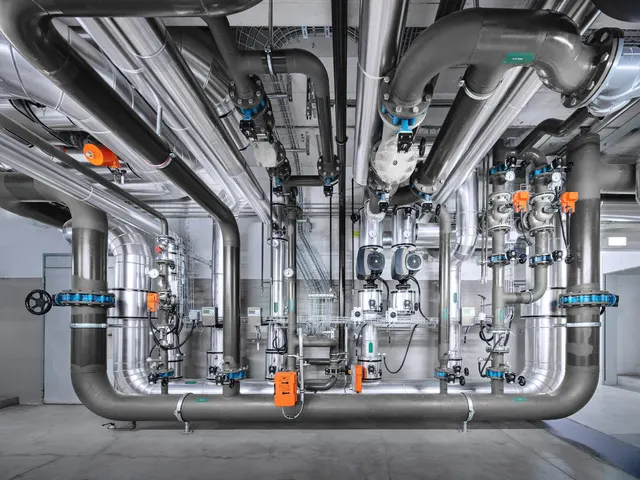
For SPIE Belgium, the complexity lay not only in the technology itself, but also in the practical execution of the project. “Everything you see here was fully modelled in 3D in advance,” says Stijn Uiten, HVAC project manager at SPIE Izegem. “Many components were prepared off-site, which made installation on site very straightforward.”
Coordination between the different building services was also tightly organised. At weekly site meetings, the contractors and engineering consultancy coordinated every detail, so problems on site were usually resolved before they arose. According to Patrick Van Heste, Business Unit Manager at SPIE Izegem, precision was central to the project. “Visitors should never feel that it is too hot or too cold. We also have to keep the artworks under exactly the same conditions at all times. That requires an installation that operates with complete stability.”
A year of trial operation before opening
Before BRUSK officially opened its doors, the entire climate-control system was tested for a year. Throughout this period, the system had to demonstrate that temperature and relative humidity remained perfectly stable. “This was necessary to give international lenders confidence,” says Stijn Uiten. “Only after we had proved that the climate remained fully controlled through all four seasons could the artworks actually be brought to Bruges.”
For Mitsubishi Electric, the project’s strength lies above all in integrating all the technologies into a single system. “Several applications come together here: geothermal energy, ice storage, air-to-water and water-to-water heat pumps,” concludes Lode Lanszweert. “Because everything is perfectly coordinated, the controls remain manageable for the contractor, while long-term operational reliability is also assured.”
Een zakelijke vraag aan Mitsubishi Electric Belgium? Get in touch
Who worked on it
BRUSK in Brugge
- totaaloplossing
 Mitsubishi
- multitechnische installateurSPIE Belgium
- architectRobbrecht en Daem architecten
- architectOlivier Salens architecten
Keep following this
Get an email when a new story is published. No account needed.
- ProjectBRUSK
- ThemeFossil-free heating and cooling
- SubjectGeneral
- CompanyMitsubishi Electric Belgium
- CompanySPIE Belgium
- CompanyRobbrecht en Daem architecten
- CompanyOlivier Salens architecten