Webinar explores the energy transition in the built environment
Much has already been written about the energy transition. There is no ready-made answer to achieving our ambitions …
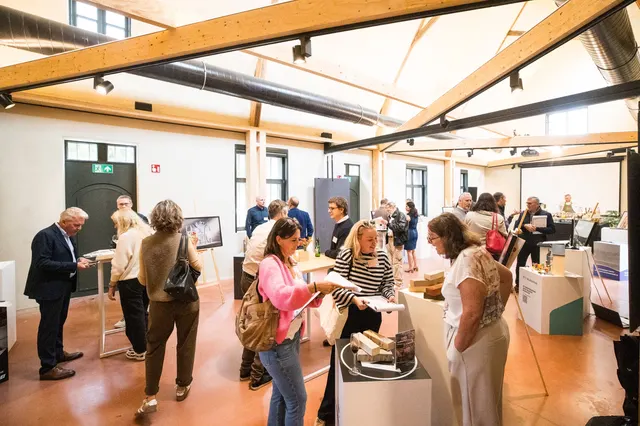
Much has already been written about the energy transition. There is still no ready-made answer to achieving our ambitions, but one thing is clear: it will not be possible without the buildings sector, which accounts for around half of our CO2 emissions. With this in mind, an ‘Energy Encounter’ was organised on the subject. Various experts examined the built environment, focusing in particular on the enormous challenges posed by the hoped-for renovation wave. How can we make the transition to a future-proof building stock possible? What are the stumbling blocks? And what opportunities are there?
To put the scale of the challenge into perspective, Maarten De Groote, Senior Expert at EnergyVille, introduced the audience to the bigger picture. “96.5 per cent of Flemish homes and apartments have an energy rating below A. Yet by 2050 every residential building must have that label. Achieving this will require a renovation rate of three per cent, or 95,000 homes a year. That is easier said than done,” said De Groote. In a study due to be published soon, EnergyVille examines the challenge in greater depth. De Groote gave a preview of its findings in his presentation. “We studied 19,000 detached houses and divided them into 135 representative house types. Taking 10 potential renovation measures into account, we estimated the ideal package of measures for each type of home, and therefore the route to energy label A with the lowest investment cost. We looked not only at investment cost, but also at total cost of ownership (TCO),” said De Groote.
PV remains worthwhile
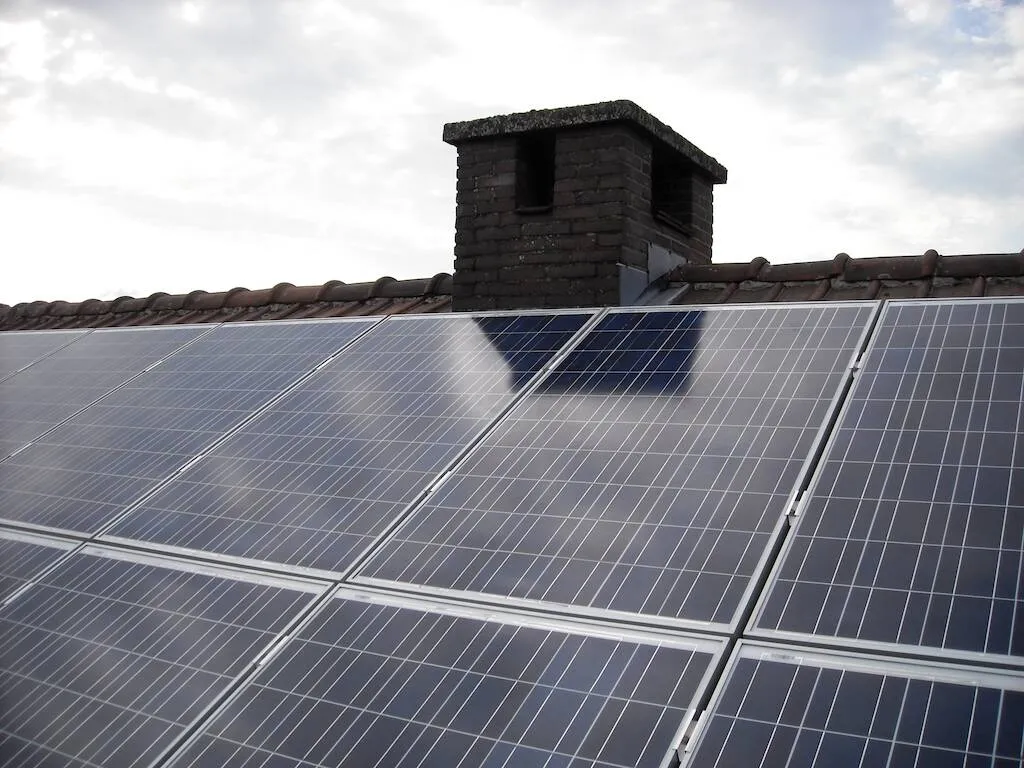
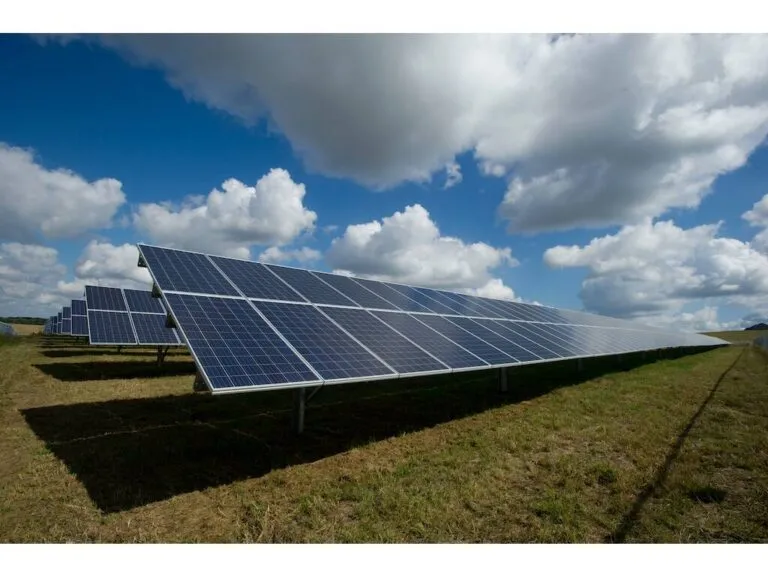
The first, unsurprising conclusion from the study is that solar panels are a conditio sine qua non: PV is part of the package of measures needed to achieve an A label for every type of home. De Groote said: “A renovation with PV costs 33,000 euros, while without PV the investment cost rises to 66,000 euros. It may seem like a strange conclusion at a time when solar panels are being cast in a bad light because of the controversy surrounding the reversing meter, ed., but PV still has a major impact on the EPC score.” The researchers also concluded that improving the building envelope is a crucial, but costly, step. “A reduction in the cost of a deep renovation of the building envelope, such as roof and external wall insulation or replacing windows, would therefore be a game changer,” De Groote concluded.
Heat pumps: investment cost versus TCO
Finally, the researchers also found that heat pumps are an interesting measure for optimising investment costs. “Yet European figures show that heat pumps are chosen in only 10 per cent of renovations,” said De Groote. The reason becomes clear when TCO is also taken into account. De Groote said: “When you factor in energy prices, installing a heat pump is a recommended measure for exactly 0 per cent of house types. Because of the large price difference between electricity and gas, Belgium has the highest electricity prices in Europe, a gas condensing boiler is more attractive. By comparison, if we repeat this exercise for the Netherlands, where people are moving away from gas, the heat pump also remains viable in the TCO scenario.” There is no doubt that the renovation wave will cost a great deal: these ten measures would bring the total investment cost in Flanders to 78 billion euros. For around 357,000 buildings, even this effort would not be enough to achieve an A label, requiring a further 35 billion euros. “Renovation costs a fortune, and many homeowners cannot or do not want to pay for it,” De Groote concluded. Experts from a range of sectors then came together to discuss the targets. Moderator Luc Pauwels, energy journalist at VRT, wanted to start on a positive note and asked the panellists what Belgium’s strengths were in terms of innovation. “We are a densely populated country, which makes us an ideal place to set up pilot projects using new technologies,” said Antoon Soete of the ESCO WAttson. “Technology is of course only one piece of the puzzle. Financial and legislative aspects are important too. All the pieces have to fit together. As an ESCO company, we are willing to take on a certain level of risk, but we also need investment certainty.”
‘Belgium is a battlefield’
Former Flemish Government Architect Leo Van Broeck, who lives by the motto ‘a day without delivering a sharp one-liner is a day wasted’, got straight to the point: “We need to be more selective about energy sources. Instead of talking about integrating gas and electricity, we should simply ban all fossil fuels. If you hire a surgeon, you should send them straight to the battlefield. And that is what our country is: a battlefield. Belgian homes are 40 to 50 per cent larger than the European average, and our energy consumption per household is twice that of an average European household. The energy transition requires far-reaching measures: if a cancer patient has a fever, you should not try to cool them down, you should treat their leukaemia.” Van Broeck is therefore in favour of far-reaching and stricter regulations. “You cannot leave people to decide for themselves. If you let children choose what to eat, they will eat sweets every day.” Charlotte van de Water (Senior Expert Energy & Climate at Agoria), however, takes a different view: “We should not tell people how to live, but give them every opportunity. For now, only three per cent of Belgian homes are climate-neutral. If that figure rises to around 30 per cent, across both the sales and rental markets and including social housing, people will have the chance to choose climate neutrality, and the dynamics of supply and demand will do their work. Climate-neutral homes will then become cheaper and therefore more attractive.”
A new kitchen, bathroom or swimming pool
“People are willing to invest in renovations, but they rarely consider sustainability. They are happy to spend money on a new kitchen, bathroom or swimming pool. But when it comes to a sustainable investment, they immediately want to know how long it will take to recoup the cost and how much they will save,” observed Freddy Van Bogget (Innovation Manager at KBC Group). He believes this is partly due to a lack of clarity: “Every expert says something different. Eventually, people no longer know what to think and would rather put their money into a new kitchen.” Valerie Barlet (Worldwide Strategy Officer at AGC Glass) agreed: “People do not invest because of an attractive payback period, but for their own comfort. When it comes to something like insulation, we should stop describing it as ‘a good business case’ and instead present it as an investment that increases the value of your home.” The renovation wave requires not only money, but also manpower: are there enough suitably qualified people to carry out the renovations? “It would be good if construction and installation companies had to spend less time persuading customers and explaining the technology,” said Barlet. “Doing this collectively would give companies more time to focus on carrying out the work.”
Housing as a service
Another problem, according to Van Broeck, is that everyone in Belgium is determined to own a home. “It is a misconception that wealthy people have to own their own homes. In prosperous countries such as Austria, Switzerland and the Scandinavian countries, renting is often the norm. Romania is one of the poorest countries in Europe, yet 90 per cent of the population owns a home without having to take out a loan. We are saddled with the mistaken idea that owning a home is a kind of airbag, an advance on your pension. But in reality, it is a burden. The average Belgian moves house once in their life, well below the European average, and gets stuck in homes that are too small or, above all, too large.” The former Government Architect therefore argued for ‘housing as a service’: “You can then live in a home that is 30 per cent more energy-efficient and 20 per cent cheaper, stay for as long as you like, and not have to worry about maintenance. You can no longer make a profit from the land, but you get to live your whole life at almost cost price,” he said with conviction.
Question about this story? Ask your question
Keep following this
Get an email when a new story is published. No account needed.
- SubjectEvents