Colourful textile duct ensures draught-free cooling in childcare centre
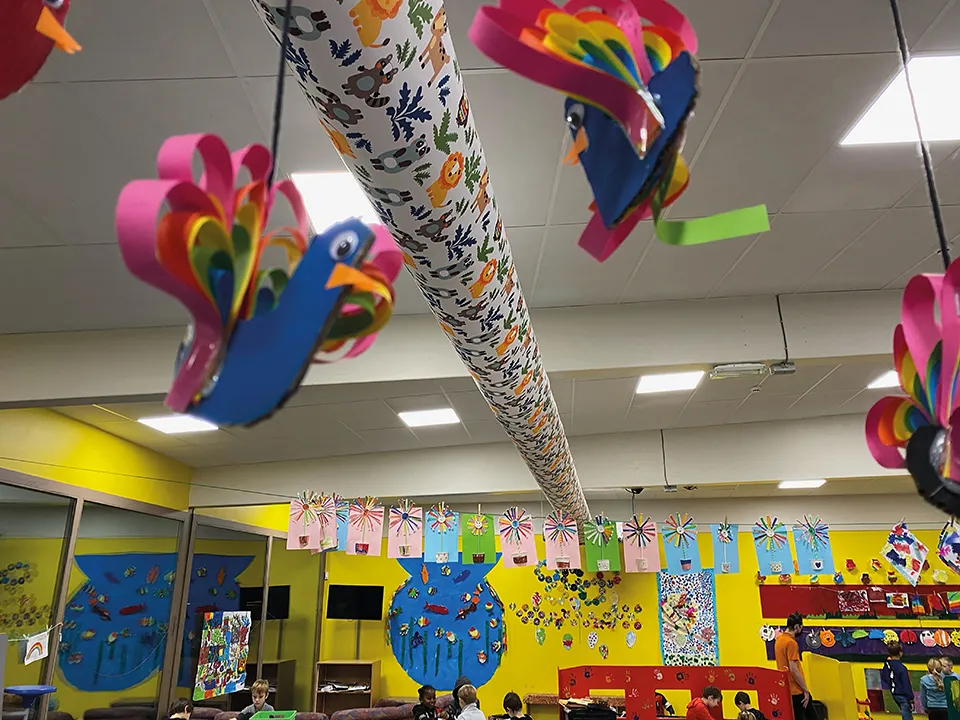
Efficient cooling is essential in a childcare centre with lots of windows, especially now that heatwaves are becoming increasingly common. Since children and staff must not be exposed to draughts, a textile duct is an excellent choice. At Sloeber out-of-school childcare in Wervik, mechanical services contractor Feys-Pattyn chose to work with Prihoda, a specialist in textile ducts.
Feys-Pattyn was founded in 1991 by Luc Feys and Linda Pattyn. The company has grown steadily, building up extensive expertise across a range of fields. Its activities broadly fall into two categories: HVAC on the one hand, and refrigeration engineering and insulated construction on the other. Feys-Pattyn is therefore active in many areas, as is Linum Group. That company also specialises in various aspects of HVAC and refrigeration, so it is hardly surprising that the two have developed a close, symbiotic working relationship over the years.
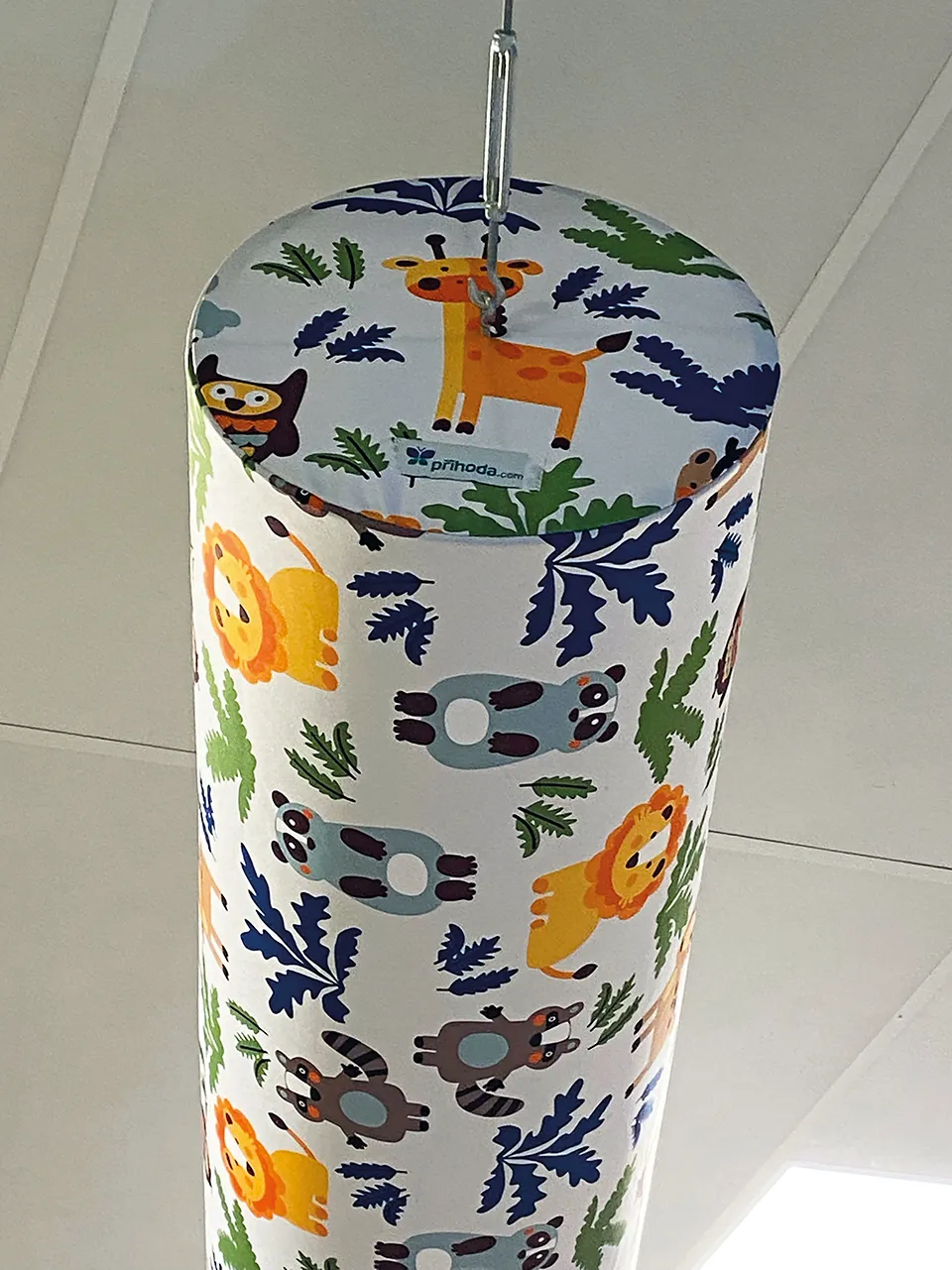
When the City of Wervik asked Feys-Pattyn to improve comfort levels at Sloeber out-of-school childcare, the choice quickly fell on Prihoda textile ducts, distributed in Belgium by Prihoda nv, part of Linum Group. “The childcare centre consists of a room with a lot of glass and large windows. The need for efficient cooling was therefore significant. The heatwaves of recent years have only made that need greater,” explains managing director Luc Feys. “A Prihoda expert came to the site to survey the space. This allowed us to design a bespoke system together. Thanks to our many years of working together, we have an efficient, high-performing way of working and know exactly what to expect from each other.” Robbie Naessens, Marketing Manager at Linum Group, adds: “We used Prihoda’s own software for the technical calculations. This enabled us to produce a duct tailored to the project, in line with the client’s wishes and requirements.”
No one exposed to draughts
Textile ducts proved ideal for this project. “In terms of price and comfort, it was the best solution,” Feys continues. “We installed an air-conditioning system in the adjoining room, but textile ducts were better suited to the main childcare room. It is a larger space, and textile ducts make it possible to distribute the air evenly throughout its length and width. This improves comfort for both staff and children. With a conventional wall-mounted air-conditioning unit, there is always a risk that someone will be exposed to a draught.”
The low-noise textile duct is 15 m long and has an airflow rate of 2040 m³/h. “Structured microperforations and perforations, patented air-diffusion techniques, at the top of the duct ensure draught-free operation. Shape rings inside the duct maintain its attractive, rounded shape at all times. The duct therefore remains perfectly round even when no air is being distributed.”
A duct with animals
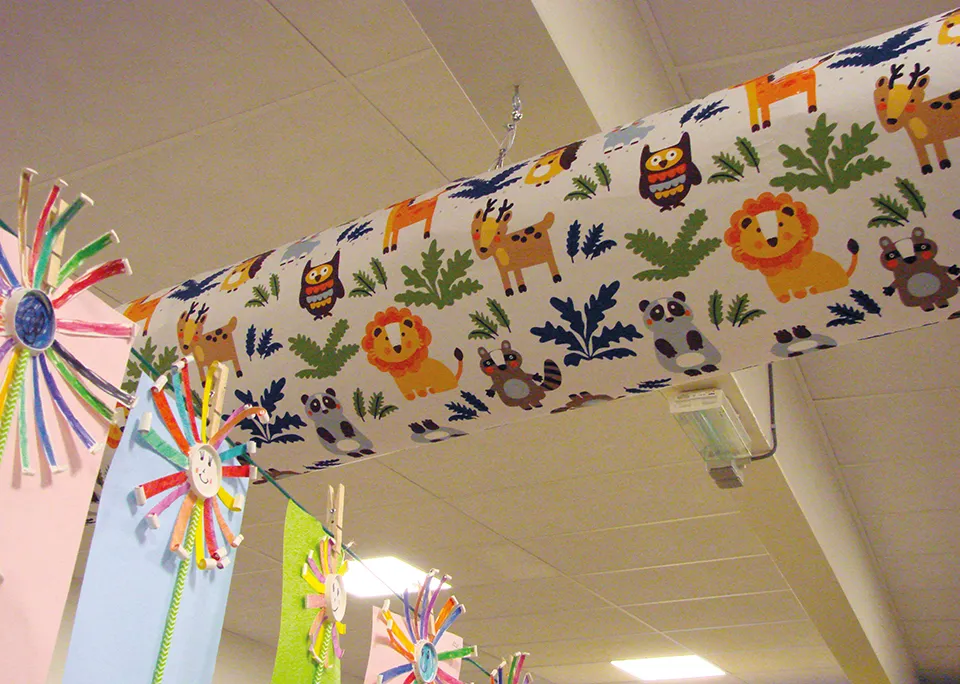
Another advantage of textile ducts is that the sleeves can be customised. Businesses can choose to include their own logo, while at a childcare centre it goes without saying that the children should also get something out of it. The result: a colourful, playful textile duct decorated with various animals. “The fun shapes and figures encourage young children’s imagination and creativity. That is obviously not possible with a standard galvanised or aluminium duct,” Naessens adds. The textile duct was installed in just half a day, using a single cable suspension with a tensioning ring. “Because the duct is made to measure in the factory, to the right length and shape and including the installation materials, the installer can save a considerable amount of time on site.”
Een zakelijke vraag aan Linumgroup / Prihoda? Get in touch
Who worked on it
Sloeber in Wervik
- building services contractorFeys-Pattyn
Keep following this
Get an email when a new story is published. No account needed.
- ProjectSloeber
- SubjectEvents
- CompanyFeys-Pattyn
- CompanyLinumgroup / Prihoda