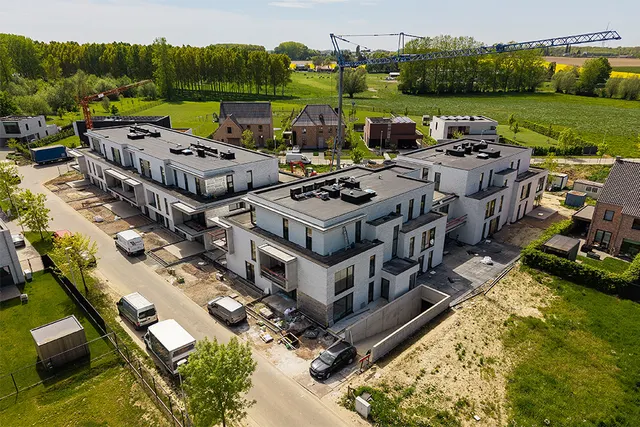
Above-ground and underground gas tanks are easy to install
A propane tank is the ideal solution if you are not connected to the natural gas network but still want to enjoy all the comforts of gas. Antargaz, a propane gas specialist, offers both above-ground and underground gas tanks. And, as Antargaz demonstrates, installing them is not at all difficult.
Underground
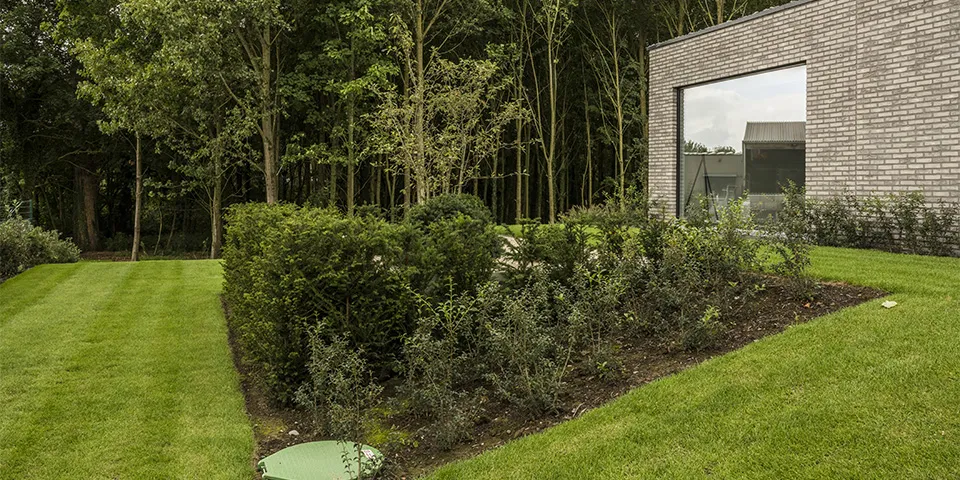
The underground Nautila gas tank is almost invisible: its green cover blends in almost completely with the lawn or planting. The tank has a 30 cm-high inspection chamber with a green plastic cover. Essential installation components are located in this chamber, including the first-stage regulator, pressure limiter and filling point.
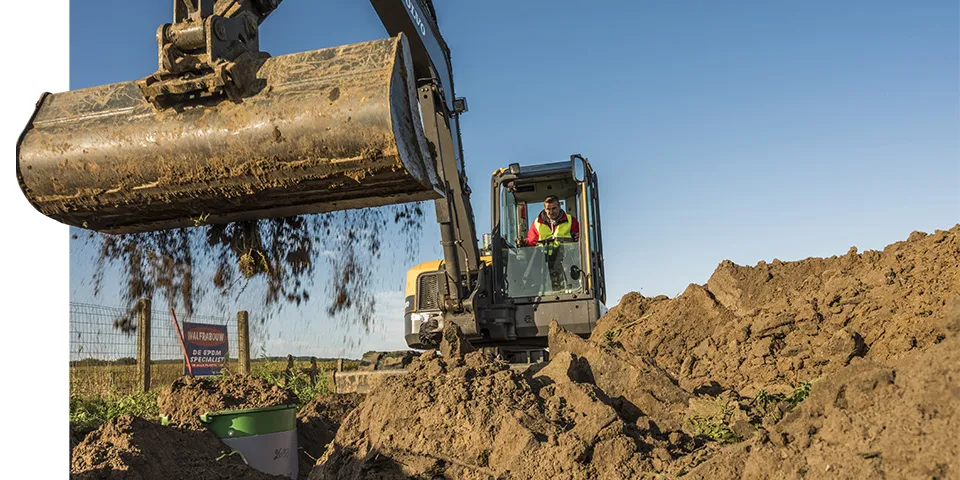
The excavator fills the hole back in with soil or yellow sand.
How is an underground gas tank installed?
Antargaz gets the job done in 10 steps.
1. Antargaz comes to the site to install the tank.
2. Antargaz arranges for the necessary inspections to be carried out by an approved inspection body.
3. If Antargaz installs the pipework, the excavator digs a trench for the pipes. The trench is about 70 centimetres deep.
4. The excavator digs a hole for the gas tank. The hole is about 1.3 metres deep.
5. The gas tank is lowered into the hole and anchored.
6. The team lays a yellow warning mesh over the tank.
7. The excavator fills the hole back in with soil or yellow sand (this is a legal requirement if the soil contains too many or too many large stones. This prevents damage to the tank and ensures that the cathodic protection works properly).
8. The team levels the garden, leaving only the inspection chamber visible. The tank is installed on a slight slope to ensure the proper functioning of the first-stage regulator and pressure limiter, and to allow deliveries to be made. Installing a tank on a slight slope means that the inspection chamber is positioned about 20 cm above the surrounding ground and some of the excavated soil is spread over an area with a radius of 3 m to 5 m around it.
9. The first-stage regulator and pressure limiter are then installed.
- Option 1: a combined regulator under the tank cover
- Option 2: an additional regulator in a wall-mounted cabinet at your home
If you have chosen this option, the team also installs the pipework. The machine then fills the trench with soil or yellow sand (if necessary).
10. Some soil will be left behind after the excavation work. The customer can use it later to tamp down the area around the tank by hand. This is necessary because the disturbed soil needs time to compact. The leftover soil can also be used to level and finish the garden. Antargaz therefore always recommends completing the final landscaping (levelling and finishing) after the tank has been installed. If the soil is not to be reused, Antargaz can arrange for it to be collected.
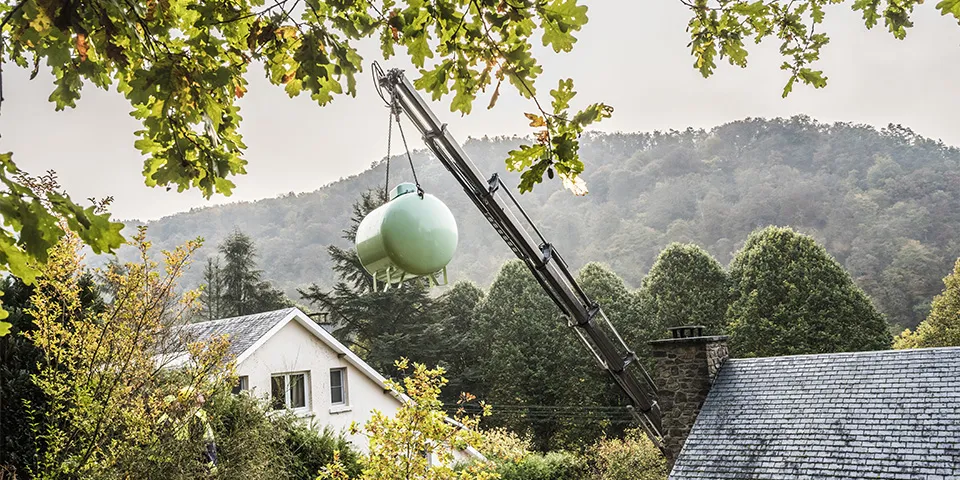
An above-ground tank is an easy and affordable alternative to natural gas.
Above-ground
An above-ground tank is an easy and affordable alternative to natural gas. Tanks are available in various sizes, depending on energy requirements, and can be installed in no time.
How is an above-ground gas tank installed?
Antargaz gets the job done in 6 steps.
1. Antargaz comes to the site to install the tank.
2. The tank is placed on two concrete plinths to ensure it is level and stable. If the ground is unstable, it may compact under the weight of the tank, leaving the tank no longer level. To prevent this, a concrete slab should be installed at the planned tank location when the contract is signed.
3. The team drives an earthing rod, connected to the tank, about 40 cm into the ground.
4. The first-stage regulator and pressure limiter are then installed.
- Option 1: a combined regulator is fitted under the cover on the tank
- Option 2: a second regulator is fitted in a wall-mounted cabinet at your home
5. Antargaz arranges for the pipework to be installed.
6. Antargaz arranges for the necessary inspections to be carried out by an approved inspection body.
Customers should bear in mind that heavy machinery will drive across the site during the work. This is necessary to ensure the underground tank is installed correctly. This will leave marks on the site and on the public road in front of the property.
Antargaz Hall 12, stand 407B
Een zakelijke vraag aan Antargaz? Get in touch
Companies in this story

Keep following this
Get an email when a new story is published. No account needed.
- SubjectEvents
- CompanyAntargaz