Artificial intelligence boosts comfort in the classroom
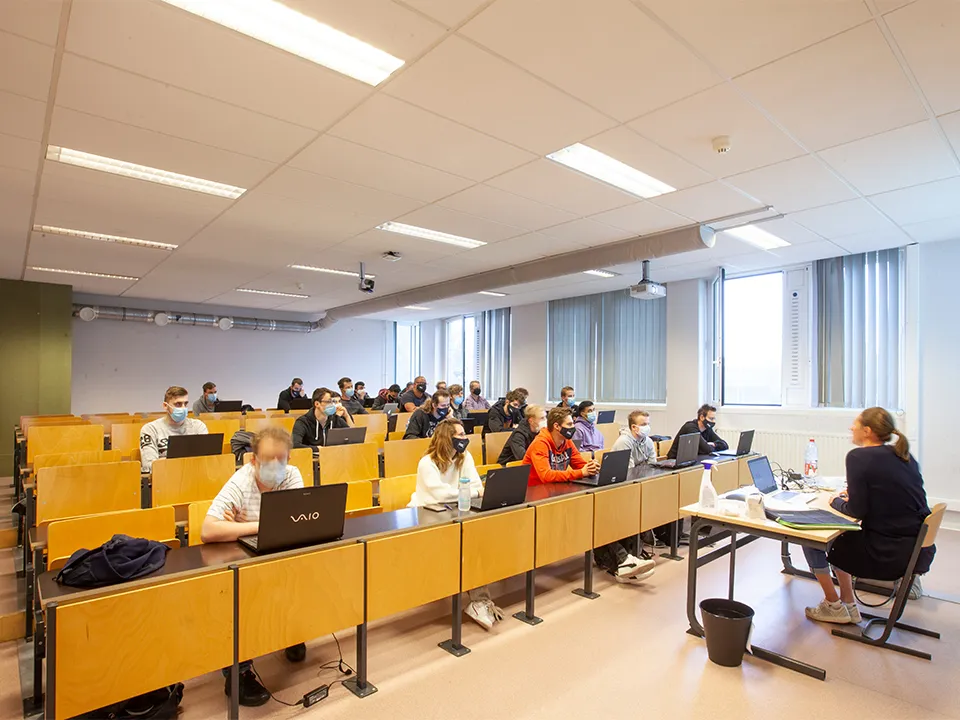
At Hogeschool PXL, an advanced control system has been developed to optimise CO2 levels in a classroom in an energy-efficient way.
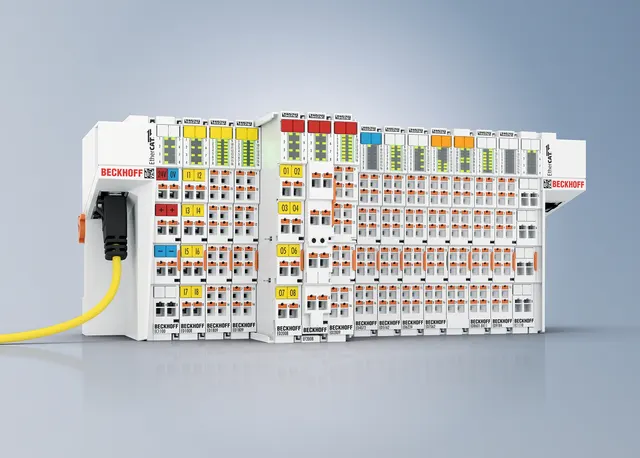
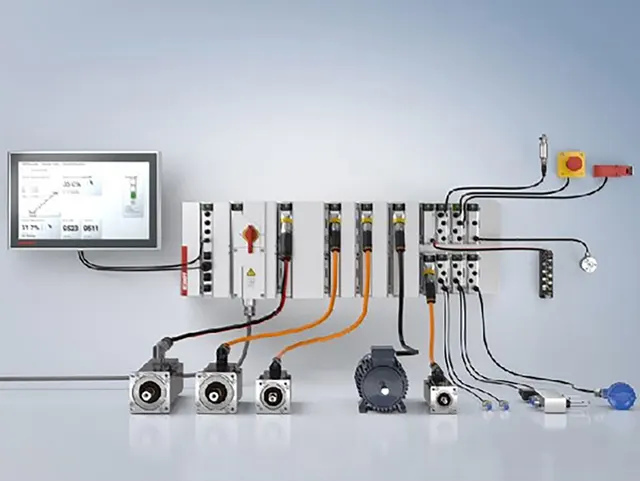
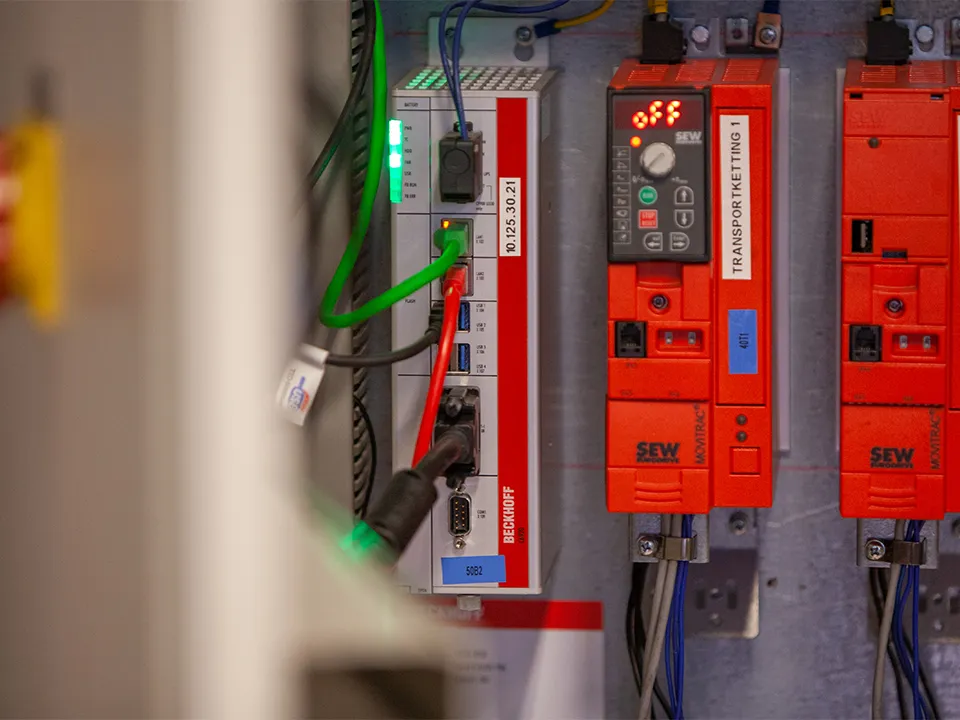
The control system uses artificial intelligence to predict CO2 levels, allowing it to anticipate rather than react. At its heart is a Beckhoff Automation PLC, which collects the data and controls ventilation based on the model’s output.
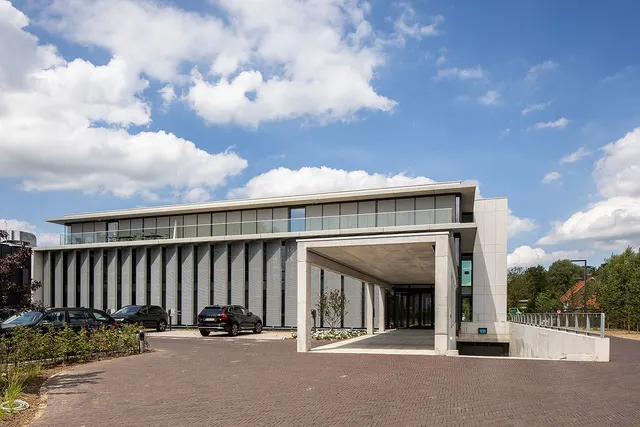
Smart Buildings is a module on the Electromechanics course at Hogeschool PXL. The institution’s own building serves as a living lab for implementing new technologies and carrying out experiments. “In 2016, we started a project to monitor the entire building,” says Patrick Pilat, head of the Electromechanics programme. “Electricity, gas and water meter readings are read automatically and stored in the cloud. We also installed sensors to measure the temperature and CO2 levels in the rooms. It soon became clear that CO2 levels were sometimes well above the recommended limit, which has a negative impact on comfort. People feel tired and are more easily distracted. That is not a good situation in a classroom.”

A project was therefore launched to develop a control system in one of the classrooms to keep CO2 levels below the 1,000 ppm limit. Additional sensors and window contacts were installed, along with a Beckhoff PLC to control ventilation. Beckhoff Automation’s industrial controllers are becoming increasingly important in building automation. As an open platform, they offer far greater scope for integrating and coordinating different systems, a crucial step in optimising overall energy performance.
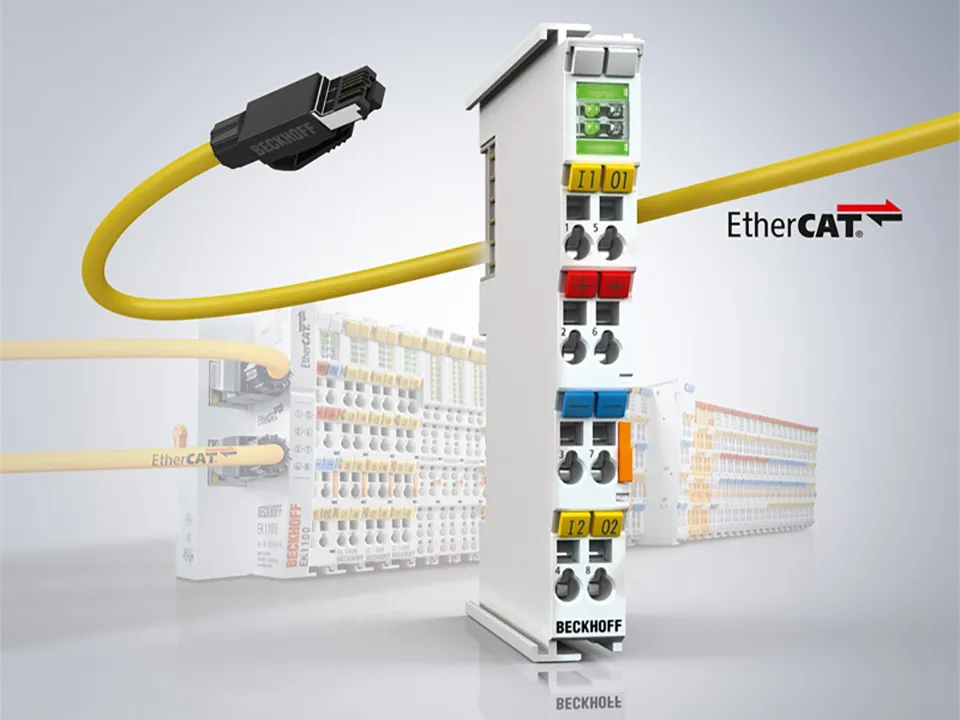
To support this, Beckhoff Automation offers a wide range of I/Os and software blocks that make it possible to connect quickly and transparently to all kinds of networks and communication protocols used in building automation. PC-based controllers can also readily connect to other IT systems, including databases and applications running in the cloud.
Machine learning
The cloud plays an essential role in the application developed by PXL to control CO2 levels in the classroom. Lowering the CO2 concentration in the air is relatively straightforward, as the only solution is to increase ventilation. The challenge is to do so in an energy-efficient way.
Patrick Pilat: “Our solution uses machine learning to predict in real time what the CO2 concentration will be in one and two hours. The control system uses these predictions to adjust ventilation accordingly. At the end of the day, for example, the model knows from the timetable that CO2 levels will not rise any further, so ventilation can be reduced.”
The model used is called Boosted Decision Tree, one of the machine learning tools offered on Microsoft’s Azure platform. It predicts CO2 levels by comparing the situation at a given moment with historical data. The situation is represented by a dataset comprising PLC readings, supplemented with data from IT systems such as students’ timetables.
Coefficient of determination
“The model can use the timetables to see how many groups have classes and estimate how many people will be present,” says Patrick Pilat. “For this type of artificial intelligence, the model’s performance is assessed using its coefficient of determination. In our case, it is 83%. That is sufficient to make fairly accurate predictions.”
In practice, however, the explanation of how CO2 levels are predicted needs some qualification. The aim of the control system is to keep levels below the 1,000 ppm limit at all times, and therefore to ensure that a prediction is not borne out if it indicates that levels will exceed the limit.
“We started with a simple control system in the PLC to collect the data used to train the model,” explains Patrick Pilat. “The model’s prediction is the value that would have been reached under the old control system. Based on that prediction, the new control system can adjust itself to do better. In principle, we could now retrain the model using new data to make it even more accurate.”
Integrating the different systems
The project’s results are impressive. Whereas CO2 concentrations initially sometimes reached 6,000 ppm, the 1,000 ppm limit is now only rarely exceeded. The classroom in question, which can accommodate 70 students, is also used more than before without increasing energy consumption.
The decision has therefore been made to extend the project and use the Beckhoff controller to control the entire wing of the building. “We will be controlling heating as well as ventilation,” says Gwen Vanheusden, lecturer in automation and project team member. “As in many buildings, the current heating control system sets the circuit temperature for each wing according to wind direction. We will initially retain that system, but supplement it by controlling the radiator valves via the PLC. This will allow the heating to be switched off in rooms that are not in use. As with ventilation, the machine learning model will be able to determine when the radiators need to be switched back on.”
This brings us back to the earlier point: an advanced controller such as Beckhoff Automation’s offers greater capabilities by integrating the different systems in a building. For example, the control system will be able to reduce heating at times when ventilation is running at full capacity. Ventilation capacity can also be increased further by linking the controls for different rooms. When classrooms do not need ventilation, that capacity could, for instance, be used to ventilate the atrium. “This takes the idea of the building as a living lab even further, improving comfort and, as a bonus, reducing the energy bill.”
Een zakelijke vraag aan Beckhoff Automation? Get in touch
Companies in this story

Keep following this
Get an email when a new story is published. No account needed.
- SubjectAutomation
- CompanyBeckhoff Automation